Sunday, March 7, 2021

Spirit of the Living God (Sermon 9 on the Apostles' Creed)

And here we are, rounding the corner into the final stretch! Over the past eight weeks, as we've been learning our faith through the lens of the Apostles' Creed together, we've confess that we “believe in God, the Father Almighty, Creator of heaven and earth; and in Jesus Christ, his only Son, our Lord, who was conceived by the Holy Spirit, born of the Virgin Mary, suffered under Pontius Pilate, was crucified, died, and was buried; he descended into hell; on the third day he rose again from the dead; he ascended into heaven and is seated at the right hand of God the Father Almighty; from there he will come to judge the living and the dead.” But now the Creed invites us to rewind – back to the beginning – as we confess the next line: “I believe in the Holy Spirit.”

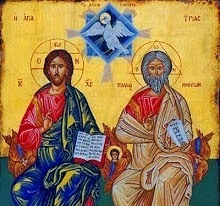
So let's rewind. Rewind until we hit Genesis 1:1. Then rewind some more, until we're off the tape. There is no universe. There is no creation. There is neither space nor time. There is only God, alone in eternity. God is all there is, and there is only one. But within the life of this one and only God, there is relationality. We've already met the Father. And we've also met the Son, who is eternally begotten from the Father, sharing the same essence as him – the Son is the Word eternally meditated, God's perfect reflection. But there is a third in this Blessed Trinity. This third is the Holy Spirit. He is the bond of love whom the Father and the Son share, pouring forth eternally from them, passing from each to the other within the inner life of God – when God is by himself, God is Father relating to both his Son and his Spirit, and them to him, and them to each other. For that reason, we're told that the Holy Spirit “comprehends the thoughts of God” (1 Corinthians 2:11), which is something no creature can ever do. The Holy Spirit is worth as much as the Father or the Son – and that is infinite. The Holy Spirit knows as much as the Father or the Son – which is infinite. The Holy Spirit can do as much as the Father or the Son – which is infinite. And the Holy Spirit is every bit as beautiful and every bit as glorious – which is also infinite. The Holy Spirit is the same divine nature as the Father and the Son. The Holy Spirit is God – as fully God as either of them. And therefore the Holy Spirit is worthy of being worshipped and glorified with Father and Son as the one and only God of all.

And then, God creates – he is, after all, Creator of heaven and earth, of all things that exist that are not God. It's the Holy Spirit who creates, just as much as the Father or the Son do. A 'spirit,' in Hebrew, is the same as a 'breath' or a 'wind,' and so as God speaks creation into being with his Word, he breathes forth his Spirit at the same time. The Spirit is the Sacred Breath of God, the Divine Wind that blows over the unformed world. “The Spirit of God was hovering over the face of the waters” from the start (Genesis 1:2), but as the psalmist says to God, “When you send forth your Spirit, they are created, and you renew the face of the ground” (Psalm 104:30) – and just like in the era of creation, each of us, when we are formed and brought to light, can declare with Elihu in the Book of Job, “The Spirit of God has made me” (Job 33:4). And this Creator Spirit will never be limited. “Where shall I go from your Spirit?” (Psalm 139:7), we ask, and the answer is nowhere.

Down through the pages of history, we find that when God liberates the Hebrews from their slavery in Egypt, a divine wind blows upon the sea to clear a path for them. And from then on, God “put in the midst of them his Holy Spirit” (Isaiah 63:11). Particularly, this Spirit was “upon Moses” (Numbers 11:17) and later in his protege Joshua (Numbers 27:18), while the tabernacle architect Bezalel was “filled” with “the Spirit of God” (Exodus 31:3). While the Spirit blew into or onto a few particular people for special tasks, God “gave [his] good Spirit to instruct them,” the whole nation, in the desert, we're told (Nehemiah 9:20). But the problem is that, time and again, the Israelites in the desert “rebelled and grieved his Holy Spirit” (Isaiah 63:10).

God brought the later generation into the land of promise, and they were governed for a while by pop-up leaders called judges, whom the Spirit chose to work through. So we read about the Spirit being upon Othniel (Judges 3:10), clothing Gideon (Judges 6:34), being upon Jephthah (Judges 11:29), and stirring and them rushing upon Samson (Judges 13:25; 14:6, 19; 15:14). In time, the people insist on having a mortal king instead of God's rule through the judges. So the final judge Samuel anoints a tall man named Saul, and the Spirit was with him (cf. 1 Samuel 16:14). But because Saul was unfaithful, Samuel anoints his successor in advance, a teenager named David; and “the Spirit of the LORD rushed upon David from that day forward” (1 Samuel 16:13). When David, like Saul, badly abuses his power, in his prayer of repentance he begs God, “Take not your Holy Spirit from me” (Psalm 51:11). And God hears this prayer.

After his time and his son's time, the nation splits, but even within this divided monarchy, God chooses prophets whom his Word visits and his Spirit fills. For God “sent” Israel messages “by his Spirit through the former prophets” (Zechariah 7:12). “No prophecy was ever produced by the will of man, but men spoke from God as they were carried along by the Holy Spirit” (2 Peter 1:21). And so we read of the Holy Spirit coming upon prophets like Azariah and Jahaziel (2 Chronicles 15:1; 20:14), clothing Zechariah (2 Chronicles 24:20), entering into and falling on Ezekiel (Ezekiel 2:2; 11:5), and so on. Nehemiah summarizes their history by saying that “many years [God] bore with them and warned them by [his] Spirit through the prophets” (Nehemiah 9:30). Their problem is how frequently the Israelites “carry out a plan, but not [God's], and make an alliance, but not of [God's] Spirit” (Isaiah 30:1). So God drives the upper crust of the people into exile for seventy years. But after their return, the prophet Haggai assures them that God's “Spirit remains in your midst” (Haggai 2:5).

Throughout all this time, God's Spirit, the Holy Spirit, has to be distinguished from other spirits – real spirits, real conscious personalities – that are at work in the world. Some of them are called “lying spirits” (1 Kings 22:23), “harmful spirits” (1 Samuel 16:14), “unclean spirits” (Matthew 10:1), “evil spirits” (Acts 19:15). These days, we've come to adopt a Greek word for them: “demons.” On the other hand, there are also good spirits at work in the world. They are on the side of the Holy Spirit, but are not his equal. For God breathes out the Holy Spirit as Lord, but these others are “ministering spirits sent out to serve” (Hebrews 1:14). And for them, we've come to adopt a different Greek word: “angels.” Angels and demons are real. They lurk behind the scenes of the world. But God's Holy Spirit is infinitely greater than the mightiest angel or nastiest demon.

The prophets through whom the Holy Spirit spoke taught Israel to look forward for the day when the Spirit would be poured out onto their land: “I will pour water on the thirsty land and streams on the dry ground” (Isaiah 44:3); “the Spirit is poured... and the wilderness becomes a fruitful field and the fruitful field is deemed a forest” (Isaiah 32:15). The prophets taught them to look forward to the Spirit being poured out on the people as a whole: “I will pour my Spirit upon your offspring and my blessing on your descendants” (Isaiah 44:3), “the Spirit is poured upon us from on high” (Isaiah 32:15), “I will pour out my Spirit on all flesh” (Joel 2:28). And once this happened, Israel would be renewed. “I will put my Spirit within you, and you shall live” (Ezekiel 37:14); “I will put my Spirit within you, and cause you to walk in my statutes and be careful to obey my rules” (Ezekiel 36:27). This would be in the time of the final king, known as the Messiah or 'Anointed One' because the Holy Spirit would anoint him (Isaiah 61:1) and rest upon him (Isaiah 11:2; cf. Isaiah 42:1). But by the time the Hebrew Scriptures we call the Old Testament come to a close, these things haven't yet happened.

But then we flip the page. And we meet the Divine Son being made flesh in the womb of the Virgin Mary, but only because “the Holy Spirit will come upon” Mary (Luke 1:35), so she is “found to be with child from the Holy Spirit” (Matthew 1:18). When Jesus is born, he is already announced to be the promised Messiah (Luke 2:11). But three decades later, Jesus goes to the river to be baptized by his cousin John the Baptist, a prophet who also was “filled with the Holy Spirit” (Luke 1:15). And when Jesus rises from those waters, the Holy Spirit flies down from heaven and descends on him, “coming to rest on him” (Matthew 3:16), so that Jesus can also be described as “full of the Holy Spirit” (Luke 4:1), for “God anointed Jesus of Nazareth with the Holy Spirit” (Acts 10:38). From the waters, the Holy Spirit leads Jesus into the desert to confront the Tempter there (Matthew 4:1), after which he “returned in the power of the Spirit to Galilee” to begin his ministry (Luke 4:14). And the Holy Spirit empowered Jesus' ministry, including his miracles and exorcisms – he himself said, “By the Spirit of God..., I cast out demons,” overcoming these unclean spirits with the Holy Spirit (Matthew 12:28). In the years of his ministry, he announces that the time is coming when he will bring what Israel had been taught to hope for. Jesus is promised as the One who will “baptize you with the Holy Spirit” (Mark 1:8), and he declares that God “gives the Spirit without measure” (John 3:34), so his “heavenly Father” will gladly “give the Holy Spirit to those who ask him” (Luke 11:13). But first, he has work to do.

We know that Jesus dies on the cross, rises from the dead, ascends into heaven, and takes his seat at the Father's right hand. But only there, as we've learned, can he “receive from the Father the promise of the Holy Spirit” (Acts 2:33). It was the Feast of Pentecost, fifty days after the Passover. It's reckoned by first-century Jews as the anniversary of the day when God gave the Law on Mount Sinai. And that's important to remember, because the way Luke tells this story actually builds off of Jewish interpretations we later find of the Mount Sinai event. So let's take a quick trip back to the desert. On a very special day, when the people were consecrated and gathered for God's presence, the LORD approached in a thick cloud and came down on the mountain with thunder, lightning, sound, and smoke, and “the LORD descended on [the mountain] in fire” (Exodus 19:18). And then God spoke the Ten Commandments (Exodus 20:1-17), but we're told that the Israelites “saw the thunder,” “saw... the sound” (Exodus 20:18). That's an odd choice of words – seeing what should be a purely auditory phenomenon – so later Jews imagined that when God spoke the words of the Law, each word actually came forth “like flames of fire: a fiery torch on its right and a fiery torch on its left, flying and floating in the air of the heavens; it returned and was seen over the camps of Israel; it circled round and was engraved on the tables of the covenant that had been given into the palm of Moses' hands.”1

The rabbis also imagined that, for the sake of the entire world to hear, “each and every utterance that emerged from the mouth of the Almighty divided into seventy languages,” or seventy tongues.2 These are the seventy languages of humanity in Jewish thought, and the rabbis said that the Jewish ruling council, the Sanhedrin, was ideally supposed to be able to speak each of the seventy traditional human languages, the rabbis said, so that they'd never need to hear testimony through an outside translator; and they held that the best and wisest Sanhedrin was one that had four members who could speak all seventy languages.3 Going back to Sinai, some rabbis also suggested that each man in Israel was, at that time, crowned by angels as they heard the Law, but later forfeited those crowns because of their sin with the golden calf.4

Now, with all of that in mind, what does Luke say happens when the apostles gather with others in Jerusalem to celebrate the Feast of Pentecost that commemorates all those things? Suddenly, something happens. God gives a new gift. The Divine Wind blows hard from heaven, let loose by Jesus from the throne. The wind catches flame. Just as the words of the Law were originally torches of fire that divided into all the languages of the known world, so now the Holy Spirit descends as fire that divides into a variety of 'tongues,' or languages, and enables the apostles to speak and be understood in all the languages of the world (Acts 2:1-4). Not only is this appropriate because they're called to be witnesses to the very ends of the earth (Acts 1:8), and not only is it quite appropriate because it's God's answer to the ancient curse on Babel (Genesis 11:1-9), but it makes the apostles a much more qualified Sanhedrin, or Jewish ruling council, because they already have triple the number of all-language speakers as the wisest there ever was. And the fire hangs over the apostles' heads in a way suggestive of the lost crowns being restored – the radiant face of Moses is now replicated among the apostles, for they have encountered the Spirit face-to-face and are crowned with joy upon their heads in Zion (cf. Isaiah 35:10).

In the old tale, God's Law was fire that hovered over the camp of Israel, but did not descend to them; instead, it left the camp to be inscribed on the tablets of stone. But the prophets were led by the Spirit to look forward to a day when God would “put my Law within them, and I will write it on their hearts” (Jeremiah 31:33). I want to suggest that that's what Pentecost was all about: the fire, divided into all the languages, writes the New Law, the Law of Christ, not on tablets of stone but enters the apostles to inscribe it directly on their hearts, the very promise God had given to Israel. And this is what allows them to receive back the crowns Israel had lost. Not only that, but although not all who received the Spirit received language gifts, all who received the Spirit were crowned in Christ and had the Law written, in some measure, on their hearts – hearts not of stone but of flesh, pliable and responsive to God, “that they may walk in [God's] statutes and keep [God's] rules and obey them” through this “new Spirit” placed within them – and within us who have received the same (Ezekiel 11:19-20). Thus began the promised outpouring, as the apostles were that day “baptized with the Holy Spirit” (Acts 1:5) and “clothed with power from on high” (Luke 24:49). Is that not beautiful?

From that moment on, we read about how Peter was “filled with the Holy Spirit” (Acts 4:8), how the apostles were “all filled with the Holy Spirit” (Acts 4:31). The Holy Spirit's outpouring gives power especially to the commissioned apostles – and attempting to trick them, as Ananias and Sapphira learn the hard way, is tantamount to “lying to the Holy Spirit” and “testing the Spirit of the Lord” (Acts 5:3,9). Alongside the apostles, the Holy Spirit will act as another witness to the truth of the gospel (Acts 5:32). It's only after this that they're suddenly ready to embark on their mission. As they go, their movement begins to take a more definite shape. In picking the first seven deacons to take care of practical work while they commit to prayer and preaching, even these deacons are required to be “full of the Spirit” (Acts 6:3). The Holy Spirit will continue to speak to and through the leaders of the church (Acts 13:2; 16:6; 21:11). As the apostles went forth, they “preached the good news to you by the Holy Spirit sent from heaven” (1 Peter 1:12). As they preach, sometimes, for significant breakthroughs, the Holy Spirit abruptly “fell on” their receptive hearers without any action on their part (Acts 10:44). But much more commonly, “the Spirit was given through the laying on of the apostles' hands” (Acts 8:18; cf. Acts 19:6).

And as the apostles completed their ministries, they – like the prophets before them – left behind writings. And these writings of the prophets and apostles and those associated with them were revered by the church. For the mysteries of God had been “revealed to his holy apostles and prophets by the Spirit” (Ephesians 3:15), and the prophets and apostles all wrote what they wrote because they were “carried along by the Holy Spirit” (2 Peter 1:21). The consequence of that was that “all Scripture is breathed out by God and profitable for teaching, for reproof, for correction, and for training in righteousness” (2 Timothy 3:16). And so, as said those the apostles handed these things off to, “the Holy Scriptures... are true and inspired by the Holy Spirit” (1 Clement 45.2). In time, it was the Spirit who guided and shepherded the church to recognize these Holy Scriptures clearly and to collect them as one standard by which to measure faith and life: the canon of books we call the Bible. For that reason, the church has historically held its confession of the Holy Spirit to include a confession that we believe that the Bible is inspired by the Holy Spirit and is true in everything God means to teach us by it. What we read in our Old Testament – the Holy Spirit carried those authors as they wrote. What we read in our New Testament – the Holy Spirit proclaimed that to us through the apostles. To confess the Holy Spirit is to trust Scripture as “the sword of the Spirit, which is the word of God” (Ephesians 6:17).

But aside from giving us the Bible, what does the Holy Spirit do in our lives? Why does it practically matter that there is a Holy Spirit, or that he's been poured out onto the world, or that he can be received? We know that “the world,” society in general, “cannot receive” the Holy Spirit “because it neither sees him nor knows him” (John 14:17). But “when [the Holy Spirit] comes, he will convict the world concerning sin and righteousness and judgment” (John 16:8). And that's vitally important. What it means is that the Spirit prosecutes a legal case against those who oppose the gospel, those who resist the gospel, those who side with the gospel-obscuring and gospel-ignoring powers of the world. The Spirit prosecutes this case against the world; but when we sin, we're siding (even if for a moment) with that world, and so the Spirit's prosecution against the world also reminds us. And from this we know that when we sin, the Spirit drives home that felt sense of conviction, the awareness that we've flirted with the wrong side and have done wrong. On the other hand, for those who turn toward Jesus and away from sin, those who relish in the good news and pursue righteousness in faith, the Holy Spirit is not our prosecutor. Jesus calls him our Advocate, our defender – in prosecuting sin, he's defending us (John 14:16).

But how do we get to be on that side – the side of faith, the side of love, the side of life? It comes down, first, to regeneration. Jesus tells us that “it is the Spirit who gives life” (John 6:63) – which is why one of the ancient statements the church makes about the Holy Spirit is to title him “the Giver of Life.” And before we can taste true life, we must be reborn. “That which is born of flesh is flesh, and that which is born of the Spirit is spirit” (John 3:6). “The Spirit blows where he wishes” (John 3:8). “Unless one is born of water and the Spirit, he cannot enter the kingdom of God” (John 3:5). We'll come back to that water in a couple weeks, but at least part of Jesus' point is clear: to come to real life, a person must be “born again” (John 3:3), and the Holy Spirit is the One who makes that happen. To be born again is to be born of the Spirit. And so “God's love” is “poured into our hearts through the Holy Spirit who has been given to us” (Romans 5:5).

In pouring God's love into our hearts, the Holy Spirit sets us right. The Bible uses the word 'justify' for that, and while usually we talk about justification as something God does for us through Jesus on the basis of faith, and that's very true, the Bible also connects the Spirit to justification. Paul says that we're “justified... by the Spirit of our God” (1 Corinthians 6:11). When the Spirit blows through our life, he reconnects us to God and moves us back toward where we need to be. One early Christian pictured Jesus as something like a crane operator, and the crane is the cross; but cranes in those days had a rope, and that rope is the Holy Spirit, who links us to the cross from which all rightness comes (Ignatius of Antioch, Ephesians 9.1). For Jesus and his cross to move us where we need to be, it takes that connection to the Holy Spirit. The Holy Spirit justifies us, setting us right; and that's why, if we later turn our backs on God and choose to set ourselves wrong, we would “outrage the Spirit of grace” (Hebrews 10:29).

When the Holy Spirit makes us “born of the Spirit” (John 3:6), he accomplishes also our adoption into God's family. We “have received the Spirit of adoption as sons” (Romans 8:15). Because we receive the Holy Spirit – and all believers do – we are adopted into Jesus' own relationship with his Father. The Holy Spirit is the Spirit of Jesus' Sonship, and “God has sent the Spirit of his Son into our hearts, crying, 'Abba! Father!'” (Galatians 4:6). And so God chooses to call us family. Every time we pray and address God as our Father, that's a gift that the Holy Spirit gives us. No Holy Spirit, no right to call God Father. No Holy Spirit, no right to embrace Jesus as both parent and brother. But because we do receive the Holy Spirit, we enjoy all the benefits of true family, and the Holy Spirit makes us one.

In binding us to God as his children, the Holy Spirit also unbinds us from the world. Adoption spells liberation. “The law of the Spirit of life has set you free in Christ Jesus from the law of sin and death” (Romans 8:2), and “where the Spirit of the Lord is, there is freedom” (2 Corinthians 3:17). When the Spirit is here, we are free from all those former forms of bondage. Sin has no authority over one in whom the Spirit of the Lord dwells. Death has no right to terrorize one who reaches out to the Spirit of life. Lies need never entrap one who reveres the Spirit of truth. And unclean spirits flee from their utmost opposite, the Holy Spirit. We can be afflicted by all these things, yes. We can be tempted by sin, we are vulnerable to death, we can believe lies, and we can be pestered by unclean spirits. But we are unbound from them. Sadly, we sometimes choose to live out the image of that old bondage, but we are free people, free for God, because the Holy Spirit has been our Liberator.

And to protect us from those things, we were “sealed with the promised Holy Spirit” (Ephesians 1:13), “sealed for the day of redemption” (Ephesians 4:30). And that language, which Paul uses for the Ephesians who lived in a famously magic-obsessed city, is language of spiritual protection. To mark or seal something was to shield it from nefarious threats. And so we read in Revelation about spiritual forces “that were told not to harm the grass of the earth or any green plant or any tree, but only those people who do not have the seal of God on their foreheads” (Revelation 9:4; cf. Revelation 7:3). In some way, we have protection. Additional graces have been given to us so that we will not be overtaken by the darkness – not unless we willingly surrender.

And to seal us, the Holy Spirit comes to dwell in us so that our very body and soul become “the temple of the Holy Spirit” (1 Corinthians 6:19). And that sets us apart – or, as the Bible would say, it makes us holy, that is, it sanctifies us. A temple is a special place, a place set apart from other kinds of places. A temple deserves to be treated and regarded with reverence. A temple should never be treated as if it's an ordinary house, because that isn't what it is and that isn't what it's for. A temple is special, unique, reserved for the deity who dwells there. And the Holy Spirit claims us, body and soul, as a temple. We are set apart by the Spirit. From this angle, the Christian life is all about cooperating with the Holy Spirit's intention to furnish his temple suitably for himself. And so Paul talks also about “sanctification by the Spirit” (2 Thessalonians 2:13). The Spirit sets us apart as clean and holy, and then begins working to bring all aspects of our reality into conformity with that declaration.

So the Holy Spirit writes God's new law onto our hearts, as if it were a letter from Jesus Christ himself, written there in the depths of who we are (2 Corinthians 3:3). And from the believer's heart, the Holy Spirit is like living rivers that flow out and irrigate the whole life (John 7:38-39), like the river that “flowed out of Eden to water the garden and... became four rivers” to irrigate the whole earth (Genesis 2:10; cf. Revelation 22:1-2). So the question is, what grows in our life when the Spirit irrigates the field? A crop of virtues, the specific crop that the Spirit wishes to grow. For “the fruit of the Spirit is love, joy, peace, patience, kindness, goodness, faithfulness, gentleness, self-control” (Galatians 5:22-23). And so the Holy Spirit, flowing out from the heart to irrigate our souls, grows this crop, this fruit, in the life and character of the believer. And that is a continuation of sanctification.

The Holy Spirit is also the “Spirit of Truth,” as Jesus says (John 14:17), and testifies to the truth, especially the truth about Jesus. “When the [Spirit of Truth comes..., he will bear witness about me,” Jesus says (John 15:26). “The Spirit himself bears witness” (Romans 8:16). “The Spirit is the one who testifies because the Spirit is the Truth” (1 John 5:6). In that capacity, the Spirit is given to lead Christ's people into a fuller and fuller awareness of the truth that's found in him. The Spirit is the teacher of the church, to guide it “into all truth” (John 16:13), because the Spirit's “anointing teaches you about everything and is true and is no lie” (1 John 2:27).

And as he grows fruit and teaches, so the Holy Spirit also gives gifts – and not all the same gifts. “There are varieties of gifts, but the same Spirit” (1 Corinthians 12:4). Paul talks about the different gifts or services or tasks that we're all given – and everyone has some. But these are not for our own private use, nor to lord it over each other. They are ways of contributing to one another's lives in helpful ways. “To each is given the manifestation of the Spirit for the common good” (1 Corinthians 12:7). They may all be different – and Paul just lists a few of them – but “all these are empowered by one and the same Spirit, who apportions to each one individually as he wills” (1 Corinthians 12:11), because we as believers “all were made to drink of one Spirit” (1 Corinthians 12:13). The Spirit's gifts are not as important as the Spirit's fruit, but they are helpful to others, when used rightly and properly.

And the Bible, inspired by the Holy Spirit, also tells us that the Holy Spirit is a down-payment or a deposit, an advance by God on something that's coming. God has “given the down-payment of the Spirit in our hearts” (2 Corinthians 1:22). The Holy Spirit is “the down-payment of our inheritance to the redemption of the full possession” (Ephesians 1:14). The Holy Spirit is God's advance deposit on what he has in store when our redemption is at last complete, when we come into our inheritance, when we are fully God's possession and all things are fully ours. And if the Holy Spirit is literally a divine person dwelling inside us, his presence and fruit and gifts given to us, how great must the inheritance be if that is the size of the down-payment? When the deposit is infinite, we cannot begin to dream of the full inheritance!

In response, God calls us to focus not on ourselves but on the Holy Spirit and his ways, because “to set the mind on the Spirit is life and peace” (Romans 8:6). To cooperate with his sanctifying work in us, we are to walk as “led by the Spirit” (Romans 8:14), and to “keep in step with the Spirit” (Galatians 5:25) – Paul calls us to match our steps through life to the footprints of the Holy Spirit, to time our steps to his tune. It's about being guided, not by our impressions or our self-will, but by the imitation of Christ. And so we “pray in the Spirit” (Ephesians 6:18; Jude 20), and as we do, we have help: “the Spirit himself intercedes for us” and “helps us in our weakness” (Romans 8:26). And we bring things full circle as we “worship by the Spirit of God” (Philippians 3:3), as we “worship in Spirit and Truth” (John 4:24). So believe in the Holy Spirit. Trust in the Holy Spirit. Hang your everything on the Holy Spirit. Let him lead you by what he's said in his Scriptures, and by the portrait of Christ he sets before you, and by the work he's doing in you, and by the voice he speaks to and through the Church – but more on that, perhaps, next week. Glory to the Holy Spirit, now and forever! Amen.

Sunday, February 28, 2021

He Comes to Judge the Earth (Sermon 8 on the Apostles' Creed)

“I believe in God, the Father Almighty, Creator of heaven and earth; and in Jesus Christ, his only Son, our Lord, who was conceived by the Holy Spirit, born of the Virgin Mary, suffered under Pontius Pilate, was crucified, died, and was buried. He descended into hell. On the third day, he rose again from the dead. He ascended into heaven and is seated at the right hand of God the Father Almighty.” Thus far have we known, in our journey through the Apostles' Creed. But now it's time to shift into the future tense. What are we waiting for? And here we have a new line to recite: “From there he will come to judge the living and the dead.”

The one who ascended will one day descend again. And just as his ascension involved his literal body, so will he future descent. Jesus will return again to the earth. But if we've been reading our Bibles, we know that. Even at the Ascension, what did the angels say to the disciples? “This Jesus, who was taken up from you into heaven, will come in the same way as you saw him go into heaven” (Acts 1:11). And even Paul knows about it, when he says that “the Lord himself will descend” (1 Thessalonians 4:16). What does this tell us? That Jesus really is still alive. Jesus really is still active. Jesus really is coming again.

Paul also tells us that the reason we can have the strength, the determination, and the desire to live upright lives now is because we are “waiting for our blessed hope.” We are waiting, because hope is on the horizon. We are hanging on, because help is coming. And because help is coming, we are not giving up this lifelong struggle against sin. Because hope is on the horizon, we are not counting our labor as a loss. And what is that blessed hope? “The appearing of the glory of our great God and Savior Jesus Christ” (Titus 2:13). The appearing of Jesus in glory, the appearing of Jesus as both our great Savior and our great God, visibly presented to us here on earth – that is the blessed hope we're holding out for. That's what keeps us going.

And this is something worth looking forward to. When it happens, you or I will be able to talk to Jesus. We'll be able to listen to the sound of his voice with our actual ears, not just our hearts. We'll see the style of his hair. We'll gaze into the color of his eyes. We'll have the same opportunities – all of us! – that the apostles had during those forty days between the Resurrection and the Ascension. And that is something we will welcome. That is something we will celebrate!

So our natural next question is: When? If we're waiting for our blessed hope, how long do we have to wait? Is there some sort of countdown we can do? Well, sort of – with plenty of caveats!

First, we can expect warfare and disaster before the end. Jesus explains that “nation will rise against nation, and kingdom against kingdom, and there will be famines and earthquakes in various places. All these are only the beginning of the end” (Matthew 24:7-8). When the end is approaching, it will begin with such tumultuous times. But bear in mind here that, throughout the history of the church, I struggle to think of a generation that looked out their windows and didn't think that those words felt awfully familiar.

Second, we can spot a bit of good news. Another sign of the end – or, better said, a precondition for the end – will be the spread of the gospel. Jesus says that “this gospel of the kingdom will be proclaimed throughout the whole world as a testimony to all nations, and then the end will come” (Matthew 24:14). We can safely say that by the end, the church will have accomplished its mission of spreading the gospel. But what standard does that set? Is it met when there's at least one Christian from every ethnic group? Is it met when every region has had the gospel announced? Is it met only when the Bible is fully available in every language? Neither Jesus nor Paul gets that specific. But one tradition suggests that we should think of the church as a construction project, being built of people drawn from all nations that the gospel has touched (1 Peter 2:5), and it must achieve the proper height, which is “the measure of the stature of the fullness of Christ,” as Paul says (Ephesians 4:13; cf. Ephesians 4:15). And so one second-century Christian wrote that the end will not come until this construction is done, until the right number of blocks have been put in place – but “whenever the construction of the tower is completed, that is the end.”1 And this will hopefully include the repentance of the fleshly descendants of Abraham, for as Paul tells us, “a partial hardening has come upon Israel until the fullness of the Gentiles has come in, and in this way all Israel will be saved” (Romans 11:25-26), and “what will their acceptance mean but life from the dead?” (Romans 11:15). The tricky thing here is that we haven't been given a number of blocks until God calls the tower finished – the blueprints are in Jesus' hands, not ours.

Third, we can expect general moral decay in the world. Jesus tells us that “lawlessness will be increased” (Matthew 24:12). Paul follows up on that thought by telling us that “in the last days..., people will be lovers of self, lovers of money, proud, arrogant, abusive, disobedient to their parents, ungrateful, unholy, heartless, unappeasable, slanderous, without self-control, brutal, not loving good, treacherous, reckless, swollen with conceit, lovers of pleasure rather than lovers of God, having the appearance of piety but denying its power” (2 Timothy 3:1-5). Once again, bear in mind, it's hard to think back on any generation that looked out the window and didn't find these words to be pretty familiar. And yet we can expect that, when everything is said and done, we'll review history in the rear-view mirror and say, “Oh, I see it now.”

Fourth, we can expect a spread of false teaching. Jesus himself says that “many false prophets will arise and lead many astray” (Matthew 24:11). In the first century, those years were rife with pretend messiahs and pretend prophets. But when the final end is approaching, there will be plenty of counterfeits making a stir on the scene. There will be ample political and religious confusion. Jesus adds that “false messiahs and false prophets will arise and perform great signs and wonders, so as to lead astray, if possible, even the elect” (Matthew 24:24). Paul hints that the end won't come “unless the rebellion comes first” (2 Thessalonians 2:3), and he may mean a rebellion against God by people who don't want to hear the truth but would prefer falsehood – maybe even falsehood in the church. Accordingly, other writings from the first generations of Christians warn that “in the last days, false prophets and corrupters shall be multiplied, and sheep shall be turned into wolves, and love shall turn into hate” (Didache 16.3). Some added that as the time draws close, “his disciples will abandon the teaching of the twelve apostles, and their faith and their love and their purity; and there will be much contention” (Ascension of Isaiah 3.21-22). Sound teaching will be a difficult and precious thing to find, because false teaching will be so popular; and that will be because of four factors: greed, pride, sexual sin, and “the spirit of error” (Ascension of Isaiah 3.27-28). And even in the church, “everyone will speak what pleases him in his own eyes,” and people will neglect the Bible “in order that they may speak what bursts out of their heart” (Ascension of Isaiah 3.30-31) – that's what the first-century church expected to come. Again, some of this would have been a common complaint throughout church history. But the End will not find it absent.

Fifth, as the end draws near, there will be a final trial. Jesus explains that “there will be great tribulation, such as has not been from the beginning of the world until now – no, and never will be! And if those days had not been cut short, no human being would be saved. But for the sake of the elect, those days will be cut short” (Matthew 24:21-22). The Roman siege of Jerusalem did not exhaust Jesus' meaning. There is a 'great tribulation' yet in store. We know that the persecution of Christians is an ongoing phenomenon, and the end will come only once the number of martyrs is “complete” (Revelation 6:11). And about this, the Bible offers more details, but we must tread very carefully.

Paul tells us that, even now, there is a “mystery of lawlessness” at work (2 Thessalonians 2:7). Forces opposed to God are lurking in the world and working in the world. And that should not be surprising to us. However, Paul says, there is a force restraining it from taking full effect (2 Thessalonians 2:6). He mentions a force or figure he calls the Restrainer. And he isn't more specific, because he already told the Thessalonians about this in person. But right now, in Paul's time already, there is a Restrainer or restraining force in the world that is inhibiting the final trial from beginning. For the final trial to commence, the Restrainer is going to have to step aside (2 Thessalonians 2:7). A lot of ink has been spilled over various guesses as to what this Restrainer is. But Paul was probably talking about the Archangel Michael. In the Greek Old Testament that Paul had access to, there's a little difference in the words of the Book of Daniel, and it says that before the final tribulation, Michael will 'disappear' or 'pass by' (Daniel 12:1 LXX). Up until that time, Michael is portrayed as the guardian angel of Israel – and, Paul likely thinks, now of the New Israel that is the Church. Michael is, as it were, blocking Satan from flexing his full ferocity. But Michael will step out of the way to allow the final trial to come.

And this, Paul tells us, will allow for the rise of a figure he calls “the Man of Lawlessness,” or “the Lawless One,” who in advance is known as “the son of perdition” (2 Thessalonians 2:3). This title looks back to the Greek version of Isaiah 57:4, where rebellious Israel is called “children of perdition, lawless offspring” (Isaiah 57:4 LXX). But Paul also knows the tradition where pagan rulers who invade God's land and get too uppity are given this title. So a century before Jesus was born, the Roman general Pompey the Great trespassed in the temple, and accordingly, a Jewish writing from that time calls him “the Lawless One” and prays for God to send the Messiah to fix the problem (Psalms of Solomon 17:11; cf. 17:22-24). When the real Lawless One comes, his rise will be plotted by Satan (2 Thessalonians 2:9). That's why he can't appear until Michael steps aside.

Paul explains that the Lawless One will be a deceiver (2 Thessalonians 2:10) – imitating Satan, who is known as “the deceiver of the whole world” (Revelation 12:9). Some early Christians identified this deception as partially involving the way the Lawless One will present himself as a benevolent and compassionate ruler, in imitation of Christ – that he “pretends that he vindicates the oppressed.”2 But Paul tells us also that this ultimate Lawless One will have impressive abilities. Paul calls it “every power and signs and wonders of falsehood” (2 Thessalonians 2:9). And so early Christians envisioned that “the deceiver of the world shall appear as a son of God and shall perform signs and wonders, and the earth shall be betrayed into his hands, and he shall perform unlawful acts which have never occurred since the beginning of time” (Didache 16.4).

In particular, Paul says, the Lawless One will exalt himself above all religion, effectively presenting himself as God through the way he redirects religious impulses toward himself and toward the values he represents (2 Thessalonians 2:4). Paul describes this in terms borrowed from the Book of Daniel, where it says that this “king shall do as he wills: he shall exalt himself and magnify himself above every god and shall speak astonishing things against the God of gods; he shall prosper until the indignation is accomplished, for what is decreed is done” (Daniel 11:36). Jewish thinkers saw this pattern playing out in various pagan rulers. First there was Antiochus IV, the Hellenistic king who desecrated the temple and persecuted the Jews in the second century BC. Then there was Pompey the Great, the Roman general who invaded Jerusalem and whose soldiers rampaged in the temple courts. Then there was Caligula, the Roman emperor who ordered an idol of himself to be put inside God's Temple in Jerusalem. Paul is writing just a couple years before a teenager named Nero will become Roman emperor, and Nero would unleash a brutal persecution of Christians in Rome. Paul projects these types of patterns into the future, because he sees them as leading up to something. And that something – the Lawless One – will gain significant allegiance in the world.

So it isn't a surprise that some early Christian writings outside the New Testament try to get more specific. One of them, Ascension of Isaiah, imagines that Satan (or 'Beliar') will descend in the form of Nero, will perform miracles, will put on a convicting display of imitating Jesus, will proclaim himself Lord, will gain widespread support and even worship, will lead astray the majority of professing Christians, will set up his image in every city, will rule for a set period of time, and will compel the faithful remnant of believers to retreat from society (Ascension of Isaiah 4.2-13). From there begins a long tradition of filling in more details than we really have.

So we have five preconditions of the end – (1) warfare and disaster, (2) the spread of the gospel, (3) general moral decay, (4) the rise of false teaching, and (5) the final trial under the Lawless One. And from that, it nearly sounds like we can rest easy, because it at least looks like a few of those aren't yet accomplished. On the other hand, it nearly sounds like we should be hunkering down, because it at least looks like a few of those are upon us. But Jesus would caution us not to do either. Don't hunker down, and don't rest easy. Jesus also informed his disciples that “concerning that day and hour, no one knows – not even the angels in heaven, nor the Son, but the Father only” (Matthew 24:36). And before ascending into heaven, he told the apostles, “It is not for you to know the times and seasons which the Father has fixed by his own authority” (Acts 1:7). So while we know a bit of what we can expect, we can't effectively use that to pinpoint how close it is.

Because, Jesus also tells us, his return – which follows these preconditions – will arrive suddenly. “The Son of Man is coming at an hour you do not expect” (Matthew 24:44). Peter adds that “the Day of the Lord will come like a thief” (2 Peter 3:10), and Paul elaborates that “the Day of the Lord will come like a thief in the night: while people are saying, 'Peace and security!', then sudden destruction will come upon them as labor pains come upon a pregnant woman, and they will not escape” (1 Thessalonians 5:2-3). This fact calls for us to not hunker down and not rest easy, but to live each day attentively. “Watch, therefore, for you know neither the day nor the hour” (Matthew 25:12). Jesus does not want us to be caught living as if he'd never come back – caught having spent our all on things that don't matter. Neither does Jesus want us to be caught living so sure of his soon return that we run out of steam and can't endure for the long haul.

That's why, after giving his teaching on the end but before explaining his return, he tells two stories, two parables. In one story, a master leaves his servant to run the house in his absence. But the wicked servant might tell himself, “My master is delayed” (Matthew 24:48) – that is, “I don't need to expect him just yet, so I can put him and his return out of mind.” So then the wicked servant gets an unpleasant surprise when “the master of that servant will come on a day when he does not expect him and at an hour he does not know” (Matthew 24:50). The servant was unwise because he expected that his waiting would be long, and so he was caught unprepared by how shortly it took. On the other hand, in the other story, there are ten bridesmaids waiting through the night for the groom to come and start the feast. But half of them acted unwisely. They expected the groom to get there faster. So they didn't bring enough oil. And “as the bridegroom was delayed, they all became drowsy and slept” (Matthew 25:5). See, they expected that their waiting would be short, and so they were caught unprepared by how long it took.

We have these parables back-to-back so that we understand the twin perils on either side. We should not expect a short wait, we should not expect a long wait. We should expect Jesus. Knowing the conditions of the end does not let us determine in advance that he won't come today. It also doesn't let us determine in advance that he's sure to come in the next year, or even the next century. The condition of the world today offers us no firm guarantee of either, because God's ways are not our ways, God's thoughts are not our thoughts (Isaiah 55:9). We dare not presume to know the standards by which God will deem these various preconditions fulfilled. The way the world is now might do it, for all we know. Or it might fall way short, for all we know. Looking out our window, seeing the world, should stimulate us to live in expectation of Jesus while readying ourselves with endurance for the long haul. For “the one who endures to the end will be saved” (Matthew 10:22; 24:13).

And so, after these two stories and their warning against presuming the wait will be either short or long, Jesus chooses to add a third story. And that story is how, during our era, Jesus has entrusted us with his resources. To some of us, he has given much. To others of us, he has given us a smaller portion. Jesus uses financial images, but he's not just talking about finances. He's talking about his gifts to us. And whatever gifts these are, we see that Jesus, on his return, will be happy when he sees that we've done something with them – that we've made them profitable for him. Will Jesus be glad he invested with us? For some, he will be. But then he shows us a portrait of a servant who has risked nothing – who buried the initial investment in the ground and returns it intact, and has done this out of fear. He could at least have invested it in a bank that would guarantee some interest, however minimal. But instead, he has come through unchanged. Jesus trusted him with something based on an estimate of the servant's ability, and yet the servant has disappointed, refusing to risk, refusing to even invest. And so he is a letdown (Matthew 25:14-30).

As we wait for Jesus' coming, we dare not presume on how long we have, whether short or long. But we know that it will not be easy. Even when the end is far off, the mystery of lawlessness is at work in the world, and that means being a profitable Christian will not be an easy or riskless thing. And when the end is close, the challenge is even greater. Tumult is not easy. Disaster is not easy. The moral decay of society will not be easy. The temptations of false teachings and deceptions will not be easy. And certainly the final trial will not be easy. But we are called to spread the gospel to all nations and to endure to the end – enduring faithfully, but also enduring profitably, for Jesus' sake, until he comes again.

When he comes, what will we see, hear, feel? In this, the Bible and the understanding of the first generations of Christians give us some help. And first, there will be some signs. We begin with a sign in the sky, something significant up above. Jesus himself declared that “then will appear in heaven the sign of the Son of Man” (Matthew 24:30). Peter quotes Joel's prophecy about how the last days will be marked by “wonders in the heavens above and signs on the earth below... before the Day of the Lord comes, the great and magnificent day” (Acts 2:19-20; cf. Joel 2:30-31). And so the first mark of Christ's return cited by the early church was “first the sign unrolled in heaven” (Didache 16.6). What sign does that mean? Jesus doesn't tell us. Some Christians early in the second century speculated it would be “the sign of the cross.”3 Others thought it was about the heavens opening and a portal appearing.4 Still others thought it would be a celestial event like a comet or an eclipse or a supernova or a new star. But really, we don't know. But when we see it, then we'll know. If we're awaiting the Lord's coming attentively (as we ought to be), we'll recognize the sign as a sign.

And then the Bible describes a significant sound. Early church tradition follows the sign unrolled in heaven by “the sign of the trumpet's voice” (Didache 16.6). But that's just an abridgment of what Paul says when he picks out “a loud command” and “the voice of an archangel” and “the trumpet of God” (1 Thessalonians 4:16). And before him, Jesus had likewise mentioned “a loud trumpet call” (Matthew 24:31). This trumpet is both a note of joy and a call to arms. The sound we hear will command us, calling us to attention, making us ready.

As Jesus descends in the glory-cloud that is God's chariot, he will be accompanied. Some of those who come with him will be angels. Jesus said that “the Son of Man comes in his glory, and all his angels with him” (Matthew 25:31). Paul echoed that in looking ahead to when “the Lord Jesus is revealed from heaven with his mighty angels” (2 Thessalonians 1:7). But it won't just be angels. Paul also notes that “God will bring with him those who have fallen asleep” (1 Thessalonians 4:14). These are the saints, those who have been waiting in heaven in the presence of Jesus. Paul expected when he died that he would “be with Christ” (Philippians 1:23), and since Paul died – or 'fell asleep' – before Christ's return, Paul's spirit will be there, accompanying Jesus alongside the other angels and saints. So will the patriarchs, the psalmists, the prophets; so will the apostles and martyrs and confessors. That vast group of the righteous who lived for Christ before or during or after his first appearance, plus perhaps millions of angels, will form the immense escort with whom the Lord will descend.

But then we will be gathered, and in this way, Jesus will be met by a welcoming party during his descent, to be escorted for the rest of his journey in honor and majesty. So Jesus himself teaches us that “he will send out his angels with a loud trumpet call, and they will gather his elect from the four winds, from one end of heaven to the other” (Matthew 24:31). And as Paul adds, “then we who are alive, who are left, will be caught up together with them in the clouds to meet the Lord in the air” (1 Thessalonians 4:17). Paul's using the familiar image of an imperial visit, when the leading citizens of a city would meet the visiting emperor in the surrounding country, give him gifts, celebrate him, and then finish escorting him into town. Just so, Paul pictures us going out of the city called earth to meet Jesus, celebrate him, then finish escorting him on his descent. For “he comes on that day to be glorified in his saints and to be marveled at among all who have believed” (2 Thessalonians 1:10).

After that, Jesus will become visible to the perplexed world – and the world will not be pleased with it. Jesus himself told us that “all the tribes of the earth will mourn, and they will see the Son of Man coming on the clouds of heaven with power and great glory” (Matthew 24:30). “Behold, he is coming with the clouds,” John writes, “and every eye will see him, even those who pierced him, and all tribes of the earth will mourn on account of him” (Revelation 1:7). They're getting this language from the prophecy of Zechariah, where God says to the people of Jerusalem “that, when they look on me, on him whom they have pierced, they shall mourn for him as one mourns for an only child, and weep bitterly over him as one weeps over a firstborn” (Zechariah 12:10). Some early Christian writings were content to say that “the world shall see the Lord coming upon the clouds of heaven” (Didache 16.8), but others added the expectation that Jesus would be “shining seven times brighter than the sun” when he appears “in [his] majesty with [his] saints, [his] angels” (Apocalypse of Peter 1).

And then Jesus will set foot on the earth again. He will oppose the Lawless One and all persecutors, all who range themselves against human dignity, against the creation and its Creator, and against those who faithfully have sought to follow Jesus. Isaiah had described the Messiah by declaring that “he shall strike the ruthless with the rod of his mouth, and with the breath of his lips he shall slay the wicked” (Isaiah 11:4). And based on that, not only did Paul generally described the returning Christ as “destroying every rule and every authority and power” (1 Corinthians 15:24), but he specifically singled out “the Lawless One” as someone “whom the Lord Jesus will kill with the breath of his mouth and bring to nothing by the appearance of his coming” (2 Thessalonians 2:8). And that's why Paul called this Lawless One “the son of perdition,” or – as some other translations might have it – “the son of destruction” (2 Thessalonians 2:3). It's talking about his fate. Here's the great thing: we know in advance that the Lawless One is doomed. His fate is sealed, and that fate is destruction. He'll get his clock cleaned. And since the whole 'mystery of lawlessness' will come to its head in him, that means lawlessness will be brought to an end.

How? Jesus will annihilate it with “the appearance of his coming,” with the epiphany of his appearance. Paul uses the word 'epiphany' there, a word commonly used then to describe a divine appearance. When Jesus returns, he will conquer them as God. He need not raise a finger. He only speaks, only thinks, only wills, and the Lawless One is done. The Lawless One loses the fight in the instant Jesus chooses to call victory his. And that is how, as Revelation tells us, “from his mouth comes a sharp sword with which to strike down the nations” (Revelation 19:15). And so, as another early Christian writing summarizes all this, “the Lord will come with his angels and with the hosts of the saints from the seventh heaven, with the glory of the seventh heaven, and will drag Beliar (and his hosts also) into Gehenna,” into hell (Ascension of Isaiah 14.14). That will be, for all intents and purposes, their destruction – the doom that confronts the embodiments of evil on earth.

It's worth pausing here to reflect on some of the significance of what we've said. We've looked together at five examples of what the Christian tradition has often considered to be preconditions for the return of Jesus Christ at the conclusion of this major phase of the world's story. Many of those preconditions are, in themselves, pretty intimidating. War and disaster? Moral decay? False teaching? Gravely serious persecution, embodied in the figure of the Lawless One? Those are not things we welcome. They each bring real harms.

And yet, because of the words of Jesus, we find hope buried in each one. By setting these as preconditions of his return, Jesus has transformed all our fears into reminders – not longing laments, but whispered repetitions of a promise. Every time a war breaks out, it should break our heart. But into the cracks of that broken heart, the Lord softly says, “This is bad, and it will be so much worse; but stay the course, and I'll meet you at the end of it.” Every time disease breaks out so widely, or drought withers the land, or blazing flame rages beyond human control, the Lord whispers that he'll be here someday. When the moral fabric of society is beaten to tatters, and our neighbors and the powers of the world seem to all have lost their minds, the Lord places his hand on our shoulder and reassures us it's only a matter of time. With every foolish and arrogant and overweening leader who arises, the Lord embraces us and tells us that one still worse will come, but Jesus will knock him dead. In that light, all that dismays us in the world, all that seems to echo these warnings – whether softly or loudly, in the distance or right at hand – well, they become opportunities for hope. Hope, because the return of Christ will be far more valuable than the sum total of all the atrocities and tragedies of history.

When he comes in the clouds, shining with a brightness that makes the sun and stars pale, no longer concealing or soft-selling his glory, Jesus will come with an unthinkable army of angels and saints – but they will not fight. Jesus will face off with the leader of worldwide rebellion and persecution – but Jesus will not lift a finger. His word alone is enough. And with that simple word, Jesus will bring the gospel home. Bad news for the Lawless One and for the mystery of lawlessness is good news for all those who live in faith and hope and love. There will be no more dread of war, for the Prince of Peace will reign on earth. There will be no more protective measures against pandemic disease, for the Great Physician will inoculate us all. There will be no more hunger or thirst or poverty, for Christ's feast will have no end. There will be no more fretting over moral decay or over deceptive notions, for the Truth who is All Beauty and All Goodness will teach all. There will be no tribulation, no trial, no terror, for Jesus will be here, and we will marvel at him face-to-face, and he will restore all things.

But what does that restoration mean for a world that has resisted the gospel so long? At this point, we need to talk about the real problem of evil. Too often, some of us in the Western world, insulated from reality by our carefully crafted fictions born from luxury and leisure, have sought to mask language of 'evil,' as if it could be psychologized away. But the truth is, there is right, and there is wrong. There is good, and there is evil. History is littered with blessings and curses, with altruism and atrocity. And history is only where each moment goes as we lay it aside through the inexorable march of time. There are things people do, sometimes, that are good. Some of those things are very good. And by doing these good things in a disciplined way, we might build up a rhythm that makes them easier to do. This habit of good actions, words, and thoughts – that's a virtue. On a small scale, opening the door for people carrying heavy things is a good action. And as we do it frequently as a courtesy, it gets written onto our minds and muscles, our heart and heft, so that eventually, our active minds need little deliberation about it: our eyes catch sight of someone struggling, our muscles move to help, almost automatically. But on the other hand, there are things people do that are bad – sometimes, very and truly bad. Not only do these bad things threaten to disrupt our habits of virtue, but they make other bad things easier. Such a habit of bad actions, words, and thoughts – that's a vice. And vicious habits can be challenging to break, because the natural bent of our hearts is to settle to a lower level. Transforming vicious habits into virtuous ones requires fighting against the moral gravity, that downward pull generated by what has sometimes been called 'original sin' or a 'sin nature' – our default propensity to develop in wrong ways, to fall short of what we could have been or even of what we could still be. And to really break the cycle, we need the grace of God.

In the world, now and before, there have been cases of people doing exactly that – rising heroically through the grace of God, until virtuous habits liberate their life, relatively speaking, from that moral gravity. We think of names like Mother Teresa, who aimed to faithfully serve the poor in their suffering. We think of St. Damian, the Belgian priest who went to a leper colony in Hawaii and gave his all, day after day, for those widely deemed untouchable – and who, to minister God's grace to them as he'd received it himself, paid eventually with his health and his life. Many others could be named, of greater or lesser extremity.

And yet the opposite is also easy to find. We think of Josef Mengele, the German doctor who afflicted his victims in Nazi concentration camps through horrific human experimentation. We think of so many antebellum slave-owners who whipped their human brothers and sisters in fields and houses. We think of stories of abuse, of racial and sexual hatred, of acts of violence and betrayal and deceit. And many such could be named, of greater or lesser extremity.

In many of these cases, those who had begun developing virtuous habits died without seeing a reward other than their past life of virtue itself; and those who had sunken into vicious habits died without ever being adequately confronted with the moral guilt of their misdeeds, never compelled to recognize the true horror of their vices. And deep within every human heart, there is buried an instinctive awareness that this is unacceptable. It cannot be the case that vicious people escape confrontation. It cannot be the case that virtuous people meet an end utterly unworthy of their lives. A part of us lives that hungers and thirsts for justice. Bad outcomes should be assigned to bad deeds, if not necessarily to their doers. Good outcomes should be assigned to good deeds, again if not necessarily to their doers. Someone needs to get this imbalance under control. Someone needs to see to it that, even if only eventually, vice meets its proper end and virtue flowers toward endless horizons. This world needs an arbiter who can make all this happen. Or, in other words, the world needs a judge.

And that was always expected to be God. Abraham addressed God as “the Judge of all the earth” (Genesis 18:25). Hannah, the mother of Samuel, was inspired to prophesy that “the LORD will judge the ends of the earth” (1 Samuel 2:10). David sang thanks over the thought that “the LORD... comes to judge the earth” (1 Chronicles 16:33). Psalmists declared that “God is a righteous Judge, and a God who feels indignation every day” (Psalm 7:11), that “the LORD judges the peoples” (Psalm 7:8), that God “judges the world with righteousness” (Psalm 9:8), that “the heavens declare his righteousness because God himself is Judge” (Psalm 50:6), that “surely there is a God who judges on earth” (Psalm 58:11). And so they called on him to do exactly that: “Arise, O God, judge the earth!” (Psalm 82:8). God is the God “who judges righteously, who tests the heart and the mind” (Jeremiah 11:20). In the New Testament, James writes that “there is only one Lawgiver and Judge: he who is able to save and to destroy” (James 4:12). Peter talks about God as the One “who judges justly” (1 Peter 2:23) or “who judges impartially” (1 Peter 1:17). Paul speaks of the events in question as “the day of wrath when God's righteous judgment will be revealed” (Romans 2:5).

But God has added a twist. God has chosen to achieve his judgment by appointing Jesus to actually carry it out. And so Jesus told us that “the Father judges no one but has given all judgment to the Son, that all may honor the Son just as they honor the Father” (John 5:22-23). So “the Father has given [Jesus] authority to execute judgment” (John 5:27). Therefore, Peter recalled that Jesus had commissioned the apostles “to testify that he is the One appointed by God to be judge of the living and the dead” (Acts 10:42). Paul's gospel is anchored in the truth that “God judges the secrets of men by Christ Jesus” (Romans 2:16), and he teaches that “Christ Jesus... is to judge the living and the dead” (2 Timothy 4:1). And Jesus is who James means in declaring, “Behold! the Judge is standing at the door” (James 5:9).

Now, here's the great thing about that: it means that we have a judge “who in every respect has been tempted as we are, yet without sin,” and therefore can “sympathize with our weaknesses” (Hebrews 4:15). This judge is just, yes. This judge is impartial, yes. But judgment has been placed in the hands of the most gentle man who ever walked the face of the earth. Judgment has been given to the one whose eyes brim with mercy, the one who'd never snuff out a smoldering wick or break a bruised reed, the one who weeps for every sin we won't turn away from, the one who laid down his very life for his friends. It's a terrifying thing to be judged by someone who can't relate to your motives or who doesn't understand your reasoning. But the world will be judged by someone who can sympathize with every weakness you've suffered, someone who understands fully the reasoning you used to get to each and every decision. This in no way compromises his justice or impartiality. But it does make him all the more sympathetic and fair. He will never make a wrong judgment. He will never make an unreasonable judgment. He will never make an inhumane judgment. It is excellent news that Jesus is the One to judge us – and that no one else gets a say.

So what will the event be like? What can we expect for Judgment Day, beyond what we've already said about the return of Christ? First, we can expect that his appearance to judge will be bright and fiery. “For behold, the LORD will come in fire, and his chariots like the whirlwind, to render his anger in fury and his rebuke with flames of fire, for by fire will the LORD enter into judgment” (Isaiah 66:15-16). Daniel suggests that “a stream of fire issued and came out from before him” (Daniel 7:10). We've already noticed that fire has been associated with Jesus' return – Paul said that Jesus would be “revealed from heaven with his mighty angels in flaming fire” (2 Thessalonians 1:7-8). And repeatedly in Revelation, Jesus' eyes – with which he'll look on sin in the world – are described as “like a flame of fire” (Revelation 1:14; 2:18; 19:12).

And this fire will be significant. The New Testament sketches a portrait of cosmic upheaval due to this fire. “The heavens and the earth that now exist are stored up for fire, being kept until the Day of Judgment and destruction of the ungodly” (2 Peter 3:7). “The heavens will pass away with a roar, and the elements will be burned up and dissolved, and the earth and the works that are done on it will be found” (2 Peter 3:10). And in keeping with that, Revelation says that “from his presence, earth and sky fled away, and no place was found for them” (Revelation 20:11). And so the early church imagined that “then the voice of the Beloved will reprove in anger this heaven and this earth and the mountains and the hills and the cities and the desert and the trees..., and the Beloved will cause fire to rise from him...,” and some things will “become as if they had not been created” (Ascension of Isaiah 4.18). However literally we should take this, we should not expect Judgment Day to be easy for creation to handle. These pictures suggest creation will buckle and break from the manifestation of Jesus' fiery glory for judgment – that it will chase away or dissolve the very foundations of created reality.

But Jesus will be present. And Jesus will be visibly enthroned. Now, we know, he's enthroned high in heaven at the right hand of God his Father. But he will not cease to be enthroned when he comes to judge. He will be enthroned for judgment. Jesus himself says that “when the Son of Man comes in glory..., then he will sit on his throne of glory” (Matthew 25:31). Jesus elsewhere refers to “the seat of his majesty” (Matthew 19:28). Paul talks about it as “the judgment seat of God” (Romans 14:10), but Paul knows that Jesus will be the One we'll see seated there. And John in Revelation portrays “the great white throne” (Revelation 20:11).

Once Jesus is enthroned to judge, all who have ever lived will be gathered into his presence. As the Lord said through the Prophet Isaiah, “The time is coming to gather all nations and tongues, and they shall come and shall see my glory, and I will set a sign among them” (Isaiah 66:18-19). Jesus himself declared that “before him will be gathered all the nations” (Matthew 25:32). And Paul explains that “we must all appear before the judgment seat of Christ, so that each one may receive what is due for what he has done in the body, whether good or evil” (2 Corinthians 5:10). Once gathered into the presence of the enthroned Judge Jesus, all – whether willingly or unwillingly – have to admit the truth of who Jesus is and the undeniable right he has to judge. “At the name of Jesus, every knee [will] bow – in heaven and on earth and under the earth – and every tongue will confess that Jesus Christ is Lord, to the glory of God the Father” (Philippians 2:10-11).

And then the judgment will begin. Daniel had mentioned a stream of fire, and since there's so much imagery of fire surrounding this event, some early Christians began to picture that judgment would involve each person being tested by stepping into that river of fire, such that those who'd been chosen and approved would be able to pass through with the fire only refining them, while those who were unrighteous would simply be swept away by the flaming flood (Apocalypse of Peter 6). And this way of thinking was helped by the Apostle Paul when he declares that “each one's work will become manifest, for the Day will disclose it, because it will be revealed by fire, and the fire will test what sort of work each one has done” (1 Corinthians 3:13).

In this evaluation, the sum total of our lives, in all their detail, will be exposed and examined and tested. That includes actions, as we've said. We're going to be “judged impartially according to each one's deeds” (1 Peter 1:17). Paul himself says that God “will render to each one according to his works” (Romans 2:6). But not only actions will be judged. Even words will be taken into consideration. Jesus informs us that “on the Day of Judgment, people will give account for every careless word they speak” (Matthew 12:36). Even things we say by ourselves, things that slip out in the heat of the moment, things we forget as the years go by – those will be quoted back, entered into the record.

And not only actions and words, but even our internal states and thoughts we've cultivated will be exposed. We know, as Paul says, that “the secrets of men” will be held up to judgment (Romans 2:16). “All are naked and exposed to the eyes of Him to whom we must give account” (Hebrews 4:13). “The sins of some people are conspicuous, going before them to judgment, but the sins of others appear later” (1 Timothy 5:24). For when Jesus sits to judge, he “will bring to light the things now hidden in darkness and will disclose the purposes of the heart” (1 Corinthians 4:5). His word will “discern the thoughts and intentions of the heart” (Hebrews 4:12), and our “evil thoughts” will have to be weighed alongside our actions and words (Matthew 15:19), because our “conflicting thoughts accuse or even excuse” us (Romans 2:15). Jesus himself declares, “I am he who searches mind and heart, and I will give to each of you according to your works” (Revelation 2:23). And to him, our confession will be given: “Each of us will give an account of himself to God” (Romans 14:12). It will not be possible to 'plead the Fifth,' refusing to potentially incriminate ourselves. Testifying is mandatory.

Now, from this evaluation process, we're told that Jesus will separate everyone into two binary categories, in the end. “He will separate people one from another as a shepherd separates the sheep from the goats. And he will place the sheep on his right, but the goats on the left” (Matthew 25:32-33). When Jesus talks about separating sheep and goats, he's carrying forward pictures he already previewed in the Book of Ezekiel. There, Israel is pictured as a flock, with her national leaders as shepherds who have been severely derelict in their duties: “You eat the fat, you clothe yourselves with the wool, you slaughter the fat ones, but you do not feed the sheep, the weak you have not strengthened, the sick you have not healed, the injured you have not bound up, the strayed you have not brought back, the lost you have not sought, and with force and harshness you have ruled them – so they were scattered because there was no shepherd, and they became food for all the wild beasts” (Ezekiel 34:3-5). So God commits to personally take on that shepherding role (Ezekiel 34:11-16). Then, addressing the flock, God says, “Behold, I judge between sheep and sheep, between rams and male goats” (Ezekiel 34:17). Jesus picks up this language – sheep on the one far end, goats on the other – and pledges to settle the accounts.

All this isn't to say that there won't be degrees within each category. But there will be two categories. There is not a third – not by the end, not at the judgment. There is no middle ground to stand on. Nobody is left up to a coin toss. Presently, we know that there's good and evil in each of us. As the Russian philosopher Aleksandr Solzhenitsyn most famously said, “If only there were evil people somewhere insidiously committing evil deeds, and it were necessary only to separate them from the rest of us and destroy them. But the line dividing good and evil cuts through the heart of every human being. And who is willing to destroy a piece of his own heart?”5 But in the end, we say, that line will be cut through and cut out. There will be those who stand on the right hand, having allowed Jesus to destroy the piece of their heart that was unworthy. And there will be those who stand on the left hand, clinging to their whole heart, plunging into the flame with it, and allowing themselves to forever be identified with the worst in themselves. There will be no third option, no middle ground, no coin toss. There will only be these two. There will only be sheep and goats.

The basis for evaluation, then, will be an overall lifestyle – the sum total and pattern that emerges from those actions and words and thoughts, and how their burden has been handled, whether by faith or unfaith. “They were judged, each of them, according to what they had done” (Revelation 20:13). We might feed, water, clothe, and visit “the least of these my brethren,” Jesus says, or we might shun them. Some will have proven, through their whole life, to be developing real virtue that's allied with grace. Others will have proven, again through their whole life, to be developing vicious habits, even if under the color of relative but graceless virtue.

When the judgment takes place, we who profess Christ vocally will be first up. Peter announces that “it is time for judgment to begin at the household of God … It begins with us” (1 Peter 4:17). We have reason to think, from these words and from other clues in the Scriptures, that as judgment comes to each, we will be reached earlier in the list. But some good news is that the suffering we deal with now, as believers, is counted by God as an advance helping of refining fire. “When we are judged by the Lord, we are disciplined so that we may not be condemned along with the world” (1 Corinthians 11:32). As the prophet Zechariah hears God say, “I will put this third into the fire, and refine them as one refines silver and test them as gold is tested” (Zechariah 13:9), and Peter follows that thought by saying that our “various trials” now are meant to test the “genuineness of your faith, more precious than gold that perishes though it is tested by fire” (1 Peter 1:6-7).

After us, judgment will equally include those who have not professed their faith, for as Peter also says, “the Gentiles... will give an account to him who is ready to judge the living and the dead” (1 Peter 4:5). And for this part, in some way, after we're in the clear, we may have some role in assisting at the Last Judgment. Jesus first says to his twelve core disciples that they will “sit on twelve seats judging the twelve tribes of Israel” (Matthew 19:28). But then Paul says to us, “Do you not know that the saints will judge the world? … The world is to be judged by you … Do you not know that we are to judge angels?” (1 Corinthians 6:2-3).

On that day, it will not be good to find yourself a goat! “Their end is destruction” (Philippians 3:19), and those who refuse to trust in Jesus are “already condemned” (John 3:18). “It is a fearful thing to fall into the hands of the living God” (Hebrews 10:31). “For behold, the Day is coming, burning like an oven, when all the arrogant and all evildoers will be stubble. The Day is coming that shall set them ablaze...” (Malachi 4:1), when Jesus returns “in flaming fire, inflicting vengeance on those who do not know God and on those who do not obey the gospel of our Lord Jesus. They will suffer the punishment of eternal destruction, away from the presence of the Lord and from the glory of his might...” (2 Thessalonians 1:8-9). “The Lord comes with ten thousands of his holy ones to execute judgment on all and to convict the ungodly of all their deeds of ungodliness that they have committed in such an ungodly way and of all the harsh things that ungodly sinners have spoken against him” (Jude 14-15, quoting 1 Enoch 1.9). Those who “did not believe the truth but had pleasure in unrighteousness,” Paul says, will “be condemned” (2 Thessalonians 2:12). And so “the wrongdoer will be paid back for the wrong he has done, and there is no partiality” (Colossians 3:25).

But for those cast in the role of sheep, “each one will receive his commendation from God” (1 Corinthians 4:15) and can expect a “crown of righteousness which the Lord, the Righteous Judge, will award... on that day... to all who have loved his appearing” (2 Timothy 4:8). So “watch yourselves, so that you may not lose what we have worked for, but may win a full reward” (2 John 1:8), for “if the work that is built on the foundation survives, he will receive a reward” (1 Corinthians 3:14). For these sheep, although the test has been a hard one, yet the event is a rescue operation. For in waiting for Christ's return as Judge, “we await a Savior” (Philippians 3:20), as “Christ... will appear a second time... to save those who are eagerly waiting for him” (Hebrews 9:28). For “when Christ who is your life appears, then you also will appear with him in glory” (Colossians 3:4).

And so, by abiding in Jesus and living faithfully and enduring to the end, we can look forward to that Day. John tells us that it really is possible for someone to “have confidence for the Day of Judgment,” provided we pursue the goal of perfect love (1 John 4:17). For if we abide in the God who is Love, then when Jesus comes as his appointed Judge, “we may have confidence,” John promises us, “and not shrink from him in shame at his coming” (1 John 2:28). What more incentive do we need to repent, believe, and live in a way worth rewarding, a way we can have confidence in by our Savior's grace? So hear these final words from the lips of Jesus: “Behold, I am coming soon, bringing my recompense with me, to repay each one for what he has done” (Revelation 22:12). Thanks be to God!