Friday, January 21, 2011

Deliverance Past and Present

During the course I'm taking this term (Church History I), each student signs up for a day to deliver a brief morning devotional before class gets underway. Recently I had my turn and chose to focus a bit on Habakkuk 3, so there are a variety of thoughts I've been having about it, which I'll have to spread over several posts. The opening verses of Habakkuk 3 make clear that the chapter is a prayer to God crossed with a song celebrating God's strength and power. And the basic point it makes is a very simple one: long ago God saved his people from their troubles by kicking some serious butt, but now the prophet and the people are once again in trouble and their only hope is for God to once again kick some serious butt and rescue them. Or in other words: "Yahweh, I have heard of your fame; I stand in awe of your deeds, Yahweh. Repeat them in our day, in our time make them known; in wrath remember mercy" (Habakkuk 3:2).

Most of the rest of the chapter (3:3-15) is a powerful, gripping, awe-inspiring roar of God's power to deliver - our God is mighty to save! Habakkuk 3:3-15 is a picture of a God you really, really, really don't want to mess with. His footsteps shake the earth with plague; he looks all the peoples of the world... and they flinch. He shoots his arrows everywhere, carving through the land with rivers. When the mountains see him on the warpath, they squirm and quake. When the heavenly bodies see his arrows and his spear, they hold still for fear. He makes the oceans churn, trampling them underfoot. That is the God of Habbakuk - and that is our God, too. No wonder Habakkuk says that when he heard about what God once did, his lips quivered and his legs trembled (3:16)!

And yet what does he then say? He says that he waits patiently for God to do it again. Habakkuk's prayer/psalm is an impassioned cry to God: "When we were in trouble before, you bailed us out! Please, please God - we need an encore now!" And yet... he waits patiently! He waits patiently for God to make good on that prayer. Habakkuk has faith that God will punish and drive off the invaders. And so no matter how dire things get until then - even if everything they rely on is gone and they're left with nothing - Habakkuk says that even then he "will rejoice in Yahweh, [he] will be joyful in God [his] Savior" (3:18). Even when all the nations of the earth are arrayed against him, Habakkuk trusts that Yahweh, the God of Israel, will be his strength and give him the power to "tread on the heights" (3:19).

Habakkuk can trust that he's praying to the very same God who once did all of those things - and who hasn't lost his touch. Habakkuk can trust that God will carry through. Habakkuk can cry out for the God of then to be the God of now, for the God of deliverance past to be the God of deliverance present.

And I have to ask myself, do I honestly have that faith? Do I have the faith to believe that when I pray, the God whose throne of grace I boldly approach (alright, so usually I approach it timidly) is a God who not only is the greatest of Deliverers, but who is still in the deliverance business? Do I have the faith to believe that maybe, just maybe, my prayers are being heard... and I might get a response more explosive and earth-shattering and breathtaking than I ever thought possible?

Honestly, I don't know that I do. I'd like to, though. I want to have Habakkuk's faith. I want to have the faith to look back on what God has done for his people when they needed him, and to cry out, "I need that now too!", and then to wait patiently in the assurance that I'm in good hands. I was not brought up to trust; I was trained to be anxious and paranoid and fearful. When it comes to developing Habakkuk's sort of faith, I have a long way to go and, honestly, very little clue where or how to practically begin. But imagine what the church could be like as a whole if we could read the Old Testament and the New Testament and the stories of God's powerful acts in the two thousand years since then... and confidently, joyfully, expectantly, rightly pray, "Today as well!"

Saturday, January 1, 2011

Happy New Year!

[Originally posted at Study and Faith]

Happy New Year, everyone! In celebration of the new year, I'd like to reprint here the words of a little-known New Year's hymn. (There really are such things, you know.) The title is simply 'Hymn I', and it's taken from John Wesley, A Collection of Hymns for the Nativity of Our Lord: and for New-Year's-Day (London, UK: Thomas Cordeux, 1810), 19-20. I hope you won't mind if I modernize the spelling and remove a few minor eccentricities in punctuation.

Wisdom ascribe, and might and praise,
To God who lengthens out our days,
Who spares us yet another year
And lets us see his goodness here;
Happy and wise the time redeem,
And live, my friends, and die to him.

How often when his arm was bared,
Has he our sinful Israel spared!
Let me alone, his mercy cried,
And turned the vengeful bolt aside,
Indulged another kind reprieve,
And strangely suffered us to live.

Laid to the root with conscious awe,
But now the threatening axe we saw,
We saw when Jesus stepped between,
To part the punishment and sin
He pleaded for the blood-bought race,
And God vouchsafed a longer space!

Still in the doubtful balance weighed,
We trembled while the remnant prayed;
The Father heard his Spirit groan
And answered mild, It is my Son!
He let the prayer of faith prevail,
And mercy turned the hovering scale.

Merciful God, how shall we raise
Our hearts to pay thee all thy praise!
Our hearts shall beat for thee alone,
Our lives shall make thy goodness known
Our souls and bodies shall be thine,
A living sacrifice divine.

I and my house will serve the Lord,
Led by the Spirit and the Word;
We plight our faith assembled here,
To serve our God the ensuing year;
And vow when time shall be no more,
Through all eternity to adore.

Monday, December 27, 2010

Technical Difficulties, Please Stand By

[Originally posted at Study and Faith]

Hello, everyone. Just wanted to put up a notice that I seem to have encountered some hardware... difficulties... with my laptop. The sort of difficulties that have the unpleasant side effect of preventing me from accessing the Internet with it. (Technically, I can open an Internet window, I just can't make it larger than a tab.) Right now I'm using one of my previous computers, which is currently held together with substantial quantities of tape. Because of this issue, I most likely won't be posting much for the next week or two until I can (hopefully) get the issue straightened out. [...] In the meantime, please feel free to look over the many other posts I've made [both here and at my other blog] in the past month and give feedback to your heart's content.

Wednesday, December 22, 2010

The Communion of Saints: A Wesleyan Poem

[Originally posted at Study and Faith]

I found this a few weeks ago in John and Charles Wesley, Hymns and Sacred Poems, 4th ed (Bristol, UK: Felix Farley, 1743), 301-311. It was printed as a six part poem, and I'd like to transcribe it here with minor alterations (mostly updates to spelling):

Father, Son, and Spirit hear
Faith's effectual, fervent prayer,
Hear, and our petitions seal,
Let us now the answer feel.
Mystically one with thee,
Transcript of the Trinity,
Thee let all our nature own,
One in three and three in one.

If we now begin to be
Partners with thy saints and thee,
If we have our sins forgiven,
Fellow-citizens of heaven,
Still the fellowship increase,
Knit us in the bond of peace,
Join, our newborn spirits join
Each to each, and all to thine.

Build us in one body up,
Called in one high calling's hope;
One the Spirit whom we claim,
One the pure baptismal flame,
One the faith, and common Lord,
One the Father lives, adored,
Over, through, and in us all,
God incomprehensible!

One with God, the Source of bliss,
Ground of our communion this;
Life of all that live below,
Let thine emanations flow,
Rise eternal in our heart:
Thou our long-sought Eden art;
Father, Son, and Holy Ghost,
Be to us what Adam lost.

Bold we ask through Christ the Son,
Thou, O Christ, art all our own;
Our exalted flesh we see
To the Godhead joined in thee.
Glorious now thy heaven we share,
Thou art here, and we are there,
We participate of thine,
Human nature of divine.

Live we now in Christ our head,
Quickened by thy life and fed;
Christ, from whom the Spirit flows,
Into thee thy body grows;
While we feel the vital blood,
While the circulating flood,
Christ, through every member rolls,
Soul of all believing souls.

Daily growth the members find,
Fitly with each other joined;
Closely all compacted rise;
Every joint its strength supplies,
Life to every part conveys,
'Til the whole receive increase,
All complete the body prove,
Perfectly built up with love.

Christ, the true, the heavenly vine,
If thy grace hath made us thine,
Branches of a poisoned root,
Fallen Adam's evil fruit;
If we now transplanted are,
If we of thy nature share,
Hear us, Lord, and let us be
Fully grafted into thee.

Still may we continue thus,
We in thee, and thou in us;
Let us fresh supplies receive,
From thee, in thee ever live;
Share the fatness of the root,
Blossum, bud, and bring forth fruit,
With immortal vigor rise,
Towering 'til we reach the skies.

Christ, to all believers known,
Living, precious cornerstone,
Christ, by mortals disallowed,
Chosen and esteemed of God;
Lively stones we come to thee,
Built together let us be,
Saved by grace through faith alone:
Faith it is that makes us one.

Other ground can no man lay,
Jesus takes our sins away!
Jesus the foundation is:
This shall stand, and only this:
Fitly framed in him we are,
All the building rises fair:
Let it to a temple rise,
Worthy him who fills the skies.

Husband of thy church below,
Christ, if thee our Lord we know,
Unto thee betrothed in love,
Always faithful let us prove,
Never rob thee of our heart,
Never give the creature part;
Only thou possess the whole,
Take our body, spirit, soul.

Steadfast let us cleave to thee,
Love the mystic union be;
Union to the world unknown!
Joined to God, in spirit one,
Wait we 'til the Spouse shall come,
'Til the Lamb shall take us home,
For his heaven the Bride prepare,
Solemnize our nuptials there.

Christ, our Head, gone up on high,
Be thou in thy Spirit nigh,
Advocate to God, give ear
To thine own effectual prayer:
Hear the sounds thou once didst breathe
In thy days of flesh beneath,
Now, O Jesus, let them be
Strongly echoed back to thee.

We, O Christ, have thee received,
We the gospel-word believed,
Justly then we claim a share
In thine everlasting prayer.
One the Father is with thee;
Knit us in like unity;
Make us, O uniting Son,
One as thou and he are one.

If thy love to us hath given
All the glory of his heaven,
(From eternity thine own,
Glory here in grace begun)
Let us now the gift receive,
By the vital union live,
Joined to God, and perfect be,
Mystically one in thee.

Let it hence to all be known,
Thou art with thy Father one,
One with him in us be shewed,
Very God of very God;
Sent, our spirits to unite,
Sent to make us sons of light,
Sent, that we his grace may prove,
All the riches of his love.

Thee he loved e'er time begun,
Thee the co-eternal Son;
He hath to thy merit given
Us, the adopted heirs of heaven.
Thou hast willed that we should rise,
See thy glory in the skies,
See thee by all heaven adored,
Be forever with our Lord.

Thou the Father seest alone,
Thou to us hast made him known:
Sent from him we know thou art,
We have found thee in our heart:
Thou the Father hast declared:
He is here our great reward,
Ours his nature and his name;
Thou art ours with him the fame.

Still, O Lord, (for Thine we are)
Still to us his name declare;
Thy revealing Spirit give,
Whom the world cannot receive:
Fill us with the Father's love,
Never from our souls remove,
Dwell in us, and we shall be
Thine to all eternity.

Christ, from whom all blessings flow,
Perfecting the saints below,
Hear us, who thy nature share,
Who thy mystic body are:
Join us, in one spirit join,
Let us still receive of thine,
Still for more on thee we call,
Thee, who fillest all in all.

Closer knit to thee our head,
Nourish us, O Christ, and feed,
Let us daily growth receive,
More and more in Jesus live:
Jesus! We thy members are,
Cherish us with kindest care,
Of thy flesh, and of thy bone:
Love, forever love thine own.

Move, and actuate, and guide,
Diverse gifts to each divide;
Placed according to thy will,
Let us all our work fulfill;
Never from our office move,
Needful to the others prove,
Use the grace on each bestowed,
Tempered by the art of God.

Sweetly now we all agree,
Touched with softest sympathy,
Kindly for each other care:
Every member feels its share:
Wounded by the grief of one,
All the suffering members groan;
Honored if one member is,
All partake the common bliss.

Many are we now, and one,
We who Jesus have put on:
There is neither bond nor free,
Male nor female, Lord, in thee.
Love, like Death, hath us destroyed,
Rendered all distinctions void:
Names, and sects, and parties fall;
Thou, O Christ, art all in all!

King of saints, to whom are given
All in earth and all in heaven,
Reconciled through thee alone,
Joined, and gathered into one:
Heirs of glory, sons of grace,
Lo! to thee our hopes we raise,
Raise and fix our hopes on thee,
Full of immortality!

Absent in our flesh from home,
We are to Mt. Zion come:
Heaven is our soul's abode,
City of the living God;
Entered there our seats we claim
In the New Jerusalem,
Join the countless angel choir,
Greet the firstborn sons of fire.

We our elder brethren meet,
We are made with them to fit,
Sweetest fellowship we prove
With the General Church above;
Saints, who now their names behold
In the Book of Life enrolled,
Spirits of the righteous, made
Perfect here in Christ their Head.

We with them to God are come,
God who speaks the General Doom,
Jesus Christ, who stands between
Angry heaven, and guilty men,
Undertakes to buy our peace,
Gives the covenant of grace,
Ratifies, and makes it good,
Signs and seals it with his blood.

Life his healing blood imparts,
Sprinkled on our peaceful hearts:
Abel's blood for vengeance cried,
Jesus' speaks us justified:
Speaks, and calls for better things,
Makes us prophets, priests, and kings,
Asks that we with him may reign--
Earth and heaven say, "Amen!"

Come, ye kindred souls above,
Man provokes you unto love;
Saints and angels hear the call,
Praise the common Lord of all:
Him let earth and heaven proclaim,
Earth and heaven record his name,
Let us both in this agree,
Both his one great family.

Hosts of heaven begin the song,
Praise him with a tuneful tongue,
(Sounds like yours we cannot raise,
We can only lisp his praise)
Us repenting sinners see,
Jesus died to set us free,
Sing ye over us forgiven;
Shout for joy, ye hosts of heaven!

Be it unto angels known,
By the church, what God hath done:
Depths of love and wisdom see
In a dying deity!
Gaze, ye firstborn seraphs, gaze!
Never can ye sound his grace:
Lost in wonder, look no more;
Fall, and silently adore.

Ministerial spirits know,
Execute your charge below:
You our Father hath prepared,
Fenced us with a flaming guard:
Bid you all our ways attend,
Safe convey us to the end,
On your wings our souls remove,
Waft us to the realms of love.

Happy souls whose course is run,
Who the fight of faith have won,
Parted by an earlier death,
Think ye of your friends beneath?
Have ye your own flesh forgot?
By a common ransom bought?
Can death's interposing tide
Spirits one in Christ divide?

No: for us you ever wait,
'Til we make your bliss complete,
'Til your fellow-servants come,
'Til your brethren hasten home:
You in Paradise remain,
For your testimony slain,
Nobly who for Jesus' stood,
Bold to seal the truth with blood.

Ever now your speaking cries
From beneath the altar rise,
Loudly call for vengeance due,
"Come, Thou Holy God, and true!
Lord, how long thou dost delay!
Come to judgment, come away!
Hasten, Lord, the General Doom!
Come away, to judgment come!"

Wait, ye righteous spirits, wait,
Soon arrives your glorious state;
Robed in white a season rest,
Blessed, if not completely blessed.
When the number is fulfilled,
When the witnesses are killed,
When we all from earth are driven,
Then with us ye mount to heaven.

Jesus hear, and bow the skies,
Hark! we all unite our cries;
Take us to our heavenly home,
Quickly let thy kingdom come!
"Jesus, come," the Spirit cries,
"Jesus, come," the Bride replies;
One triumphant church above,
Join us all in perfect love.

New Blog Alert

Just wanted to add a notice here that, in addition to this blog, I've added another one. Study and Faith is a blog devoted to exploring issues relating to cordial dialogue between Evangelicals and Latter-day Saints (Mormons). Now, on this blog, I try to only post when I have a sense that the Spirit may be leading me to do so. That's one reason why I haven't added anything in the past five weeks. At Study and Faith, however, I try to post on a fairly regular basis - maybe once every other day or so. I'd really like to invite all the readers I have here to subscribe to that blog as well. Of most relevance to readers here, especially those who aren't especially drawn to LDS-Evangelical dialogue, I'm doing a series there where I work my way through a variety of Evangelical documents like the Lausanne Covenant.

Sunday, November 14, 2010

On Proclamation and Persuasion

In the year 1989, the second major International Congress on World Evangelization met in Manila in the Philippines to take up where they'd left off at the first such congress, which met in 1974 in Lausanne, Switzerland. Where the first International Congress on World Evangelization released a document called the Lausanne Covenant, the second such Congress released a document called the Manila Manifesto. I happen to think that both of these documents are powerfully written and right on the money, and today I'd like to ponder one of my favorite quotes from the Manila Manifesto. It says:

The good news must be boldly proclaimed, wherever possible, in church and in public halls, on radio and television, and in the open air, because it is God's power for salvation and we are under obligation to make it known. In our preaching we must faithfully declare the truth which God has revealed in the Bible and struggle to relate it to our own context.

We also affirm that apologetics, namely "the defence and confirmation of the gospel", is integral to the biblical understanding of mission and essential for effective witness in the modern world. Paul "reasoned" with people out of the Scriptures, with a view to "persuading" them of the truth of the gospel. So must we. In fact, all Christians should be ready to give a reason for the hope that is in them.

I really want to leap into that second paragraph there, but I think maybe we should take our time and go in order. What do we need to do? We need to proclaim the good news. First of all, let's stop there for a moment. How often do we think of the Christian message as "news" these days? It seems these days that most folks consider it totally 'old hat', yesterday's news, but outdated for today. But it isn't! And it isn't just a 'lifestyle' either; it's a 'message', something you can say or write. And we're supposed to say it! We're supposed to talk about it! But why? Well, first of all, because it's good news. It isn't just some interesting story that you might find tucked on page C5 in the local newspaper. This is front-page stuff, and anyone who's got a good grasp on reality and who reads that headline in faith - "Jesus, Promised Messiah, Dies to Save Everything, Defeats Death; Declared by God to be King over Heaven and Earth" - should have the same reaction that a parent might get when they've lost their toddler in a dangerous part of town, and then find the child happily standing on a street corner, safe and sound; or that a person might feel when they've been suffering for ages from a painful, lethal disease, and suddenly the doctor announces that the medicine is working and they're going to be cured. This is powerful news, wonderful news, marvelous, miraculous, stunningly significant news!

Where should we talk about the good news? Is it something that we should chit-chat about amongst ourselves in cozy, air-conditioned and heated church buildings, and then leave thinking that it can wait again until next week? No! We definitely must talk about it in church. But we also should be talking about it in public halls; it should be on the radio and the television - the real deal, not the counterfeit 'get rich quick: use God for fun and profit!!!' schemes of so many popular televangelists - and it should be spoken in the open air. Indoors and outdoors, in person or on the media, and these days even on the Internet, we need to be sharing the message. From hi-tech to low-tech, leave no tech unused!

So that answers the what and the where, but why? Why should we be spreading this message around? Because it saves. A compassionate person who knows what can help other people will judiciously share that news with others. If I've found out about a really great bargain at the local store and I know that my neighbor is in real need of what the store's got, I should let them know! And more than that, the good news isn't just good news that saves; it's God's power for salvation. The message we're spreading? That is the saving, freeing, liberating might of a God who could easily call entire galaxies into existence from absolutely nothing without the slightest strain or effort. And is it just a nice thing for us to spread it, something we could do if we wanted to be especially nice? No. No, we are obligated to make it known, to make absolutely sure that the whole world has heard the message, whether they believe it or not. It's not an option, like, "Oh, well I could either be a Christian who stays real quiet about it, or I could be a Christian who tells other people about the news." That's not a choice we have. The first person is by definition not being a faithful disciple of Jesus. Only the second one is. This is not a suggestion, it's an order.

When we declare the message, we need to faithfully declare it as truth. It sometimes seems these days that "truth" is not a popular idea. Some folks think that there's something very evil about claiming to have the truth. After all, if on some issue we have the truth, and other people have different ideas, then those ideas are... wait for it... wrong! (Any of you pass out from the sheer shock of it all?) But let's face it, virtually everyone should recognize that there's such a thing as truth. For instance, take the statement "Grover Cleveland lived in the United States of America". That is actually saying something about the way reality is (or, in this case, was). Once you understand what it means, then it's obvious that it can be either true or false. If it's true, then it's true, period. If it's false, then it's false, period. But what it can't be is true-for-me and false-for-you. You might not believe it to be true, but that doesn't make Grover Cleveland suddenly a Pakistani shepherd! Or take another statement: "There is no such thing as absolute truth." First, you have to understand what the terms mean - for instance, that by "absolute truth" we're meaning a statement that has a truth-value independently of any contingent being's assessment of it's truth-value - and then you can see that either it's absolutely true that there's no such thing as absolute truth (in which case, there really is, so then it's false after all), or it's false that there's no such thing as absolute truth (in which case, there really is such a thing as absolute truth). And what Christians are declaring is just such a message. It makes a claim about the way things really are. It could be true; or, it could be partly true and partly false; or, it could just be wrong. But there's nothing somehow bad about claiming that something is absolutely true, though there is, I think, something bad about not being willing to hear what other people have to say on the issue and being willing to be somehow affected by it.

Furthermore, this truth is truth which God has revealed in the Bible. I've known a lot of professing Christians who have said to me that they don't really care what the Bible says on [pick an issue of choice], for some reason that usually amounts to, "Well I don't like not being the boss." And that is a sad, sad, sad thing, because that is not the heart of a disciple. That is not the attitude that Jesus had towards the Scriptures, and it isn't the attitude that a disciple of Jesus should have towards the Scriptures either. Now, before you get too far, does this mean that every Christian has to be a biblical inerrantist, so that if - for example - there's some mistake somewhere in 2 Chronicles, then Jesus didn't rise from the dead and doesn't now rule as Lord? Think for just a moment how ridiculous that is. Instead of worrying about whether the Bible is inerrant, what Christians can and should agree on is that it's authoritative. We do not get to just make up whatever we want. If the Bible says, 'X is a sin', and if our best methods of sifting the text give us every reason to believe that that's still true today, then it's time to face the facts, quit living in la-la land, and deal with it.

And thus, Christians are called to struggle to take what the Bible actually says - which of course requires that we do the serious work required to understand it, rather than being lazy like so many Christians who think that real study of the Bible is and should be forever beyond them because it goes over their head now and they don't really care enough to try to learn something for a change - and accept that that's really what it says, and that the Bible is not something we can discard at random. But then we must also struggle to take what we've seen there and figure out how to apply that to where we are today. A lot of Christians have a "the Bible said it, I believe it, that settles it" mentality. And I'm not saying that there isn't some truth in there. But it also isn't sufficient. Very, very few Christians believe that everything in the Bible is equally applicable to today's situation in the exact same way. The Bible itself says otherwise, since obviously the Old Testament distinguishes between the circumcised people of God and those 'uncircumcised Philistines', while the New Testament says that you can be part of the people of God and keep your foreskin too, so long as you have the reality to which circumcision was pointing all along: namely, a heart, a center of being and willing, that's allowed the Spirit of God to come to it and to remove everything that might hinder it from being a public witness to a covenant made with God. And then there are the sacrificial laws, and plenty of others. Is this always an easy task? No. And that's especially true for people who don't study how to do it. But as Christians, we need to be able to faithfully relate the Bible to our context in ways that are accurate to how God would intend us to do it.

But that's not all! The Manila Manifesto next goes on to talk about something called apologetics. That's not a very common word; what does it mean? Well, the Manifesto defines it as "the defence and confirmation of the gospel". The word 'apologetics' comes from the Greek word apologia, meaning 'defense'. It's the name of one of Plato's works, the Apology, which was not about Socrates saying he was sorry for being so annoying all the time, but instead was about Socrates' speech in his defense when he was on trial. There are a lot of people out there these days who would love to put Christianity on trial, whether in the media or in the classroom or just in general. Richard Dawkins, Christopher Hitchens, Sam Harris, etc., etc., etc.... there are a lot of them. And beneath all the plentiful rhetoric and bluster and irrational outrage, sometimes - whether intentionally or by accident - they actually make a case (almost always a weak one) against the Christian faith. You could say that they're acting as the prosecution. And Christians are called upon to speak up for the defense, to answer the charges. And even more than that, Christians are at times called upon to make their own positive case for Christianity and against other rival ideas. Christians are called to argue. That doesn't mean that we're called to be abrasive, arrogant, annoying, loud, or obnoxious; it means that we're called to present our case, our reasons, for the position we've taken.

Now, one of the phrases that gets bandied around pretty often is, "You can't argue somebody into the kingdom." And that's true. There's no amount of arguing that can bring somebody to faith, all on its own and without the involvement of the Spirit and their own free will. You also can't love somebody into the kingdom. There's no amount of love you can give that is sure to bring somebody to faith in Jesus, apart from the work of the Spirit and their own choice in the matter. The same is true of preaching. The same is true of quoting the Bible. The same is true of, well, anything you can do. So does that mean you shouldn't preach, or love, or witness? Nope! The Spirit can use those fruitfully to bring a person to the point where they have the option of whether or not to respond - and the same goes for arguing/apologetics.

Another thing that gets thrown around a lot is, "Oh, well, you just have to have faith." And it's true; we do need to have faith. But that means real faith, not misdefined faith. Faith essentially means our trust and our loyalty to someone or something. When we have faith in God, we're loyal to him (which is why obedience is a crucial component of a living faith, and why "faith without works is dead" - James 2:26); we also trust in God, which means not only that we trust in his capacity to save us and his love for us, but also that we trust him to be faithful to his promises and to be truthful to us when he speaks. Nothing in that means that we're supposed to do things contrary to reason. Nothing in that means that we should just will ourselves to believe things really really hard. Faith is a proper component in a rational life - and, as my favorite quote from Galileo runs in part, "I do not feel obliged to believe that the same God who has endowed us with senses, reason, and intellect has intended us to forgo their use." We can, at least in part, use reason to help us realize that God exists, that God can be trusted, and that he actually has (or hasn't) said what we think he's said. Nowhere does the Bible command us to believe things without good reason; nowhere. It is, after all, a book where God tells people, "Come now, let us reason together" (Isaiah 1:18). If faith were believing things for no good reason, the Bible would not have told us to be faithful!

But back to the Manila Manifesto. We've mentioned what apologetics is and looked at two common objections to it, and both fail. Furthermore, as the Manifesto itself points out, apologetics is very, very biblical! Over and over again in Acts, we see Paul going into new places and immediately reasoning with people to try to rationally persuade them that the Christian message is true. In Thessalonica, Paul "went into the synagogue, and on three Sabbath days he reasoned with them from the Scriptures, explaining and proving that the Messiah had to suffer and rise from the dead" (Acts 17:2-3). In Athens, Paul "reasoned in the synagogue with both Jews and God-fearing Greeks, as well as in the marketplace day by day with those who happened to be there. A group of Epicurean and Stoic philosophers began to debate with him" (Acts 17:17-18). In Corinth, too, Paul "reasoned in the synagogue, trying to persuade Jews and Greeks" (Acts 18:4). At Ephesus, Paul "went into the synagogue and reasoned with the Jews" (Acts 18:19). And Paul is not alone! An Alexandrian Jew named Apollos became a Christian and swiftly was noted as a very capable apologist; the Bible says that Apollos "was a great help to those who by grace had believed" precisely because Apollos "vigorously refuted his Jewish opponents in public debate, proving from the Scriptures that Jesus was the Messiah" (Acts 18:27-28).

Now, not all people were convinced, even by Paul and Apollos, and the Parable of the Soils helps us understand why. But note the contrast between the people in Thessalonica and the people in Berea who eagerly accepted Paul's message, after they checked it against Scripture and saw that it matched up - and the Bible praises the Bereans for that. This work was not without success! So the alleged ineffectiveness of apologetics also can't be used to discredit it. The Bible is pretty clear that apologetics is a good thing. This is why the Manila Manifesto is able to say that apologetics is "integral to the biblical understanding of mission". The evangelists of the early church did not simply walk around proclaiming the message; they made a case for the message; they offered people reasons why they ought to accept it. A crucial aspect of the mission that the Church has is apologetics.

Evangelism used to be very apologetic in nature - and we still often need the same today, where it's called for. And it's for good reason that the Manila Manifesto says that apologetics is "essential for effective witness in the modern world", and that "all Christians should be ready to give a reason for the hope that is in them". (The last quote, by the way, draws on 1 Peter 3:15: "Always be prepared to give an answer to everyone who asks you to give the reason for the hope that you have"; the word 'reason' here is apologia, the Greek word from which we get 'apologetics'.) This is not an option; this is not something that is good for some Christians who are really into that sort of stuff. Apologetics of some sort is a task given to all Christians in some capacity, just as serving others and witnessing are. Now, not all of us have an equal capacity for all of those, nor do all of us have a particular desire to do all of those. But we all have all of those callings. And apologetics is also important. In today's world, Christianity has many challengers. There are plenty of worldviews that reject important aspects of the Christian message; Christianity is not the only message vying for your obedience, or my obedience, or your neighbor's obedience. There's Islam, and Buddhism, and atheism (including, of course, the 'new atheism'), and scientism/verificationism, and relativism and various strains of postmodern thought, and a wide range of others; and then within the church, many of the ancient heresies still exist - both at the lay level in regular churches, as well as in unorthodox religious movements that some people call "cults" (though I don't think that's an accurate use of the word) - to compete with the orthodox faith that was "once for all entrusted to God's holy people" (Jude 3). And Christians need to be equipped to deal with living in the presence of other religions and other worldviews. That is not just recommended; it is essential for effective witness - because many people these days are not in a position where they will simply come to faith the moment they hear someone mention Jesus. They may need some persuading as a part of the evangelistic process that, by the grace of God and through the work of his Spirit on that person's heart, may in due time bring them to a point where they, too, are ready to begin a life of Christian discipleship. So, to reiterate:

The good news must be boldly proclaimed, wherever possible,
in church and in public halls, on radio and television, and in the open air,
because it is God's power for salvation and we are under obligation to make it known.
In our preaching we must faithfully declare the truth which God has revealed in the Bible
and struggle to relate it to our own context.
We also affirm that apologetics, namely "the defence and confirmation of the gospel",
is integral to the biblical understanding of mission and essential for effective witness in the modern world.
Paul "reasoned" from people out of the Scriptures, with a view to "persuading" them of the truth of the gospel.
So must we. In fact, all Christians should be ready to give a reason for the hope that is in them.

Monday, November 8, 2010

The Trinity and Creation Out of Nothing

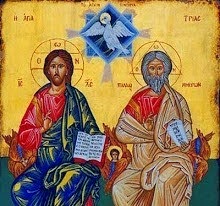
Today I'd like to start talking about some things that Christians* believe - some things that a lot of people assume are just dusty, archaic, impractical ideas that people debate for no good reason and which don't have any real significance, but which really make all the difference in the world.

[* I'm talking about "what Christians believe" here, and what I mean is what has been handed down as agreed-upon Christian doctrine from ancient times all the way up to the present; these things are shared by Roman Catholics, by Orthodox (Greek, Russian, or otherwise), by all sorts of Protestants, and even sometimes by other Christian groups outside of those broad families. These are truly ecumenical doctrines, and they are definitely not theological novelties. Speaking of these as what Christians believe isn't meant here to suggest automatically that someone who rejects some of these beliefs is therefore obviously not saved. They may very well be; they may be true disciples of Christ for all I know. But they don't hold to the historic orthodox faith, which is what I'm concerned with here.]

One thing that Christians have historically believed is the doctrine, or teaching, of creatio ex nihilo. That's a fancy Latin phrase meaning "creation out of nothing". Now, that doesn't mean that God took a big fistful of a stuff called 'nothing', and then poof! he turned it into a universe. That's crazy talk. What it does mean is this. The world has, in some sense, a beginning. Christians have often held that it had a first period of time to its existence, and in many respects it's gotten some strong scientific support from modern cosmology. So 'before' that beginning to the world, God was all there was. It's not like, pre-universe, there was God plus a lot of other stuff lying around. No, God is the only eternal reality, not God plus matter. There was nothing that just happened, lucky for God, to be there so that God could make stuff with it. When it came to creating the world, it was entirely God's decision for there to exist anything but God. If God had wanted, he was totally free to not create anything. And if he'd made that call, then eternally there would be only God - and that's it, because that's enough. (More on that in a moment.) God has no equals. Nothing but God's own self, or aspects of his own self, can be co-equal with God, because only God is a necessary being. And God did not need anything outside of himself in order to create. That's the main lesson we get from creatio ex nihilo - as opposed to the idea, which the early Christians rejected, of creatio ex materia, which would have meant that God had some matter existing eternally and independently alongside of God that he used to make the world. Like I said, there was no such matter; God made that, too. And what that teaches us is that everything that exists is dependent on God. Nothing is independent of him. We are dependent on God for our existence. God created us, and he is absolutely responsible for the fact that we exist; we are dependent and contingent and merely temporal, while God is independent and necessary and eternal. Like Christian philosopher Peter Van Inwagen said:

To say that God is the creator of all things besides himself is not to say that he formed them out of some pre-existent stuff, like the cosmic craftsman of the Timaeus. If there is a God, then there never was a chaos of prime matter that existed independently of his power and his will, waiting through an eternity of years for him to impress form on it. This could not be, for, if there is a God, nothing does or could exist independently of his will or independently of his creative power. God creates things from the ground up, ontologically speaking. His creation is, as they say, ex nihilo.1

Two other Christian philosophers have similarly noted:

For the author of Genesis 1, no preexistent material seems to be assumed, no warring gods or primordial dragons are present - only God, who is said to "create" (bara, a word used only with God as its subject and which does not presuppose a material substratum) "the heavens and the earth" (eth hassamayim we'eth ha'arets, a Hebrew expression for the totality of the world or, more simply, the universe). Moreover, this act of creation took place "in the beginning" (bereshith, used here as in Is 46:10 to indicate an absolute beginning). The author thereby implies creatio ex nihilo (creation out of nothing) in the temporal sense that God brought the universe into being without a material cause at some point in the finite past.2

So God did not need anything outside of himself to create, but Christians also believe that God did not need anything outside of himself for any other reason either - including his own happiness, or fulfillment, or for relationships. God is not just a God of love; God is essentially love. He doesn't need or require us, because everything needed for relationship, he has eternally had within his own being, within his self. What Christian teaching says that? Turns out it's a pretty famous one: the Trinity. That's right, the doctrine of the Trinity isn't just some academic thing that theologians talked about and argued over for ages simply to hear themselves talk or find something to fight over. It's actually important! It's important because, for one, it shows us that relationship isn't something that required creation. It's not as if God was forced to create because he got bored. God could never be bored because God's life is the eternally blessed communion of the Father with the Son and the Spirit, of the Son with the Father and the Spirit, and of the Spirit with the Father and the Son. And it's not as if God felt lonely; how could God feel lonely when he is, in his very character, relational within himself? So what this shows us is, first, that God does not need us for companionship or for anything else. God has everything it takes to be completely and perfectly fulfilled, and he had it eternally and necessarily. If he didn't, then he wouldn't be eternally and necessarily perfect, which is also something that Christians believe about God. What it also shows us is that God is and has always been perfect relationship in himself, from before the world began, and that when he freely chose to create a world, he created it in a way that reflects his nature. We were not made to be alone, because God is not alone. We were made to be in community because God himself is Community. And God created us so that he could enter into contingent and free relationships with us - not because he needed to, but because he freely chose to - and so that he can by grace bring us as contingent partners to share in the community of the Trinity. Think about that. God called us so that by grace we can share in the relationships that are from everlasting to everlasting, so that we can be brought into the communion of the Father and the Son and the Holy Spirit! This participation in God's inner life, as participants who have been freely invited by God from the outside, is a large part of what ancient Greek-speaking Christians - as well as Orthodox Christians today - call theosis, 'deification'/'divinization'. That doesn't mean that we become God by nature - we don't get to be omnipotent, for example, nor do we get to become the source of all things that exist, or uncreated, or anything like that - but it does mean that we get to share in some profound ways in who God is, as an act of God's grace.

Now, all those ancient heresies that some people who haven't done their history homework think were valid forms of Christian belief but were oh-so-brutally repressed by those evil orthodox Christians who wanted to control everyone? ("Help! Help! I'm being repressed!") Those heresies don't give you this. Take Sabellianism, for example. That's an ancient heresy, also known as 'modalism', that taught that there was really only one person who was God, and that when you saw the 'Father' and the 'Son' and the 'Holy Spirit' in the Bible, this was just one divine person playing a bunch of different roles, like a guy with a puppet in each hand, pretending to have real conversations with them - but really, there's only one center of consciousness there, only one person, so there's no actual relationship going on. That's what a lot of Christians mistakenly think the Trinity is, but it isn't. Jesus was not praying to himself, he was praying to a distinct person: his Father. There are real relationships between them. If Sabellianism were true, then if God hadn't created, he might well have gotten lonely; he could not have had a relationship unless he created something to have one with. And in a real sense, that would mean that God would have been in need, and therefore not perfect. And that God could never have a rich enough inner life to invite us to share in; it would forever be closed to us. Not only would that God be too small, so would the salvation he offers. Sadly, modalism of some form is still with us today in the teachings of the United Pentecostal Church International as well as other Oneness Pentecostal groups, as well as in the personal beliefs of a lot of well-meaning Christians who haven't been taught well enough to know better.

Or take Arianism, for example. This was the heresy that the Council of Nicaea fought in the year 325. Arius, a church elder from Alexandria in Egypt, taught that the Father was the uncreated God, but that the Son was a lesser created god who wasn't eternal like the Father. And because the Son was of a different essence from the Father, the Son couldn't know the Father perfectly; there are some things about God, in other words, that even Jesus doesn't get, and so he can't perfectly reveal God to us. What's worse, only God is eternally perfectly good; all other created agents can choose to fall away. What this meant for Arius was that it's theoretically possible for Jesus to rebel against the Father just like Satan did - and if he does, then say goodbye to your salvation. (Oh, and also, since only the one true God is worthy of worship, if you've ever worshipped Jesus, you're an idolater. Congratulations! The early Arians actually tried to hang on to some form of worship of Jesus, but they ultimately couldn't escape the logical consequences of their views.) And if you believe that Jesus is the Word/Reason (Logos) and Wisdom of God, like the New Testament says and the church recognized, then to believe that Jesus is a created being means that God was once totally speechless, irrational, and foolish until he created Jesus. This is why early Arians had to resort to saying that God had an uncreated Word/Wisdom as well as a created word/wisdom, and that Jesus is the second one instead of the first.

Note that this all means that Arianism has nothing better to offer than Sabellianism here. God in eternity is still a solitary individual without a robust inner life of relationship and community, and he can't bring us into a divine community by grace. Add to that all the other problems with what Arius was teaching, and you can see why the church had to make a big fuss about it! So when the Nicene Creed said that the Son is "of the same essence as the Father", using the Greek word homoousios, they were safeguarding what they knew about Jesus and his eternal relationship to the Father, as well as the fact that the church had always worshipped the Father and the Son and the Holy Spirit (which is why when some heretics decided to concede when it came to Jesus and go after the Spirit instead - they were called 'Pneumatomachians', or 'those who fight against the Spirit' - they didn't get any further). Sadly, forms of Arianism are still with us today among Jehovah's Witnesses, Christadelphians, and a bunch of other sects, as well as probably a lot of uninformed Christians in the pews.

Sabellianism can't give you a God of eternal community. Neither can Arianism. Neither can other anti-Trinitarian ideas such as tritheism, which is any belief that the Father, Son, and Holy Spirit are three totally separate gods. Aside from the fact that this is obviously not what Christians have ever believed, each of these 'gods' would be incomplete without the others. None of them has relationship within his own self, his own divine essence. And so while they might be able to invite you to join their society and become a peer, it isn't their inner life that you're entering into. And there's also the possibility that, unless they are necessarily always in agreement, they'll fight and break off their relationships - and then where would we be? But if they are necessarily in agreement, and if they do share an inner life, and if they're all co-eternal and mutually related, then really they aren't three gods but one God, just as the doctrine of the Trinity says.

None of these false theologies, these heresies, can give you what orthodox Christianity can. And in my opinion, not only is the doctrine of the Trinity better grounded in what the Bible teaches, but the doctrine of the Trinity is simply more beautiful, more promising, and more meaningful. There really are practical implications to believing in these things; don't let anyone try to tell you otherwise. Only the doctrine of the Trinity, coupled with creatio ex nihilo, speaks to you about one God who has no needs, who exists eternally as Community - which means that our relationships on earth are a reflection of something divine. And only these doctrines affirm God's true freedom, independence, and unique eternity in creating. And only these doctrines offer you the hope of being invited to participate by grace in the Community of the Father and the Son and the Holy Spirit, in which they eternally participate by nature.


1 Peter Van Inwagen, The Problem of Evil: The Gifford Lectures Delivered at the University of St Andrews in 2003 (Oxford, UK: Oxford University Press, 2006), 29.
2 J. P. Moreland and William Lane Craig, Philosophical Foundations for a Christian Worldview (Downers Grove, IL: InterVarsity Press, 2003), 554.