Sunday, June 4, 2023

An Eternal Prelude

It's time to get back to the beginning. The Bible falls into two big parts: the Old Testament and the New Testament. The twenty-seven books of the New Testament all unfold the shining splendor of the new covenant between God and his people through Christ, who makes all things new. But before the New Testament comes the Old Testament, a collection of equally inspired books that emerged as part of God's dealings with his creation before Jesus arrives in the flesh. Our Bible has thirty-nine Old Testament books, for a total of sixty-six altogether. Actually, most Christians on earth today use bigger Bibles with a few extra in the Old Testament. But all Christians agree that, just as the Bible starts with the Old Testament, so the Old Testament starts with the Books of Moses. These are called the Torah, the Law. Paul defended the gospel “both from the Law of Moses and from the Prophets” (Acts 28:23). When Jesus walked the earth, all his neighbors agreed – even if on little else! – that this collection was the core of scripture. The psalmist calls the Law “perfect” (Psalm 19:7).

But if the New Testament is built on the Old Testament, and if the rest of the Old Testament is built on the Law, none of scripture makes sense without it. And if that's true of the Law, it's extra true of the start of the Law. Because this Book of Moses is actually five books – that's why it's also sometimes called the Pentateuch, 'five scrolls.' And the first of those scrolls of Moses is a book our Jewish neighbors call after its first word, Bere'shit, but which Christians usually called by its Greek and Latin title: Genesis, 'origin.'

Some have nicknamed Genesis as “the Old Testament of the Old Testament.” It's the cornerstone of all of Scripture. There are few (if any) themes in the Bible that don't crop up for the first time in Genesis. Genesis is the seed from which everything else grows. If you were to delete Genesis and all its stories and themes from your Bible, the other pages would, more often than not, crumble to dust, unable to stand without what Genesis began. Genesis pulses and breathes and grows throughout everything that follows. Genesis tells the story of creation – where it all came from, who it's all by, what it's all for, how it all went wrong, and what's being done to fix it all. Genesis reveals who God is, what the world is, and what and who you were, are, and could be.

And that's why Genesis is worth more time than we usually give it. So we're going to give Genesis its due, give Genesis its time – especially the beginning. Starting next week, as we wade into the waters of creation, we're praying to learn all Genesis has to teach us. So we're hitting the rewind button now. Back from the world we know. Back past apostles on the move and an empty tomb, back past Calvary and Bethlehem, back through sages and prophets, priests and kings, promised lands and desert mountains, parted seas and a brother sold, wrestling matches with angels and sons tied up for sacrifice, towers and arks and floods and fields and gardens, to where we first lifted our eyes to the skies. But we're going to keep rewinding, watching in reverse as animals and plants unsay their first hello, as stars wink back out of the sky, as the earth melts away beneath our feet, as the first light retreats into the void and space and time collapse to a point. And we won't lift our finger from the rewind button 'til we leave words behind... and peer beyond the Bible's beginning.

We can reason out some clues of what we must find when we've rewound so far through the Bible that we've been thrown off the first page. We look at ourselves in the mirror, and we know we sometimes do what's good, we sometimes do what's less than good. But these standards and obligations and values aren't free-floating in the universe. They have to come from somewhere, be rooted in something. Rightness, value, our conscience – from all these, we can reason backward and upward to a Perfect Good, a Good that's the source and summit of all goodness, which causes goodness in the universe and which has the right to command right and wrong.

We look around at the universe, and if we open our eyes and ears to it, we're overwhelmed by a sense of beauty, of splendor. And that's not just in environments we find it easy to live in. Even deserts, tundras, the sea floor, the spangled skies of night – they take our breath away, even as they take our breath away. This is a world of beauty beyond all necessity, and a world of beauty-makers, of music, art, and love. And so from all this beauty we reason our way back and up beyond the universe to a Perfect Beauty, “the most beautiful of all beauty.”1

We look around us and see a consistent universe, where things don't just behave randomly, but instead conduct themselves lawfully. You drop your pen for the hundred-and-first time, and it'll fall, same as the first hundred. You can even work out the math to describe how fast it'll go, based on the gravity of the earth, because this law of creation keeps describing it. And from this lawful consistency, we reason our way backward and upward to a Power in whose hands the whole universe lies, and who guides things consistently toward their goal. As was said long ago, “the very coherence, maintenance, and governance of creation teaches us that there is a God.”2

We look around at a universe finely tuned to allow our existence, when almost any universe with randomized parameters would exclude us. If the balance of one particle to another had been just a little off, if the universe had grown a little too fast or too slow, if the strength of this or that fundamental force of physics had been a little stronger or a little weaker, stars couldn't exist, the earth couldn't exist, we couldn't exist. It had to be just right for us to exist. For it to turn out just right by chance is so inconceivably improbable as to be absurd, so from that, we reason backward and upward to an Intelligence beyond the universe which wanted us to be here.

We look around at a universe full of things that change, things that begin, that didn't have to be. You weren't always around; you had to come from somewhere. You didn't just happen; you were conceived and born – and could have not been. The same was true of your parents. The same was true of the earth you're on. The same was true of the sun our world orbits. The same was true of the atoms it's made of. The same is true, in fact, of space and time itself. These are things that begin, and could have not been. And we understand, from all these examples, that anything that begins has a cause. From that, we can reason backward and upward to a First Cause without beginning, a cause of all things, a Necessary Existence that shares being with the universe.

All of these things are as St. Paul said: “What can be known about God is plain to them, because God has shown it to them. For his invisible attributes – namely, his eternal power and divine nature – have been clearly perceived, from the creation of the world, in the things that have been made” (Romans 1:19-20). And what's more, instinctively we're made to know, even without reasoning our way there, that there is a God. To the extent we're functioning properly, without interference, we by nature are believers. As it was said a long time ago, “The knowledge that God exists has been naturally implanted within us.”3 In the words of Ecclesiastes, God “has made everything beautiful in its time” and “has put eternity into man's heart” (Ecclesiastes 3:11).

The Bible begins with those familiar words I think it's safe to say we all know: “In the beginning, God created the heavens and the earth” (Genesis 1:1). And this tells us that the root of all things isn't impersonal, isn't mechanical; the root of all things is personal. We aren't flukes reacting by accident to a cold, unfeeling world around us. We're persons living in a world that is rooted in a personality, and it's to that personality that we're called to respond with our lives. But in the creation stories told by many of Israel's neighbors, they first had to narrate where their gods came from, because those gods were just part of the universe they saw around them. That's definitely not the case with the God we meet in the first line of Genesis. He isn't part of the world. The word used for 'God' here is plural for the sake of intensity, but all the verbs are singular. There's only one God. “God must be one,” the early Christians argued, “because that which is God is supreme, but nothing can be supreme save that which is unique.”4 There a unique supreme God who is beyond the universe, not part of it.

Unlike the many gods mentioned in pagan creation stories, this unique supreme God was actually already there in the beginning, already there 'before' the beginning. But God had no beginning. The early Christians said that “there was nothing co-eval with God: he was his own locus, he lacked nothing, he existed before the ages.”5 Matter and energy had a beginning. Space and time had a beginning. For “before the beginning of time, there was no time. God, after all, made times...”6 And in that eternal state with no space or time, God is still there. Isaiah calls him “the One who is high and lifted up, who inhabits eternity” (Isaiah 57:15).

See, God didn't have to create. He chose to create, but he didn't have to. There didn't have to be things, didn't have to be space and time.  There's an old turn of phrase: “And who is he when he's at home?” Who is that person – and who is he really, when nobody else is around? Well, who is God when he's at home in eternity? Who is God when he's home alone without a world?

For starters, God is existence itself. “There is nothing more characteristic of God than to be.”7 “God... is not only his own essence, but also his own existence.”8 God doesn't just fit in the class of things that exist. He's not merely the first thing there is. He's not even an eternal thing. He's more than a being; he is being, he's existence as such, existence that doesn't need to be qualified. He's also goodness itself. He exists by nature, he has every perfection there could be, he's the ultimate goal of anything that exists – and there's no goodness better than that. So God himself is the standard by which anything could be said to be good.9

God has been called “a good which is alone simple, and therefore alone is immutable.”10 God isn't made of parts, isn't made of matter, isn't subject to change. His existence and his life have no limits at all. That's what eternity is all about: God has the instantaneously-whole and total possession of unending life. God doesn't experience his life piece by piece, like we do; God has it all at once. And this unchangeable fullness explains why, if God makes times and places, he could never be distant from any place or any time. “God is... not within a place, for he himself is his own place, filling all things and transcending all things...”11

So in eternity, God is existence itself, goodness itself, immaterial and immutable and simple, unlimited by place or time or anything, having his whole life in one instantaneously total possession of himself. And if his existence can't be qualified or limited, then neither can his knowledge. God “has knowledge in the highest degree,” because “God knows himself through himself.”12 Because God knows himself perfectly, and because anything else that even could exist would have to come from him, God knows everything that could or would ever happen if he creates. There is nothing God doesn't eternally know. “Oh, the depth of the... knowledge of God!” (Romans 11:33). And just the same, God's power can't be qualified or limited. “God's active power is infinite,” for “his power has no limits.”13 God, knowing all things, has power enough for all things. There's nothing he cannot do. “The surpassing power belongs to God” (2 Corinthians 4:7). “Holy, holy, holy is the Lord God Almighty, who was and is and is to come!” (Revelation 4:8).

Learning from reason and revelation, one early Christian described God like this: “God is... an ever-abiding nature without beginning and without end, immortal, perfect, and incomprehensible. … There exists no one stronger than he. … He is altogether wisdom and understanding, and in him stands fast all that exists. … He doesn't require anything from anyone, but all living creatures stand in need of him.”14 Another early Christian explained that “the form of God is ineffable and inexpressible..., for he is in glory uncontainable, in greatness incomprehensible, in loftiness inconceivable, in strength incomparable, in wisdom unteachable, in goodness inimitable, in beneficence inexpressible.”15 You'll notice a common theme there: all the words that start with 'in-' or 'im-' or 'un-.' The most startling thing about God is his beyondness. Another Christian writer once said: “Arouse your understanding and seek to comprehend the totality of God in your mind; you hold on to nothing. This totality of God always has something over and above your power of comprehension. … In speaking of him, even speech is silent.”16 Anything we say about God is at best an analogy. We may reason our way to his doorstep, may learn what he chooses to reveal, but he's infinitely more than any created mind can get around.

Another thing worth saying about God in his eternity, even if only by analogy, is that he's happy. One theologian defined happiness as “the perfection of an intelligent being conscious of its plenitude in the good it holds.”17 That is, happiness is what you have when you've got something good, it's fully good, you can't lose it, and you know it. Well, God has himself, the Perfect Good, infinitely and can never lose himself, and he knows it. So “happiness is God's above all,” for “whatever is desirable in any happiness whatever... wholly and most highly pre-exists in divine happiness.”18 God, in being God, is eternally happier than any moment of happiness any of us has ever experienced. And so even had he not created anything at all, he could not have been lonely.

He wouldn't have been lonely because God alone is never alone in himself. One of the most profound lines in the Bible seems like the simplest: “God is love” (1 John 4:8). It's not just that God loves, as if love were an act he happens to do. It's not just that God is the most loving of all, either. But love is the word that characterizes most perfectly who and what God eternally is. Now, here's the thing: if God is eternally and essentially Love, then who does God love when God's at home alone? Who would God be loving if God never created?

I'll tell you. Eternally, God thinks lovingly about himself, and the thought he has about himself is himself. And that perfect thought is called the Word. And the Word is a fully divine reality, is God's eternal reflection of God. “In the beginning was the Word, and the Word was with God, and the Word was God,” John tells us (John 1:1). God generates the Word eternally, so we call the Word also the Son. And the Word or Son is “eternally begotten of the Father before all ages, true God from true God, begotten but not made, of the same essence as the Father.”19 Equally eternally, the Father and the Son breathe forth their Spirit through their love for each other. How? It's incomprehensible, a mystery. But, as one modern teacher summed it up well, “there must exist a love in God that transcends the mere love of mutual happiness, and this can transpire only if there are three persons in God, where the first two persons share in a self-less love of the third person.”20

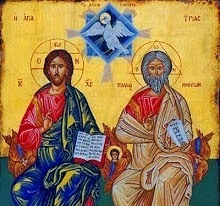
So as Christians, “we believe in one true God – the Father and the Son and the Holy Spirit..., the one Trinity..., one indivisible and undifferentiated substance, strength, power, and majesty.”21 We say God is Love because God, alone in eternity, is not alone within himself, because he is the Trinity: the Father and the Son and the Holy Spirit, each of whom is entirely the one God. The Father, Son, and Holy Spirit share the one Love that God is. These three distinct persons in one God are one and the same power, one and the same goodness, one and the same happiness, one and the same eternal life. And none of that depends on creation. Had God not created, God would still have eternally been this supremely happy, eternally good life of internally shared love.

But this triune God is worthy of worship and glory even if there's no one outside them to give them. Because this worthiness doesn't come from anything God freely chooses to do, including create. Jesus says he and his Father shared “glory... before the world existed” (John 17:5), glorifying each other (with the Spirit) in the timeless, spaceless eternity where there was only God. That's what they did in eternity: glorify and love each other. And if God creates, then that creation is the free overflow of God's glorious love outward from himself, calling things into existence by sharing his love and goodness with them in their measures, so that we – in knowing, loving, and glorifying Father, Son, and Holy Spirit – can reach our highest goodness and happiness in him. And that, we'll begin to explore next Sunday. But we've said this today, on Trinity Sunday, because apart from a disposition of faith in this God who is Existence, Goodness, Life, Knowledge, Power, Happiness, Love, and Glory, this God revealed as Father and Son and Holy Spirit, Genesis – or anything else in the Bible – would be totally senseless. But in glimpsing this God, we're now prepared to read it all. So for today, we stand at the dawn of Genesis and peer back in absolute awe at this eternal “God in three persons, blessed Trinity!” Amen.

Sunday, May 21, 2023

Made Like Him, Like Him We Rise

Though angels lectured to them, they still just couldn't help stare at the clouds. Before their very eyes, their best friend had just minutes ago begun to hover, ever so slightly distancing himself from the ground, then higher and higher, until a cloud had separated him from view. And, once out of sight, he'd crossed the threshold between the realm of mortals and the realm of the divine. The next day would begin nine days of persistent prayer in this earthly Jerusalem. And the tenth? Oh, they couldn't even begin to imagine what was to arrive on the tenth.

Did they understand, these disciples, just what the ascension of the Lord Jesus into heaven meant for them? For from the beginning, their own great-grand-disciples would say, humanity was meant to so mature in paradise in the love of God that they would from there “ascend into heaven.”1 Ascension into heaven, they believed, was the climax of God's plan for Adam and Eve. But then we said, in a spirit of arrogant un-love stoked by the tempter: “I will ascend above the heights of the clouds; I will make myself like the Most High!” (Isaiah 14:14). And so we were cast down, and the heavens were closed to us. At last, though, promises were made to Abraham of children like the stars he saw in heaven (Genesis 15:5), and his grandson Jacob dreamed of a ladder that could reach heaven (Genesis 28:12). When Jacob was renamed Israel and his children became a nation, God descended and Moses ascended to a midpoint at a mountaintop (Exodus 19:20); but the rest of Israel was “afraid... and did not go up” (Deuteronomy 5:5). Even this halfway hint of ascension would have to wait.

Centuries whizzed by, and though Israel grew, they fractured, divided, fell, crumbled, and lost their kingdom. A remnant would eventually return to their historic land, under the thumb of one or another nation, and always be left to ask when the Lord might “restore the kingdom to Israel,” the kingdom of heaven on earth (Acts 1:6). In the fullness of time, it was into this state of Israel's oppression that God the Son “came down from heaven” (John 6:41) – “the leader of the heavenly host, lingering in earthly places.”2 Since earth couldn't raise its eyes to heaven, heaven bent down to kiss earth. Through the hands of a kingdomless priesthood and their oppressor nations working in tandem, heaven-on-earth was nailed to a cross. The Heavenly One was put to death above the cold, cold earth. Yes, for our sakes and by our hands, God himself “descended to the lower parts of the earth,” buried in a tomb, was dropped into the cracks of creation forged by death (Ephesians 4:9). But it just wasn't possible for death to keep its grip on him (Acts 2:24). He stood up from his grave and walked free.

Returning joyfully to his disciples, his friends, over the next forty days “he opened their minds to understand the Scriptures” (Luke 24:45). Declaring that all authority over creation was in his hands, he directed them to go disciple the nations, “baptizing them in the name of the Father and of the Son and of the Holy Spirit, and teaching them to observe all that I have commanded you” (Matthew 28:19-20). But first, wait for power. Then, “lifting up his hands, he blessed them” (Luke 24:50), and “while he blessed them, he parted from them and was carried up into heaven” (Luke 24:51), “and a cloud took him out of their sight” (Acts 1:9). Now he is a “high priest” who's “holy, innocent, unstained, separated from sinners, and exalted above the heavens” (Hebrews 7:26). And, incredibly, that's for our sake: “he exalts himself to show mercy to you” (Isaiah 30:18). In mercy, “Christ has entered... into heaven itself, now to appear in the presence of God on our behalf” (Hebrews 9:24).

Everything we've been talking about this year so far is only possible because Jesus ascended into heaven. We're on a great human journey, we said, but it must be a supernatural journey, and thanks to the fall, not only did we forfeit that first grace, but we wounded our nature too badly to move. What we need is to be born again “of water and the Spirit” (John 3:5). That's why among the final words of Jesus was the command for the first leaders of the Church to get busy baptizing. “We were buried therefore with him by baptism into death, in order that, just as Christ was raised from the dead by the glory of the Father, we too might walk in newness of life” (Romans 6:4). So “you have died, and your [new] life is hidden with Christ in God” (Colossians 3:3). But that can only happen because Christ is ascended, hidden in God in heaven above, anchoring the direction of our life.

Not only that, but Jesus explained that “it is to your advantage that I go away, for if I do not go away, the [Holy Spirit] will not come to you; but if I go, I will send him to you” (John 16:7). “Being therefore exalted at the right hand of God, and having received from the Father the promise of the Holy Spirit, he has poured out this” Holy Spirit onto the earth (Acts 2:33). It's only because Christ ascended that we can be “born of water and the Spirit” (John 3:5). “Repent and be baptized, every one of you, in the name of Jesus Christ for the forgiveness of your sins, and you will receive the gift of the Holy Spirit,” preached Peter (Acts 2:38).

And not only does the Spirit apply the ascended Christ's sacrifice and victory to us, to forgive our sins and make us new, but as a gift, he installs supernatural powers into us. We talked this year about some of these, like the theological virtues of faith and hope and love, and all the infused goodness of moral virtues like fortitude and temperance and justice and prudence, and spiritual gifts of wisdom and understanding and counsel and fortitude and knowledge and piety and the fear of the Lord. All those, in seed form at least, are yours the minute you come to be in Christ – and they're the stuff heavenly life is made from. All we need is to hold onto them, grow in them, let them power our way. See, “if, then, you have been raised with Christ,” then you are obligated to “seek” (Colossians 3:1), to “grow in the grace and knowledge of our Lord and Savior Jesus Christ” (2 Peter 3:18), to “grow up in every way... into Christ” (Ephesians 4:15). That's a call to exercise these supernatural powers of virtue, to put them into practice, because then God will spread them throughout your life and root them even more deeply in your soul and fill you up with them, and draw you thereby closer to him, so that you do grow up in every way into Christ. This year, we've been talking about acts that cooperate with God in that.

One action that puts your supernatural powers to work is worship – what you do when you come here each and every Sunday, when you don't refuse God's call. “You shall worship the Lord your God” (Luke 4:8), “worship the LORD in the splendor of holiness” (Psalm 29:2). And this worship is invariably a heaven-aimed act, because the One we're worshipping is in heaven. The Bible describes people who “went up to worship” (John 12:20; Acts 24:11), and records prophecies that even distant nations “shall go up... to worship... the LORD of Hosts” (Zechariah 14:16). A song of worship on the way “to go to the House of the Lord” was labeled “a song of ascents” (Psalm 122:1). And now “we worship by the Spirit of God” poured down by the ascended Christ from heaven (Philippians 3:3). It's only by orienting ourselves upwards toward a Heavenly Jerusalem, only by identifying ourselves with that “church of the firstborn enrolled in heaven” (Hebrews 12:23), that we can “offer to God acceptable worship, with reverence and awe” (Hebrews 12:28). A supreme moment of grace!

At the summit of that worship, we find that “the bread of God is he who comes down from heaven and gives life to the world” (John 6:33). Jesus explained in advance that “unless you eat the flesh of the Son of Man and drink his blood, you have no life in you. … Whoever feeds on my flesh and drinks my blood abides in me, and I in him” (John 6:53, 56). And to those who were shocked by this graphic teaching, he didn't wave it away as a mere metaphor. “Do you take offense at this? Then what if you were to see the Son of Man ascending to where he was before?” (John 6:61-62). Jesus links his gift of his own flesh and blood, which we commune in at the eucharist, to his ascension – for a sacrifice is only complete when it ascends to God. It's the completed sacrifice – the flesh and blood of the ascended Jesus – that, locally present in heaven, is made sacramentally present to us on earth, so that we've now “tasted of the heavenly gift” (Hebrews 6:4). And Hebrews explains that it's through this flesh and blood of Jesus, the same we eat and drink from the altar, that “a new and living way” is “opened for us” so we can “enter the holy places” of heaven (Hebrews 10:19-20). Here, eating is exercise. The flesh and blood of the ascended Christ are vital gifts to strengthen our supernatural powers and open a way to heaven.

A third action that builds your supernatural powers is reading the Scriptures, which are there to inform your faith, awaken your hope, and deepen your love. These Scriptures have been “breathed out by God, and are profitable for... training in righteousness” (2 Timothy 3:16). Not long before he ascended, Jesus was spending his time opening up the Scriptures to his disciples. Nor did the ascension put a stop to it. Through the Spirit he poured down, he's continued to guide his church “into all the truth” (John 16:13). The Spirit is only relaying the teaching of Jesus, not through new revelations, but through deepened exploration of everything Jesus taught. And that includes learning to see through Scripture in the four ways we discussed the other week. The words of the Bible have their literal sense, the things they historically referred to. But those things themselves are packed with deeper meaning. This gives Scripture an allegorical sense, where every page in the Bible reveals the mystery of Christ and his Church. It gives Scripture a tropological or moral sense, where every page in the Bible reveals the mystery of Christ at work in your soul. And it gives Scripture an anagogical sense, a sense leading up, so every page in the Bible leads us to the threshold of heaven and what's in store for us in Christ.

A fourth action that builds your supernatural powers and puts them to use is prayer. But for that, too, thank the Christ who ascended. It's only through the ascended Christ that “we... have access in one Spirit to the Father” (Ephesians 2:18). Our feeble prayers only gain strength because Christ ascended “to the right hand of God..., interceding for us,” making our prayers complete in his own (Romans 8:34). The psalmist had already asked, “Let my prayer be counted as incense before you” (Psalm 141:2), and so Revelation pictures how angels in heaven collect “golden bowls full of incense, which are the prayers of the saints” (Revelation 5:8), “and the smoke of the incense, with the prayers of the saints, rose before God” (Revelation 8:4). Our prayers now follow the pathway Jesus marked out in his ascent into heaven; our prayers also must ascend to heaven, like incense or smoke from the sacrificial altar. Every time we offer God prayer, an ascension is happening, patterned after the ascension of Jesus. “Through union with God in prayer, our very nature is changed from earthly to heavenly.”3

A fifth action that builds your supernatural powers and puts them to use is fasting, including any other penitential disciplines. The psalmist professes, “I wept and humbled my soul with fasting” (Psalm 69:10), and to such a sincere display, God replies: “Your heart was penitent, and you humbled yourself before the LORD..., and you have torn your clothes and wept before me; I also have heard you, declared the LORD” (2 Kings 22:19). These disciplines of fasting were hallmarks of the angelic life on earth, taking God more seriously but ourselves lightly enough to fly.4 Jesus assured his disciples that “your Father who sees in secret will reward you” for your fasting (Matthew 6:18). Reward them with what? With fresh grace to draw them up! For it's written: “The LORD lifts up the humble” (Psalm 147:6), so Jesus declares, “Whoever humbles himself will be exalted” (Matthew 23:12). Humbling ourselves in fasting is an occasion for exaltation – it's a kind of ascension training.

But to “fast only to quarrel and fight... will not make your voice heard on high” (Isaiah 58:4). It's a different sort of fast that God chooses (Isaiah 58:5-7). The sixth sort of action that builds your supernatural powers and puts them to use is mercy. Over the past couple weeks, we've talked about fourteen works of mercy. There's the seven spiritual works of mercy: instructing the ignorant, counseling the doubtful, comforting the sorrowful, admonishing the sinful, bearing wrongs patiently, forgiving offenses, and interceding in prayer. And beneath these, not quite as important but a close runner-up, are the seven corporal works of mercy: feeding the hungry, giving drink to the thirsty, clothing the naked, harboring the harborless, tending the sick, visiting or freeing the prisoner, and burying the dead. These sort of things, done as exercises of love (which is a supernatural power in you!) and with an eye toward God, have a tremendous impact on your soul. Because “the LORD is good to all, and his mercy is over all that he has made” (Psalm 145:9). Just so, Christ ascended to be “a merciful... high priest in the service of God” in heaven (Hebrews 2:17). Acts of mercy conform us to the image of this ascended Christ. Mercy alone lets someone “dwell in the House of the Lord forever” (Psalm 23:6) – even you.

And the seventh class of action that builds your supernatural powers and puts them to use is simply our journey together, as we stick together and train in righteousness, in holiness, in godliness. It's “the whole body, nourished and knit together,” that “grows with a growth that is from God,” Paul tells us (Colossians 2:19). “The whole structure, being joined together, grows into a holy temple to the Lord. In him you also are being built together into a dwelling place for God by the Spirit” (Ephesians 2:21-22). And it's only as “held together” and functioning together that “makes the body grow so that it builds itself up in love” (Ephesians 4:16). So every time any member of the body pursues righteousness, holiness, godliness, it benefits the body as a whole, it welcomes God's gift of whole-body growth. And thus is the Body filled more and more with the Spirit who overflows from heaven. Our very togetherness, in the context of pursuing godliness, opens that to us! It's together that we're all sharers in a heavenly invitation to our heavenly homeland (Hebrews 3:1; 11:16).

For Christ our Lord has, as we celebrate, “ascended far above all the heavens, that he might fill all things” (Ephesians 4:10). And he is determined that our great human journey should climax in us being assumed in his wake, carried up by the force of his ascent, pulled up in and with and by him to the face of God his Father. This is the very force of grace that works itself out in our great human journey, when we act out of our supernatural powers. They're all Jesus' ascension working in us! As Charles Wesley puts it: “Soar we now where Christ has led, / following our exalted Head: / Made like him, like him we rise – / ours the cross, the grave, the skies!”5

For the time will come when all journeys must be brought to an end, successfully or not. The time will come when “this Jesus, who was taken up from you into heaven, will come in the same way as you saw him go into heaven” (Acts 1:11), appearing again “to save those who are eagerly waiting for him” (Hebrews 9:28). “The Lord himself will descend from heaven with a cry of command” to raise the dead (1 Thessalonians 4:16). When he does, those who live, those who are yet pursuing their great human journey on earth at that very hour, will be “caught up... to meet the Lord in the air, and so we will always be with the Lord” (1 Thessalonians 4:17). So too, those who are raised in the grace of God, whose souls had already approached their good destination, will in body also “bear the image of the Heavenly One” (1 Corinthians 15:49).

Thus, “when Christ who is your life appears, then you also will appear with him in glory” (Colossians 3:4). It's in being manifested in his glory that, “seeing him as he is... when he appears, we shall be like him” (1 John 3:2) – and that's our goal. The early church confessed that this was the whole reason why God sent us Jesus in the first place: “God wanted his Firstborn Word to descend into his creation and be held by it, and, in turn, for the creation to hold the Word and ascend to him, thus surpassing the angels and coming to be in the image and likeness of God.”6 For the entire creation to be conformed to God, transformed so that divine glory trickles down and soaks all things through, so that the universe itself is assumed into heaven, and all things find their share of “the freedom of the glory of the children of God” (Romans 8:21)... Well, that can only mean that we, seeing God as he is, are then so like him that we radiate him perfectly through everything. It's conformity to the ascended Christ that makes our ascension, creation's ascension, what it will be.

And that's why it matters so deeply that we even now “seek the things that are above, where Christ is, seated at the right hand of God. Set your minds on things that are above, not on things that are on earth” (Colossians 3:1-2). “Ever upward let us move, / wafted on the wings of love, / looking when our Lord shall come, / longing, gasping after home.”7 Yes, one day, Jerusalem our Golden Home will descend from heaven – because creation, being caught up into heaven, into God, will become one with it. And that will mean us finding our perfect union with God, transformed into the likeness of God more drastically than we dream, as we ascend with Christ and make him, by grace, all our own, and us all his. That's the destination, not just of the great human journey, but of the great universal journey. And God wants you – yes, you – to ascend to such fullness of glory in Christ.

So may “the Lord rescue [you] from every evil deed and bring [you] safely into his heavenly kingdom” (2 Timothy 4:18), and lift you up before his face of glory, and unveil your eyes to the glory, and change you into the glory, and thus fulfill you completely and supernaturally for eternity with himself. I'll close with a bit more good ol' Wesley to cap us off: “Risen with him, we upward move, / still we seek the things above, / still pursue and kiss the Son, / seated on his Father's throne. // Scarce on earth a thought bestow, / dead to all we leave below: / heaven our aim and loved abode, / hid our life with Christ in God! // Hid till Christ our Life appear, / glorious in his members here: / joined to him, we then shall shine / all immortal, all divine!”8 Amen!

Sunday, May 14, 2023

Mercy in Heart and Soul

As we've been exploring this great human journey that's meant to lead us to seeing God as he is, and so being made like him in ways we can't begin to imagine, we've been talking about steps we can take by God's grace to get further on that journey. Some of those bigger steps are what we called 'spiritual activities,' like spending time with God in pious actions like prayer, Bible reading, and worship in the church. But last Sunday, we had to expand our idea of 'spiritual activities' to include works of mercy. Mercy, all over God's word, is a vitally important quality of God. When God expresses his core identity to Moses, he announces his name as “the LORD, the LORD, a God merciful and gracious” (Exodus 34:6). He's “rich in mercy” (Ephesians 2:4), “the Father of mercies” (2 Corinthians 1:3). And so what does Jesus insist of us? “Be merciful, even as your Father is merciful” (Luke 6:36). The Good Samaritan was an exemplar of mercy in the Father's image, and so Jesus declared, “You go and do likewise” (Luke 10:37). To do like the Good Samaritan is to do works of mercy.

To help us figure out how, we saw last Sunday how the Church by the Middle Ages, building on the words of Jesus in Matthew 25, came up with a list of seven works of mercy – seven ways to obey the command of Jesus, imitate our Father, and therefore advance closer to his heart and so to his face, which is our destination. One of those works was to feed the hungry. Another was to give the thirsty something to drink. A third was to clothe the naked. A fourth was to harbor the harborless – show hospitality, provide shelter. A fifth was to tend to the sick. And it's important today to note, as an aside, that so far, these are all works that must routinely be carried out by parents for their children. A father's role, a mother's role, invariably calls for at least five of these works on a daily basis. A mother of a little child must feed her hungry child, must give her thirsty child something to drink, must provide clothes for her child, must ensure there's a roof over the child's head, must tend her child when he or she is sick. Sadder is when a mother is called upon to do the sixth or seventh works of mercy for her child. For the sixth work of mercy is to set free the captive, or to visit the prisoner. And the seventh work of mercy is to bury the dead. Whether a maternal work or not, these are the seven things we do as acts of mercy for people around us who have need of them – and if we seek, if we look, we'll find the need. Be merciful.

Last Sunday, though, we briefly clarified that this list of seven was the seven corporal works of mercy – and the word 'corporal' means 'bodily.' These are seven works of mercy we do with and for bodies, for the life of the body. It's the body that gets hungry and needs food, it's the body that gets thirsty and needs water, the body that shivers when naked and needs clothes, the body that's in danger without shelter, the body that grows sick and needs tending, the body that lands behind bars and needs liberation or support, the body that dies and requires dignified treatment in death. The Good Samaritan came across a potential enemy in his hour of greatest bodily need, yet went out of his way to ensure that all his bodily needs for maintenance and restoration were met.

But why did Christians have to specify that these were seven 'corporal' works of mercy? Because there's more to us than just our bodies. A lot more, in fact! And so, just as they drew on the Bible to come up with seven corporal works of mercy, by the Middle Ages they'd also put together a biblical list of seven spiritual works of mercy – seven things we do to imitate our Father, not in the service of people's bodies, but in the service of their minds and hearts and souls. These are merciful acts that help our neighbors on the inside, not just the outside.1

Today, as sometimes in other ages, there's a tendency in some parts of the church to privilege corporal works of mercy as the only true sign of Christian ministry to our neighbors. And, of course, it's indispensable. We can't not feed the hungry, help the homeless, and so on. But if our idea of mercy is limited to those corporal works, we're imbalanced as Christians. Because not only is there more to life than the body's needs, but Jesus said some pretty clear things about priorities. He warned against “fearing those who kill the body but cannot kill the soul” (Matthew 10:28). Things that endanger just the body – like hunger, thirst, nakedness, homelessness, sickness, imprisonment, death – aren't nearly as dangerous as things that put the soul and mind and heart at risk. Indeed, “what does it profit a man to gain the whole world” – to have all your bodily needs met – “and forfeit his soul?” (Mark 8:36). And the answer is, nothing. That would be a losing bargain. Christians have always understood that, as valuable and precious as the life of the body is, the life of the soul is even more important. Which means the spiritual works of mercy are even more important than the corporal ones.

So when these lists of seven spiritual works of mercy started circulating, the first one listed was instructing the ignorant. Just like people's bodies need to be fed with nutritious things, so do people's minds need to be fed with informative things. A starving mind is as big a deficit, in the big picture, as a starving stomach. And in any age, people's minds are starving for knowledge. So it's a work of mercy to feed them knowledge. Any kind of teaching of true things to people is a benefit for their starving minds. What do you know about the world? If you know it, pass it on to those who don't. You can probably see again here how it's part of a parent's job, even a mother's job, to do this for her children – teach them how to read, teach them why the sky's blue, try to answer all those incessant whys that a child's hungry mind churns forth so inevitably. We give of what's been given to us – what we've been taught that's true, we pass along to others, including our children, but not limited to them. That's why the work of teachers and tutors is so important. And there's no limit of truth about the world that can be learned and passed along, especially to those who crave to know and grow.

But the natural world and the social world aren't all there is to tell the truth about. There's also the spiritual one. And that's the most important of all. Better even than knowing why the sky's blue is knowing that the sky was made by a God of wisdom, love, and power. Better even than knowing how to read is knowing how to read the word of the Lord. And so when an Ethiopian court official was riding in his chariot, reading the scroll of Isaiah but admitting he couldn't understand it without guidance, “Philip opened his mouth and, beginning with this scripture, he told him the good news about Jesus” (Acts 8:35). And even though Apollos “spoke and taught accurately the things concerning Jesus” (Acts 18:25), still “when Priscilla and Aquila heard him, they took him aside and explained to him the way of God more accurately” (Acts 18:26). They fleshed out the big picture even more, expanding Apollos' view. Apollos needed advanced teaching; the Ethiopian official needed basics of the gospel – but both needed spiritual knowledge, and Priscilla and Philip did works of mercy in supplying it.

Ideally, mothers will do the same. Timothy, described in Acts as “the son of a Jewish woman who was a believer, but his father was a Greek” (Acts 16:1), inherited his sincere faith from his grandmother Lois and his mother Eunice (2 Timothy 1:5), and so “from childhood” they made him “acquainted with the sacred writings which are able to make you wise for salvation through faith in Christ Jesus” (2 Timothy 3:15). And in the fourth century, one of the great Christian heroes we mentioned last Sunday, Basil – an incredible theologian and teacher as well – credited much of that to his grandma Macrina, a disciple of one of the great Christian heroes of her own time, Gregory the Wonder-Worker. Macrina “molded and formed us, while still young, in the doctrines of piety,” Basil said.2 She was little Basil's evangelist, just as Lois and Eunice were to little Timothy.

And evangelism – teaching people the good news about Jesus, as Philip did – is maybe the most central way to carry out this first spiritual work of mercy. Instinctively, we should recognize that – that sharing the gospel with someone is so vital. I'm not sure we usually think of it under the umbrella of mercy, but it is. It is a merciful thing, just like feeding the hungry, to evangelize those who need to know about Jesus. And just as that foundational teaching about Jesus is a work of mercy to give, so is teaching the Bible, teaching theology, teaching the riches of the church, as Priscilla did for Apollos, as Macrina did for Basil, and as Paul did for Timothy and for so many others. But to whatever degree we're equipped, we're all called to this work of mercy.

A second spiritual work of mercy we can do is called 'counseling the doubtful.' And one general way to do it is by giving people practical advice when they need it. Sometimes, people have doubts about God's love, or about their own worth or importance or ability to thrive or just to survive. Reassure them. Sometimes, people aren't sure what course they should take. Should I apply for this new job? Is this person right for me? Am I living well? People have questions like that, all the time. And they're doubtful about which direction to go. If they're open to it, and especially if they ask for it, you can counsel them. To do so, and so to help alleviate that paralysis of indecision and doubt, is a work of mercy. Just so is it a work of mercy to encourage someone to persevere when they need to press on. That goes double for when it's persevering in Christ. Sometimes Paul's tours were evangelistic, but sometimes he did tours for “strengthening the souls of the disciples, encouraging them to continue in the faith” (Acts 14:22). Paul tells us to “encourage one another and build one another up” (1 Thessalonians 5:11), to “encourage the fainthearted” and “help the weak” (1 Thessalonians 5:14).

A third spiritual work of mercy is comforting the sorrowful. This one shouldn't be tough to understand, because we all know what it's like to grieve and be in need of comfort and consolation – to be accompanied in our inner suffering of heart. Maybe we didn't need words, or maybe there were no words that could help, but we needed a listening ear or a silent companion whose very presence reminds us that we aren't alone, that we're loved, that we'll get through this. A mother often needs to comfort her sorrowing children, because even though their hurts may not always make sense to an adult perspective, they're still very real and very painful on a child's scale set by a brain yet in formation. And we often need to comfort and console each other through difficult times – a frightening dread, a difficult diagnosis, a wounding loss, a grievous pain. Paul says that God “comforts us in all our affliction so that we may be able to comfort those who are in any affliction with the comfort with which we ourselves are comforted by God” (2 Corinthians 13:4). Seven verses later, he turns it into a commandment: “Comfort one another” (2 Corinthians 13:11). To comfort those who are hurting, grieving, sorrowing, scared – the moment we even think about it, we know it's a work of mercy, and an important one. Be a giver of comfort.

The next spiritual work of mercy, though, might catch us off guard, because it doesn't feel like it fits in so well with these first three I've described. Because it's also a work of mercy to admonish the sinful. This one can get tricky and complicated, especially in a culture where 'judge not' is so deeply woven into our reflexes. But let's think about this. If someone is sinning, is that sin good for them? Obviously not. Because our ultimate good is God himself. Any sin a person commits, whether they're a Christian or not, is a hindrance on their great human journey, even if they haven't really started that journey yet, because it will tend to entrench bad habits that can persist as obstacles even when they do get evangelized and baptized and sent forth to seek the face of God. And if a person is a Christian, sin is still a hindrance. It doesn't just bounce off of us. It can shipwreck us, derail us, send us on a detour, or at least trip us up and slow us way down. It is not good for someone to sin.

From that, it follows that it is good for someone to not sin, for someone to avoid sin or turn back in repentance from sin. And helping someone to get what is good for them isn't a bad definition for a work of mercy. Helping a sick body get better by tending to them is a work of mercy; so is helping a sick soul. Jesus frequently rebuked his disciples when they needed it (Luke 9:55). He tells them, too: “If your brother sins, rebuke him” (Luke 17:3). Paul directs Timothy, in Timothy's capacity as a pastor, to “reprove, rebuke, and exhort” (2 Timothy 4:2), and, even more strongly: “As for those who persist in sin, rebuke them in the presence of all, so that the rest may stand in fear” (1 Timothy 5:20). But it's to all of us that James is speaking when he says, “If anyone among you wanders from the truth and someone brings him back, let him know that whoever brings back a sinner from his wandering will save his soul from death and will cover a multitude of sins” (James 5:19-20).

Now, obviously this can be done the wrong way. You don't improve the health of a sick body by running up and shouting a list of prescriptions at them. If there's one thing the years of pandemic reminded us, it's how little people like to be condescended to about their healthcare. Indeed, even the gentlest approach on the street – “hello ma'am, I noticed you seem to have a nasty cough, have you considered this brand of cough syrup?” – is bound to come across as alienating, awkward, and probably won't actually improve that person's health. The same is true when it comes to ambushing people about their sins. Proverbs warns, “Do not reprove a scoffer, or he will hate you” (Proverbs 9:8). All this to say, be careful. Don't be condescending or self-righteous, angry or judgmental. Be sensitive to whether it's the right time, place, and person. But, gently and lovingly, it remains a work of mercy to admonish people against their sins. And you never know! As Paul writes, “God may perhaps grant them repentance” so as to “escape from the snare of the devil” (2 Timothy 2:25-26).

A fifth work of mercy may become especially important after doing the fourth, and it's to bear wrongs patiently. Sometimes in life, people won't treat you well. They may be thoughtless toward you, not considering the self-centeredness of the way they behave. They may manipulate you to their own ends. They may be cruel toward you in unkind words and deeds. They may even betray you. Or they may just have some very annoying habits that really get on your nerves. But bearing any of these things patiently and charitably is a work of mercy.

Jesus is our example, as Peter says: “When he was reviled, he did not revile in return; when he suffered, he did not threaten, but continued entrusting himself to the One who judges justly” (1 Peter 2:23). Just the same, Paul urges us to live “with all humility and gentleness, with patience, bearing with one another in love” (Ephesians 4:2). James begs us to “not grumble against one another” (James 5:9). Peter reminds us: “This is a gracious thing, when, mindful of God, one endures sorrows while suffering unjustly” (1 Peter 2:19). And if that goes for outright persecution, as Peter has in mind, then it goes for these lesser things we have to put up with. Maybe your child doesn't call today, or your mother doesn't make time for you. To bear that patiently is a work of mercy toward her. Jesus bore patiently even the lips of Judas Iscariot and the taunts and beatings from the Roman soldiers. He bears patiently our sins every day. We can learn from him to bear with each other's faults and foibles, however aggravating or hurtful they may be. Such mercy heals our families, our nation, our world.

A sixth spiritual work of mercy is something else Jesus talks about a lot, and it's forgiveness. Forgiveness is to release people from their indebtedness to us, including the debts they incur when they wrong us and treat us in ways that fall short of what we're owed. We all fall short in some way, and some fall short pretty significantly. We know that's true in how we treat our Lord, for “all have sinned and fall short of the glory of God” (Romans 8:28). And yet God says through his prophet, “I will forgive all the guilt of their sin and rebellion against me” (Jeremiah 33:8). Jesus assured his disciples that “everyone who speaks a word against the Son of Man will be forgiven” (Luke 12:10), and when nailed to the cross, he offered radical forgiveness to those who crucified him (Luke 23:34). Jesus insists we learn from him: “If your brother repents, forgive him, and if he sins against you seven times in the day, and turns to you seven times, saying 'I repent,' you must forgive him” (Luke 17:3-4). “Whenever you stand praying, forgive, if you have anything against anyone, so that your Father who is in heaven may forgive you your trespasses” (Mark 11:25). “If you do not forgive others their trespasses, neither will your Father forgive your trespasses” (Matthew 6:15). Paul is only echoing Jesus when he says, “As the Lord has forgiven you, so you must also forgive” (Colossians 3:13).

Maybe it's someone you know, who's hurt you in some way. Maybe it's someone who's not even alive anymore – a mother or a father, even. But if someone incurs a debt to you, cutting them loose is an act of mercy. And it's an act of mercy without which your own soul may be on the line. As deep a debt as it may be, the debt of which God forgive us is vastly deeper still (Matthew 18:23-35). Forgiveness is an essential spiritual work of mercy.

Which brings us to the seventh spiritual work of mercy, and this one, too, should make obvious sense. The last spiritual work of mercy is to pray for people. Jesus prayed for his disciples (John 17:9), and especially for Peter (Luke 22:32). Paul prayed for his churches (Ephesians 1:16), and repeatedly asked them to pray for him, too (Ephesians 6:19). He urged Timothy that “supplications, prayers, intercessions, and thanksgivings be made for all people” (1 Timothy 2:1). And Jesus highlighted especially praying for your abusers and persecutors (Luke 6:28; Matthew 5:44). In the fourth century, there was a woman named Monica, who lived in northern Africa, and she had a son who'd fallen far away from his faith at school in the big city, and who lived in unholy and self-indulgent living with his mistress, all while presenting himself as a great philosopher. For years – decades – St. Monica interceded with God for her son with desperate tears, and even followed him from place to place in secret. She prayed for her son day after day, night after night. And finally, God poured all those collected tears and prayers straight onto her son's heart, and his eyes were opened. And not only was he saved, but he became one of the most important Christian leaders of all time: St. Augustine. A mother's prayers did that. That was the special work of mercy that made St. Monica so great.3 And when we pray for people, it's our work of mercy too.

Instructing the ignorant, counseling the doubtful, comforting the sorrowful, admonishing the sinful, bearing wrongs patiently, forgiving offenses, and interceding for people in prayer – those are the seven spiritual works of mercy, the ways we can be merciful to people's souls and not just their bodies. Cleanse yourself from your own ignorance and doubt, from your own sin and unforgiveness, and you'll be, as Paul said, “a vessel for [God's] honorable use..., ready for every good work,” including these spiritual works of mercy (2 Timothy 2:21). And I hope and pray that you will be ready – ready to evangelize and counsel, ready to comfort and admonish, ready for patience and forgiveness, ready to intercede in prayer. Because these things, like the corporal works, may sound so basic and so simple at times, but they're the stuff that real glory can be built from. So go and do likewise, today and every day, as Jesus does, as God your Father does (Luke 10:37). Amen.

Sunday, May 7, 2023

Mercy in Flesh and Bone

At Lydda, Peter was watching the evangelistic campaign of his post-Pentecost life. By the power of his risen Lord, he'd had the pleasure of releasing poor paralyzed Aeneas from his bed. The sheer sight of this man, whose every step was matched by a confession of Jesus, had people turning to the Lord left and right (Acts 9:32-35). Then, two men came to town, hunting for Peter. He was needed elsewhere. Joppa, in fact – that old port city where Jonah shipped out west on his eastward trek. The men led Peter to a house, to the upper room, to look at a dead woman. Next to her wept a gaggle of poor widows, who pointed to the clothes they were wearing, and a larger pile of sewing. They said that this Tabitha, a Christian, had lived out her faith by making these for them, free of charge, to save them from utter destitution. Tabitha had been so full of this and other 'works of mercy'; wasn't there something Peter could do? In this case, yes – the episode ends with Tabitha alive, and the gospel spreading in Joppa (Acts 9:36-43). In the very next story Luke shares, Peter will be called away to Caesarea, to meet a centurion named Cornelius. Already a God-fearer, Cornelius was known for “doing many works of mercy to the people, and praying to God continually” (Acts 10:2). During the afternoon prayers, Cornelius would see an angel saying, “Your prayers and your works of mercy have ascended as a memorial before God” (Acts 10:4). So Cornelius would, by Peter's hand, be the first Roman baptized into Christ.

This year, to remind you again, we've been talking about our great human journey. Each and every one of us is made for a purpose, and that purpose is to see God as he truly is, and, by seeing him, to become like him, as like him as any creature can be. That's the supernatural destiny God offers every person who ever has, does, or will live. As a supernatural destination, we can't get there under natural powers; we have to be given supernatural power in our lives – that is, we must be born again. But once we are, then as long as we abide in Christ, we have that supernatural power in us. Yet it isn't an autopilot situation. Guided by the same grace that powers us, we have to actually pursue our destiny, grow in grace, so that we move toward our destination and ultimately reach it. Now, since our journey is a relationship journey, all about achieving union with God by knowing and loving him, things like worshipping in church and reading your Bible and praying have a pretty important role in that journey. We called them 'spiritual activities.' They're the most directly God-related things we can do.

But something's still missing from our story. It wasn't just Cornelius' prayers that ascended to heaven like good smells from the altar. Something else went with them. And the same word Luke uses to describe Cornelius' offering is how Luke also describes what Tabitha was known for. It's the word that binds these scenes back-to-back. If it weren't bad English, you could translate it as 'mercifulnesses.' So maybe let's just call them “works of mercy.” These “works of mercy” were shown before God as reason for Tabitha to rise from the dead. These “works of mercy” ascended before God as reason for Cornelius to be the first Roman baptized into Christ. So our notion of 'spiritual activities' had better expand, because these “works of mercy” fit right in with praying and Bible reading and churchgoing as activities that advance us along our great human journey. Which means that if we want to get close to God, if we want to chase after God, if we want to be brought into our supernatural destiny with God, then works of mercy aren't really any less essential than prayer, scripture, and church.

This word I'm translating as 'works of mercy' – there are various kinds of good deed that Greek-speaking Jews understood it to cover, and when Jesus paints a picture of the Last Judgment in the passage of scripture we read, he uses six of them as things the sheep did and the goats didn't. Here in Matthew 25, Jesus says that, when he sits on his throne of judgment, “he will separate people one from another as a shepherd separates the sheep from the goats; and he will place the sheep on his right, but the goats on his left” (Matthew 25:33-34). On his right, the sheep will inherit the kingdom; on his left, the goats will inherit the devil's due. And the difference between them, Jesus says, are these six things the sheep did that the goats had the chance to but didn't.

Of course, just like in the Bible, the Church really likes things to come in packs of seven. So by the Middle Ages, they'd found a seventh good deed to round out this perfect picture, adding it to the six that Jesus outright mentions. And these became known as the “seven works of mercy,” or specifically as “the seven corporal works of mercy” – we'll figure out why next week.1 These seven things are ways of meeting the tangible needs of the needy. But because Jesus identifies himself so strongly with the plight of the needy, serving the needy in this way is really service of Christ our King – and that's why these works of mercy, which both imitate Jesus and serve Jesus, enrich our life in Jesus and usher us further on our great human journey.

None of these seven works of mercy are especially hard to understand. The first is feeding the hungry. The psalmist says that feeding the hungry is God-like behavior, since “the LORD... gives food to the hungry” (Psalm 146:7). Isaiah says that one mark of a fool is “to leave the craving of the hungry unsatisfied” (Isaiah 32:6), while the life God wants to see us live is “to share bread with the hungry” (Isaiah 55:7). And Jesus praises the sheep insofar as “I was hungry, and you gave me food” (Matthew 25:35). James warns that a faith that would send away any brother or sister who's “lacking in daily food” without actually feeding them is a faith that's empty, dead, unable to save (James 2:15). And so, in the early church, one philosopher commented on how “if Christians find any among them who are poor and needy,” then they feed them, but “if they have no spare food, they fast for two or three days in order to supply to the needy their lack of food.”2 That's just what Christians do.

In the fourth century, one of our heroes of holiness to imitate was a man named Basil. He'd become bishop just in time for a massive famine to hit his area, and people were starving left and right. So he preached forthrightly on the necessity of feeding the poor and hungry, and by his instruction and example, he was able to organize maybe the world's first soup kitchen, and “ministered to the bodies and souls of the needy.”3 Not only did he “open up the storehouses of the rich,” but he even called on the poor to give what they could: “Are you poor? You know someone who is even poorer. … As a good and generous person, redistribute your surplus to the needy.”4 Basil, among his other virtues, excelled in this first work of mercy, and called others to do likewise.

Given the importance Jesus put on feeding himself in the hungry, St. Basil had the right idea. Unlike in that fourth-century famine, we here don't have so many starving in the streets, although food insecurity is with us even today. But there are still soup kitchens like Basil's to work at. There's still need for CrossNet to offer its monthly community meal, and every little bit helps. There are still food pantries like the one we've begun to partner with.5 And as you join us in gathering this monthly collection, or volunteering on our appointed months, just think: you are buying that food to feed Jesus. It's a work of mercy, bringing you closer to God in love.

The second work of mercy isn't so different. It's giving a drink to the thirsty. Isaiah says that another mark of a fool is “to deprive the thirsty of drink” (Isaiah 32:6). And Jesus praises the sheep insofar as “I was thirsty, and you gave me drink” (Matthew 25:35). Now, around here, we have clean water pouring freely from every faucet. But elsewhere in the world, that isn't so. Nearly three quarters of a billion people lack access to clean water at all, and hundreds of little children die daily from lack of it, to say nothing of the adults. World Vision is one of the non-government organizations striving hardest, they say, to address this grave global water crisis, supplying communities with wells and hand pumps, or even generator-powered or solar-powered water systems. It doesn't take much to chip in there, just as it doesn't take much to hand out bottled water to runners or fairgoers here.6 Whenever you do it, this work of mercy is for Jesus.

A third work of mercy would be to clothe those who don't have adequate clothes. There's a reason we cover ourselves, and it's not purely out of modesty, though there's that. Paul and James agree: it's a bodily essential as much as food is (1 Timothy 6:8; James 2:15). Moses preached that God supplied the defenseless with “food and clothing” (Deuteronomy 10:18). Isaiah says that God wants to see a life that imitates him in doing that: “When you see the naked, to cover him” (Isaiah 55:7), and Ezekiel agrees that a righteous person “covers the naked with a garment” (Ezekiel 18:7). This work of mercy was Tabitha's specialty! And not just hers alone.

A few years before Basil opened his soup kitchen in Turkey, a 22-year-old Roman soldier named Martin lived in France, and he was desperate to become fully a Christian. And one freezing winter day, as he walked into town, he saw a shivering man with no coat, begging someone to help him get warm. Martin had nothing left but the barebones of his military uniform, including the cloak he covered himself with. But he took off his cloak, drew his sword, and sliced the thing in two. Wrapping himself just barely in one half, he wrapped the other half-cape around the beggar. That night, Jesus appeared to Martin in a dream, wearing that other half of the cape. After all, hadn't Jesus told his sheep, “I was naked, and you clothed me” (Matthew 25:36)?7

St. Martin of Tours launched his heroic journey through this characteristic work of mercy, and so can we, when the need confronts us. It's not quite as easy as shipping our leftover clothes indiscriminately overseas. I've walked the streets of slums in Africa and seen mountains of discarded American T-shirts for sale, helping almost no one. But there is still need of clothing; we just have to be more strategic. Around here, we have quite a few thrift stores and other ministry projects, like Anchored Ministries' Clothing Closet, that will gladly take any clean and intact clothes you can donate. And when you give to them, and they pass it along to someone in need, then you have clothed Christ. And that work of mercy, like the others, will bring you closer to the face of God.

A fourth work of mercy is to harbor the harborless – which might mean welcoming the traveler or sheltering the homeless. Isaiah tells us that the life God wants to see is to “bring the homeless poor into your house” (Isaiah 55:7). The author of Hebrews commands us to “not neglect to show hospitality to strangers” (Hebrews 13:2). And Jesus, whose proverbial Good Samaritan paid room and board for a man he'd never met (Luke 10:35), praised his sheep by telling them, “I was a stranger, and you welcomed me” (Matthew 25:35). In the early church, this was another Christian hallmark: “When they see a stranger, they take him into their homes and rejoice over him as a true brother.”8 And in the sixth century, one bishop laid his claim to fame by being “always zealous in showing hospitality.” One day, he invited some Roman soldiers to stay at his house. Unfortunately, just then, the Ostrogoths invaded town, and Bishop Cerbonius had to hide his guests to save their lives. For refusing to betray the men to whom he'd opened his home, Cerbonius narrowly escaped death and was exiled.9 Now that's what I call welcoming the stranger – he was willing to lay down his life in hospitality for Christ.

Today, thanks to hotels and motels and short-term rentals, travelers are mostly taken care of – though do any of you remember the story from last winter, when that blizzard in New York stranded a group of ten Korean tourists, who were then taken in by one local couple who opened their home to these strangers?10 Or how about the small town in Canada – just twice the size of New Holland – who, on 9/11, found over three dozen airplanes bound for the US grounded in their midst, and so this little town threw open its arms and took in thousands of strangers for nearly a whole week?11 Meeting those short-term needs were works of mercy. But there are also many others in long-term homelessness, or whose homes are in jeopardy amidst the present housing crisis. Even in just our county, to afford the average rent at minimum wage, you'd have to work over 100 hours a week. Not only has rent more than doubled in recent decades, but some economists said just the other month that housing affordability in the United States is at an all-time low.12 And yet there are some of us blessed in owning homes much more spacious than our lives should really take up, or even multiple homes all for ourselves. Perhaps at the judgment, we risk hearing Jesus say, “I needed a roof over my head, and you didn't welcome me.” But even those of us without space to share can help – our county isn't devoid of homeless shelters, and CrossNet operates a Pathways to Housing program that can always use some financial assistance. Again, whatever we can do here is a work of mercy – helping to house Christ in anyone who needs sheltering.13

A fifth work of mercy Jesus mentions is tending to or even just visiting the sick. Ezekiel censured Israel's false shepherds in that “the sick you have not healed, the injured you have not bound up” (Ezekiel 34:4). Unlike the false shepherds, our Good Shepherd “had compassion on them and healed their sick” (Matthew 14:14). Then he tells his sheep: “I was sick, and you visited me” (Matthew 25:36). We may not work miracles as the apostles did to bring healing, but in these more mundane ways, we can do our part. In the third century, a serious plague struck places like Alexandria, whose bishop Dionysius wrote about how the non-Christians, living out of terror, abandoned their contagious friends and relatives to die. But Christians lived differently – “visiting the sick without thought of the danger to themselves, resolutely caring for them, tending them in Christ.”14 Fresh on the heels of a recent persecution, nevertheless many Christians cared for the sick even to the point of catching the plague and dying from it themselves – but their care saved others, Christian and pagan alike. That's mercy!

That was in an age before the professionalization of healthcare, but even now, we can tend to the sick by caring for our loved ones, by bringing food and supplies to lighten the burdens on patients and caregivers, by helping with errands or chores for those who are laid up.15 Then there are ministries of visitation and encouragement in settings like hospitals and nursing homes. And there are also charities like RIP Medical Debt, which buys bundles of hard-to-collect medical debt for a fraction of its theoretical value but, unlike a collection agency, forgives it instead of pursuing it. Just a month ago, I read about a church in North Carolina that raised enough money to buy and forgive over $3 million in medical debt in their tri-county area.16 Now that's a work of mercy.

There's one other work of mercy that Jesus mentions, and that's freeing the captive or visiting the prisoner. The psalmist says this is God-like behavior, since “the LORD sets prisoners free” (Psalm 146:7), and Isaiah says the life God wants to see in us is to “let the oppressed go free and to break every yoke” (Isaiah 55:6). From the very beginning of the church, Christians sought to care for those in prison, especially their fellow believers who were jailed for the sake of the gospel.17 Many great heroes of the faith, including St. Nicholas, famously interceded for prisoners.18 And in the sixth century, when countless prisoners of war were brought back to his city, Bishop Caesarius not only offered them food and clothing, but he sold all his property, even gifts from the king – and then also the decorations of all the city's churches – to pay these poor people's ransom.19

As in the days of St. Caesarius, there are plenty of places in the world today where captives – hostages – must literally be ransomed on a routine basis. But here, we have a different problem. The United States has more people in prison than any other country, and the sixth-highest incarceration rate. And if Pennsylvania were it's own country, we'd have the highest incarceration rate of all the nations of the earth. Setting aside questions about the policies that have awarded us such a dubious distinction, it's clear that practical care of and ministry to prisoners is more vital here than maybe anywhere else. And to the first Christians, that would've been a no-brainer. And yet we often think and talk about the imprisoned population in ways that dismiss them as redeemable and worth loving. I fear that Jesus may say to us, as to the goats, “I was in prison, and you didn't write me, didn't visit me, didn't think of me, but only cheered at my mistreatment.” But it doesn't have to be like that. We could visit, we could write letters, we could support programs with Prison Fellowship or Support for Prison Ministries, we could donate to a prisoner's commissary account – there are plenty of ways to do practical works of mercy for flesh-and-blood people who are God's image-bearers behind bars.20

That leaves that seventh work of mercy, which is burying the dead. One of the psalmists lamented how tragic it was when, in Babylon's attack on Jerusalem, God's people were killed and just left lying around, “and there was no one to bury them” (Psalm 79:3). The Book of Kings holds up a man who, seeing the corpse of a man of God, “brought it back to the city to mourn and to bury him, and he laid the body in his own grave” (1 Kings 13:29-30), much as Joseph of Arimathea would do for Jesus on Good Friday (Matthew 27:57-60). The early Christians were sometimes mistaken for a funeral association, because “whenever one of their poor passes from the world, each of them (according to his ability) gives heed to him and carefully sees to his burial.”21 And the last pagan emperor complained that the biggest factor driving the growth of Christianity, aside from Christians' holy lives and “their benevolence to strangers,” was “their care for the graves of the dead.”22

Like tending the sick, there's been a lot of professionalization since those days, and yet we still have choices to make in how we treat people in death. Sometimes we're tempted to skip holding a funeral, if we think it's too much trouble or too expensive or not enough people will attend. But a funeral is about glorifying God by honoring a body he fearfully and wonderfully made, and about seeking God's grace for departed and grieving alike.23 Every few years, our county morgue has to deal with an increasing number of unclaimed bodies, which, cremated, are buried together in a public mass burial, with a short service led by a police chaplain and those in attendance who wish to come. God bless them. Offering basic dignity in burial and in rest is a work of mercy.

Seven corporal works of mercy – feeding the hungry, giving drink to the thirsty, clothing the naked, harboring the harborless, tending the sick, visiting the prisoner, burying the dead. There are so many ways all of us, any of us, however rich or poor, can do these works of mercy. And inasmuch as we do them to the least and the last, we show mercy to the Christ who is himself God's mercy to us. “And should you not have had mercy on your fellow servant,” he asks, “as I had mercy on you?” (Matthew 18:33). So “be merciful, even as your Father is merciful” (Luke 6:36) – Jesus' words, not mine. So are these: “Go, and do likewise” (Luke 10:37). May God move you, as he moved Tabitha and Cornelius, Basil and Martin, Cerbonius and Caesarius, Nicholas and Dionysius, to beautiful works of mercy, and thereby guide you to your supernatural fulfillment in him. Amen.