Sunday, January 26, 2020

The Dream of Grateful Hearts: Homily on 2 Chronicles 1:1-13

“The king is dead; long live the king!” It was a new and perplexing day for Israel, and certainly for Solomon. Officially, he had been placed on the throne while his father David was still living – a measure to ensure that the succession wouldn't be contested. But now David had gone the way of all flesh. And Solomon, about twenty years old, was left to rule. His father had viewed him as “young and soft” (1 Chronicles 22:5; 29:1). Yet David had charged Solomon with the task of ruling a people and building a house worthy to bear the name of Yahweh the Almighty, and had told Solomon to “set [his] mind and heart to seek Yahweh your God” and to “know the God of your father and serve him with a whole heart and with a willing mind” (1 Chronicles 22:19; 28:9). So when Solomon “established himself in his kingdom,” consolidating power (2 Chronicles 1:1), he knew it was only because he'd followed his father's instructions – Solomon confessed that it was God who “made me king in this place” (2 Chronicles 1:8), and that “Yahweh his God was with him” (2 Chronicles 1:1). God had blessed.

So Solomon's first act as the sole king of Israel, the twenty-year-old alone on the throne, was to call the leaders of the people together at a high place called Gibeon (2 Chronicles 1:2-3a). Why? Because of the artifacts that were there. The tent of meeting was there, although David had relocated the ark (2 Chronicles 1:3b-4). And the bronze altar built by Bezalel in the wilderness was still standing in front of the tent of meeting (2 Chronicles 1:5). Solomon could have gone to the new Davidic tent on Mount Zion, but instead he went to where the old things were – the tent made by Moses, the altar made by Bezalel – and trusted that God would still receive their worship there, even without the ark of the covenant inside the tent.

So once Solomon got there, once the leaders of all Israel got there, they worshipped. And they worshipped by making sacrifices. Solomon entered the proximity of God's presence, and he sponsored the priests to make a thousand burnt offerings (2 Chronicles 1:6). It was a lavish gesture. Each one of those offerings was an animal – maybe an ox, maybe a sheep, maybe a goal, maybe a pigeon or turtledove – which had to be an unblemished male animal, slaughtered in the divine presence, with its blood and guts handled appropriately, then set entirely on fire until nothing was left. No mortal got to use any part; it was given entirely over to God as a gift. These could be used to make atonement for sin, but from Solomon's behavior, I'd surmise that his goal is just this: to show a lavish gratitude in answer to a lavish grace.

How long does it take to burn a thousand offerings on just one altar? At least all day. Beginning in the morning and continuing through the late hours, the entire day is devoted to this worship – perhaps some Levites are on hand to sing praises while the sacrifices go up. Night falls. And Solomon lays down, there in the dirt at Gibeon in front of the tent of meeting. He's young. He's tender. He wants to seek God and know God and serve God with a whole heart and a willing mind. God sees and responds.

And so during the night, Solomon's search finds its target. His grateful heart and mind dream a dream, and God appears to Solomon, speaking through the darkness, offering a blessing (2 Chronicles 1:7). And Solomon sees that God is handing him a blank check, an unrestricted wish. There are plenty of things Solomon could want, he could ask for any of them. He could ask for immense wealth – for mounds of gold and silver and jewels. He could ask for possessions, perhaps hold great estates. He could ask for honor, so that everyone would always respect him. He could ask God to strike down all his enemies, so that he would forever be unopposed. He could ask for long life, so that he would rule into his eighties or nineties. But he doesn't ask for any of those things (2 Chronicles 1:11a). Solomon has a different evaluation of what it means to be a success. For Solomon, being rich isn't a successful life, being respected isn't a successful life, and being alive longer isn't a successful life. What does it mean to be successful? Solomon's view is that it's being faithful to God over what he's been given stewardship over. He tells God, “You have made me king over a people as numerous as the dust of the earth” (2 Chronicles 1:9). That's a substantial stewardship! “Who can govern this people of yours, which is so great?” (2 Chronicles 1:10b). Even for a tried-and-tested administrative genius, it would be a formidable undertaking. And Solomon is a soft twenty-year-old, delicate from palace living.

So Solomon's humble request is just this: “Give me now wisdom and knowledge to go out and come in before this people” (2 Chronicles 1:10a). Offered a blank check by God, he uses it not for any personal gain but only to be equipped for the job, so that he can be a faithful steward in God's sight. Even when God offers Solomon a blank-check blessing, Solomon wants to use it for God (2 Chronicles 1:11b)! And God is so pleased that he replies, “Wisdom and knowledge are granted to you; I will also give you riches, possessions, honor, such as none of the kings had who were before you, and none after you shall have the like” (2 Chronicles 1:12).

The dream ends. Dawn breaks. Solomon is roused from his sleep. But he gets up a changed man – a man in communion with God's Wisdom, with eyes of insight and a sharper mind than ever. And so he leaves the tent of meeting at Gibeon. He returns to Jerusalem, his capital city, from which he resumes his reign over all Israel (2 Chronicles 1:13). And he thoroughly prospers, just as the Lord had promised (2 Chronicles 1:14-17).

Over the next few months, we're going to explore God's gift to Solomon. Because Solomon didn't hoard this wisdom all to himself. The wisdom-sayings he collected or composed were later compiled, and they form the core of the book we know as Proverbs. As we glean from that book, topic by topic, we'll come to recognize how it not only gives us practical lessons, but how it points us to the King Greater Than Solomon: Jesus Christ, the Wisdom of God (cf. Matthew 12:42; 1 Corinthians 1:24).

But before we get to all that, we pause here to see two things that Solomon knew before he even got this gift of wisdom and knowledge. First is this: Blessings are cause for costly expressions of gratitude. Solomon was established as king by God's faithfulness; Solomon therefore reacted to God's faithfulness by making sacrifices and devoting himself to worship. And God is still faithful – he establishes us, and if we're to be more like this Solomon at his best, our gratitude will express itself through sacrifice and worship. And the second lesson is this: God-centeredness and faithful stewardship are the metric of success. Solomon didn't define success in any of the self-serving ways he could have, when he was given a blank check for a blessing. He only wanted to get the wisdom and knowledge he needed to steward God's people well, and he kept himself focused on God. Just the same, every other metric we use to define church success pales. Our success as a church, and your success as people, is based on whether we're seeking God and are faithful and responsible stewards of the mission he has assigned to us. We chase nothing else for its own sake, but rejoice in it as an unsought bonus.

So in the coming months, we like Solomon will sit at the feet of Wisdom, learning how to live and how to live well. May we seek it with gratitude and with an eye to what truly matters most. But here we are now, gathered for our congregational meeting. God established Solomon's kingdom, and God gives us a new year of ministry in this community for the sake of his name – he has raised us up as a temple. And we now gather to ask God to give us the wisdom we'll need to carry out the ministry he's trusted to our care. That, and nothing else, is what this congregational meeting is all about. Amen.

Sunday, January 19, 2020

Highway to Holy: Sermon on Isaiah 34-35

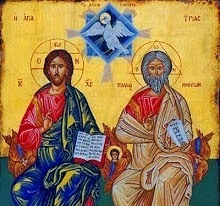
It sits on our altar each Sunday, as one of the holy things. But have you ever taken a look at this? There's a special word for what this is, the form it's in. It's called a diptych. This folding hinge allows two separate panels to dwell side-by-side, featuring our confession of faith on one and the Author of our Faith on the other.

Not unlike this, over the course of two chapters, Isaiah paints his own diptych: two panels, contrasting two lives or two worlds or two destinations. On the left of Isaiah's diptych, we have the world-trusting life on display in chapter 34. Isaiah 34 portrays what happens to a world filled with self-trust, self-absorption, self-devotion. It's an unsettling picture. And perhaps it's so unsettling because Isaiah gives us the impression that when he points to this world, he's being very inclusive. Isaiah says that this panel is a picture of “all the nations” with “all their host” (Isaiah 34:2). He invites the entire earth, its whole population, to pay attention (Isaiah 34:1). This side of the diptych isn't a portrayal of what happens in very special, exceptional, rare circumstances. It's an analysis of the ordinary. This is Isaiah's portrait of how God feels about normal human life and normal human concerns – the activities, motivations, orientations of pretty much anybody, all the host from all those nations. This side of the diptych proceeds from the way basically everyone lives – our buying and selling, our giving and getting, our mating and breaking, our thoughts and preoccupations.

And what Isaiah says is, God is not impressed with the human normal! “For Yahweh is enraged against all the nations and furious against all their host; he has devoted them to destruction” (Isaiah 34:2). And therefore, he fights it: “My sword has drunk its fill in the heavens; behold, it descends for judgment” (Isaiah 34:5). If you read on, you'll find the language in these verses isn't pretty. It's full of blood and fat, death and butchery, sulfur and smoking asphalt (Isaiah 35:6-9). Isaiah is intensely graphic. The centerpiece of his left-panel scene is grotesque on purpose. It's multisensory – you almost smell the rot, almost hear the buzzing flies. Isaiah paints a portrait of a world falling to pieces: “All the host of heaven shall rot away, and the skies roll up like a scroll. All their host shall fall as leaves fall from the vine, like leaves falling from the fig tree” (Isaiah 34:4).

What Isaiah does is, he paints the universality of human sinfulness. As he'll say elsewhere, “All we like sheep have gone astray; we have turned – every one – to his own way” (Isaiah 53:6). Or as the psalmist says, “They have all turned aside, together they have become corrupt; there is none who does good, not even one” (Psalm 14:3). Ever since our first steps east of Eden, the natural course of human life has been bound up with sin, our propensity to miss the mark, fall short of the point, sideline God and thus our very own reason for being. We tell ourselves it's okay, we convince ourselves we're good, and yet we're all turned inward on ourselves. And the new normal post-Eden, the idolatry of God-neglect and God-exclusion, is simply our commonplace. All the nations and all their host contribute to a world that ignores God – a world turned aside, a world adrift, a world hustling and bustling down eight billion different roads. A world scattered.

Isaiah wants us to be aware where this leads. He graphically shows us God's ultimate punishment of a world in rebellion. It's intense. In the end, that world becomes something worse than a wasteland. “Her streams shall be turned into asphalt and her soil into sulfur; her land shall become burning asphalt. Night and day, it won't be quenched. Its smoke will ascend forever! From generation to generation, it shall lie waste; none shall pass through it forever and ever” (Isaiah 34:9-10). All that's there are “thorns” and “nettles and thistles,” making it “the haunt of jackals” (Isaiah 34:13) and infested with demons (Isaiah 34:14). God “shall stretch the line of formlessness over it, and the plumb line of emptiness” (Isaiah 34:11). Those are the same two words we find at the dawn of Genesis, when “the earth was without form and void, and darkness was over the face of the deep” (Genesis 1:2). Isaiah gives us a picture of uncreation, of God undoing all his creative work, fully withdrawing his Spirit and letting it all collapse back in on itself, reduced to the inchoate muddle of mere materiality.

Left unattended and unaltered, normal life as all the nations live it, as all the people live it, will lead nowhere. And not just to the proverbial nowhere, but to the hellish Nowhere, the Great Undone, where the night-shadows haunt the Abyss. On this left side of the diptych, Isaiah shows us a world turning into a hell, with all its attendant sights and sounds and smells. It's an uncreation given over to howling subhumanity. Isaiah is telling us that if we settle for a normal life, if we're content to live like the nations and enjoy ourselves the way they do, this is the end of all those eight billion roads. They all drop to the Abyss. They all unravel to the Great Undone.

It's not pretty. I'd much rather us fix our eyes on the right side of Isaiah's diptych. Because Isaiah has chosen – has been inspired – to paint a study in contrasts. And as much as the left side showed a God-neglecting life's outcome, the right side shows us a God-revering life's outcome – what happens when God is our trust, when God is our hope. And whereas the left side took all the hustle and bustle of the world and brought it to an awful end, the right side takes the sterility of the desert and makes an Eden out of it. We begin with Isaiah's three words for a sterile place: “the wilderness,” “the dry land,” “the desert” (Isaiah 35:1). Those are all pretty ordinary. Isaiah knows those from experience. You can see places like that in the Middle East, after all. It's an ordinary geographic feature. But Isaiah later says that the transformation he's talking about can even begin from more extreme starting points. He uses phrases like “burning sand,” “thirsty ground,” and even “the haunt of jackals” (Isaiah 35:7). Isaiah's telling us that God can plant an Eden even in the worst wreckage of our human sin – that even after we've paved over and polluted life, even after we've driven ourselves out of the world, God can bring us back and make things new. Not even the haunt of jackals is too much for God to restore to us.

Whereas the left panel of Isaiah' diptych showed us God in his fury at the normality of our sin, the right panel gives him another motivation: “They shall see the glory of Yahweh, the majesty of our God” (Isaiah 35:2). Just where all hope looks most lost, there God is most motivated to put on the show and reveal who he really is: the Creator of New, the All-Things-Done-Well Doer. And with the same judgment by which he arrives to put an end to normal life, he arrives to “come and save you” if your life is outside that inclusive norm (Isaiah 35:4). When God steps onto the scene, things change! “Then the eyes of the blind shall be opened, and the ears of the deaf unstopped; then shall the lame man leap like a deer, and the tongue of the mute sing for joy. For waters break forth in the wilderness, and streams in the desert; the burning sand shall become a pool, and the thirsty ground springs of water; in the haunt of jackals, where they lie down, the grass shall become reeds and rushes” (Isaiah 35:5-7). So consider, then, how Jesus describes his own ministry: “The blind receive their sight and the lame walk, lepers are cleansed and the deaf hear, and the dead are raised up, and the poor have good news preached to them” (Matthew 11:5). In other words, with the ministry of Jesus, God has stepped onto the scene, and things are changing wherever he goes! The touch of Jesus flips the panels. The touch of Jesus is the saving grace. The touch of Jesus is the healing and restoring presence of God. It's beautiful, what Jesus does!

And then there's this last key image, the way Isaiah finishes off the beautiful right panel. “A highway shall be there” (Isaiah 35:8). The myriad crisscrossing ways – each having a path of our own – give way to a single route, a highway. It really is the high road, a road built by mounding up the soil into an elevated path. What that means is that this path is unmistakable. It's well-marked, as a highway should be. It's clear and visible, as a highway should be. Which means there should be no confusion. In this life, we're prone to hearing people agonize about figuring out what's true, about discerning how to live. But once you know who the true God is, once you look to him, a lot of those convoluted back roads become unimportant. You can lift up your eyes and see this highway, raised up over the others. It isn't so hard to recognize, if we've got eyes to see.

So where does the highway lead? This highway has one destination in mind. It leads to Zion. It leads to God. It leads back to the home we lost. Isaiah describes taking this highway as an act of “return[ing] and com[ing] to Zion.” It's the way home from exile. It's the way together from the scattering. It's the way Edenward from the wastelands. It's the way to the party from the doldrums. For to approach Zion is to sing: “come to Zion with singing.” It has to be! Because in approaching Zion, “everlasting joy shall crown their heads: gladness and joy shall overtake them, and sorrow and sighing shall flee away” (Isaiah 35:10). This picture is just as vivid as anything on the left panel. To get near this destination is a promise that gladness will suddenly tackle you out of nowhere. Joy will hunt you down. And in the surprise, sadness will get spooked and hightail it out of there in shock. It's like the promise God would later give through another prophet, Jeremiah:

Hear the word of Yahweh, O nations, and declare it in the coastlands far away! … For Yahweh has ransomed Jacob and has redeemed him from hands too strong for him. They shall come and sing aloud on the height of Zion, and they shall be radiant over the goodness of Yahweh – over the grain, the wine, and the oil, and over the young of the flock and the herd. Their life shall be like a watered garden, and they shall languish no more. Then shall the young women rejoice in the dance, and the young men and the old shall be merry. I will turn their mourning into joy; I will comfort them, and give them gladness for sorrow. I will feast the soul of the priests with abundance, and my people shall be satisfied with my goodness (Jeremiah 31:10-14).

It's such a precious picture! A people living at peace, languishing no more. Singing with serene confidence on the heights. Being absolutely radiant over God's goodness in his provision. Enjoying life like a well-watered garden, like the Eden we lost. Merriment for those young in years and those older in years. Dancing. Comfort. An abundant feast, forever satisfied with the goodness of God. Can you picture yourself in it? Can you see it all around you if you close your eyes? This is home! This is where you belong! This is how you should be!

And that is where the highway is leading. It's the one clear path you can't miss, and it's the only road to where you belong and how everything should be in your life. Don't you want to get on that highway? Well, be alerted that it's like the Turnpike, and you need to pass through an entryway to embark. How do you get on? What's our E-ZPass for this highway? Isaiah explains, “The redeemed shall walk there” (Isaiah 35:9). In other words, those whom God has bought a ticket for, those whom God has bought back, those whom God calls family – for that's what redemption is all about. It's his controlled-access highway, and “the unclean shall not pass over it” (Isaiah 35:8). The name of the highway is this: The Way of Holiness.

As believers, we already have been sanctified through the offering of the body of Jesus Christ once and for all” (Hebrews 10:10), but we're not all the way there: Paul prays for God to still “sanctify you completely (1 Thessalonians 5:23). And as we walk the Way of Holiness, we are presently being sanctified” (Hebrews 10:14). And in part, that sanctification will produce purity and cleanliness: “God has not called us for impurity but in holiness” (1 Thessalonians 4:7). “Since we have these promises, beloved, let us cleanse ourselves from every defilement of body and spirit, bringing holiness to completion in the fear of God” (2 Corinthians 7:1). “If anyone cleanses himself from what's dishonorable, he'll be a vessel for honorable use, set apart as holy, useful to the master of the house, ready for every good work” (2 Timothy 2:21). These are things we should all know.

But almost every time Isaiah uses the word 'holy' in his book, he's referring to God as the “Holy One of Israel.” God is set apart as holy. God is set apart as uniquely the proper target of Israel's hope and trust. Holiness is uniqueness, special separation from what's ordinary. And for us to be holy means, in turn, to be exclusively and uniquely related to God, and thus distinguished from worldly norms. “Be holy in all your conduct,” we're told (1 Peter 1:15). And if we're ever to make it to Zion, to the New Jerusalem, then we need to “strive... for the holiness without which no one will see the Lord” (Hebrews 12:14). And that means to strive for something that isn't normal – it means to strive to have God as our exclusive Hope, God as our exclusive Trust, God as our unique focus. So often, as individuals and even as the church, we try to go about our business in ways that say nothing about God, that have little to do with God – ways that are not unique to God's people. And when that's what we do, when we refuse to be God-conscious and God-centered and God-powered in how we live or even profess to minister, then we're merely mundane. And that's falling short of the holiness Isaiah is calling us to.

And now Isaiah finishes his diptych. On the left panel, the normal life of a sin-tainted world graphically leads to the Great Undone. But on the right panel, God intervenes – as he has in Jesus Christ – and so those whom God has redeemed are called to walk the Way of Holiness and press onward to Zion with heavenly song. This is the only panel that promises to “strengthen the weak hands and make firm the feeble knees” and offer assurance to the “hasty heart” (Isaiah 35:3-4). It's the only panel where flowers bloom by surprise, where beauty creeps up from the shadows, where parking lots become parks. It's the only panel where gladness is more eager to get to us than we are to get to it. But we have a choice as to which panel we'll paint ourselves in. And the right panel calls us to walk to Zion on the Way of Holiness. There is no other way. Normal doesn't cut it. If our minds and hearts are not focused on God's Spirit and on the spiritual qualities of all we do, we'll get sidetracked. Don't get sidetracked by the normal. March to Zion under Jesus' banner. For he is the Way of Holiness. Amen.

Sunday, January 12, 2020

Salvation by Quietness: Sermon on Isaiah 30

A warm July day in Paris. The race begins. Runner 451 is twenty-two years old. Before the 400-meter dash, while so many of his competitors hyped themselves up, he felt at peace. He'd made a name for himself – and taken his share of flak – for a principled stance against running on Sundays. But this was a Friday. So as he ran and ran, he fixed his eyes, not on a competitor, not even on the finish line, but on the heavens above. He pushed and sprinted the whole length of the dash in 47.6 seconds. And with a quiet confidence, he felt the ribbon break across his chest – he'd won the gold. He'd set a record. He took a deep breath. And within a minute, as his competitors panted and moaned, he felt cool and collected again. His accomplishment was great. His place of peace was greater. Eric Liddell was the kind of man Isaiah might have liked to meet.

It's hard for us to imagine just how unnerving it was to Judah's leadership and population when the Assyrians invaded. We live, after all, in a big and powerful country which George Washington himself called a “rising empire” – we have our share of fears, but feeling small and powerless in the face of something that dwarfs us is seldom an American experience. Judah was a small country, faced down by a massive empire that ground up little nations by habit – just two decades earlier, Judah had been flooded with Israelite refugees fleeing from the Assyrian annihilation of that northern neighbor. And now the Assyrians were threatening the very existence of Judah, too. And for Hezekiah's advisors, it was all too much. There was only one other great world power that might be able to stand against the Assyrians – and that was Egypt. So the royal advisors sent diplomats to make a hasty trip to Egypt, in hopes of getting support – surely the Egyptians wouldn't want the Assyrians this close to their borders. The idea was that, through the effort of Judean diplomatic wiles and Egyptian military force, Hezekiah's kingdom could find salvation.

But as Isaiah makes clear, God wasn't thrilled with their decision to turn to Egypt. “Ah, stubborn children, who carry out a plan – but not mine! – and who weave a web – but not of my Spirit! – that they may add sin to sin; who set out to go down to Egypt without asking for my direction, to take refuge in the protection of Pharaoh and to seek shelter in the shadow of Egypt” (Isaiah 30:1-2). In fact, Egypt was nowhere near capable of fending off the Assyrians. All of Egypt had recently been taken over by a foreign dynasty from Sudan, and although these new Nubian pharaohs were fascinated with restoring Egypt's heritage, they just weren't going to be up to the role Judah wanted them to play. It was no use. “Egypt's help is worthless and empty” (Isaiah 30:7), God announces. Egypt would “bring neither help nor profit, but shame and disgrace” (Isaiah 30:5).

In fact, what God uses Isaiah to point out to Judah is that it's precisely their continued attempts to solve their own problem, their efforts to invest so much energy into the endeavor, that would dig them into ever-deeper holes, thus frittering away whatever resiliency and resources they yet retained. “Therefore this iniquity shall be to you like a breach in a high wall, bulging out and about to collapse, whose breaking comes suddenly, in an instant; and its breaking is like that of a potter's vessel that is smashed so ruthlessly that among its fragments not a shard is found with which to take fire from the hearth or to dip up water out of the cistern” (Isaiah 30:13-14). All of Judah's activity was like thrashing around in quicksand. Their energetic efforts were making things so much worse than they ever needed to be.

So what God tells them is to stop. Stop moving. Stop thrashing. Stop trying. Stop working so hard. Stop all these programs and initiatives. Cancel them. Fall back. Retreat. Just hold still and let God work. God gives them a reminder of who he is: “the Lord Yahweh, the Holy One of Israel.” And then God reminds Judah of a message he'd apparently already given to them. Evidently, they'd ignored their prophet when he spoke these words before – they'd been too busy to listen, too consumed with activity to listen, too proud of themselves and their potential to listen – so now he repeats himself. And the message is this: “In returning and rest, you shall be saved; in quietness and trust shall be your strength” (Isaiah 30:15).

Oh, there's the key! Isaiah tells them, “Yahweh waits to be gracious to you” (Isaiah 30:18). God is waiting! He waits to rescue them. He waits to protect them. He waits to accomplish for them. What's he waiting for? Just this – they have to return. That means both the diplomats being recalled from Egypt, and it means a general atmosphere of repentance, of confessing that they've sinned against God, of admitting their pride, of humbling themselves. And God is waiting for them to rest and be quiet – for them to quit their frenzy of activity, for them to just hold still – an action that I'm sure to them seems like a recipe for death. Which is why they need to trust, to be confident in God. God isn't looking here to reward the hard workers. Just the opposite. God is looking for them to call it quits! God is looking for them to throw in the towel! God wants them to settle down and admit that all this energy isn't getting them where they need to be. They've been running up the down escalator for too long. They've been struggling too much against this quicksand. They've worn themselves out. It's time to admit that they've not just been idolizing idols, they've also been idolizing their energy, their activity. They need to stop. They need to realize that all this energy and drive and initiative isn't what matters, isn't what's able to rescue them. They need to hold still, calm down, take five, and trust God to do everything that matters.

We're told that the first time Judah's leaders heard this message, they just flat-out rejected or ignored it. “For thus said the Lord..., but you were unwilling, and you said, 'No! We will flee upon horses..., we will ride upon swift steeds'” (Isaiah 30:15-16). They heard God's call to return and rest, to be quiet and trust, and they said that wasn't for them. No, they were going to get stronger, get faster! They were going to crank up the tempo, they were going to pick up the pace! They were going to show what they were made of, they were going to be achievers, they were going to set goals and accomplish them. Isaiah warns that their very efforts would become their downfall – that, in all this striving, they were planting the seeds of their decimation. They want to go fast on horses? Then they will – in the opposite direction. They want to get faster, faster? Then their pursuers will pick up the pace even more. “A thousand shall flee at the threat of one! At the threat of five you shall flee, 'til you're left like a flagstaff on the top of a mountain, like a signal on a hill” (Isaiah 30:17). Their undoing.

Just as Isaiah's preaching informed them, the Egyptians were no help... but, when Judah's leadership finally paid attention, when they at last listened to and heeded Isaiah's words, when they put them into practice by stopping the activity, cancelling the programs, returning and resting – well, then what happened? God broke the Assyrian onslaught. “The Angel of Yahweh went out and struck down 185,000 in the camp of the Assyrians … then Sennacherib king of Assyria departed and returned home and lived at Nineveh” (Isaiah 37:36-37). And Judah could then restfully recover: “The Assyrians will be terror-stricken at the voice of Yahweh, when he strikes with his rod” (Isaiah 30:31). “A people shall dwell in Zion, in Jerusalem; you shall weep no more” (Isaiah 30:19). “And he will give rain for the seed which you sow in the ground, and bread, the produce of the ground, which will be rich and plenteous. In that day your livestock will graze in large pastures, and the oxen and the donkeys that work the ground will eat seasoned fodder winnowed with shovel and fork. And on every lofty mountain and every high hill there will be brooks running with water in the day of great slaughter when the towers fall. And the light of the moon will be as the light of the sun, and the light of the sun will be sevenfold as the light of seven days, in the day when Yahweh binds up the brokenness of his people and heals the wounds inflicted by his blow” (Isaiah 30:23-26). This deliverance would point to the ultimate one. All they need to do is be quiet.

And so it is with our souls. Not only are we prone to think we need to earn our way through life, but we can be tempted to apply the same logic to eternity. We're suspicious of a free lunch – no such thing, after all. And so we're tempted to ask what we have to do, what we have to achieve, to earn our way to heaven, to merit a place in the new creation. Do we have to climb the tall mountain? Do we have to swim the far sea? Do we have to go forth on a grand quest? Do we have to do twenty heroic deeds a day? What is it that will earn our way there, what will present us as worthy? We want to get a leg up on others – to be able to look at them and say that we qualify. We want that sort of upward mobility, that kind of promotion.

But if anyone knows how we can get there, it's God, and what he says is so different from what we may imagine – he says that it's precisely by faith that we can be saved! It's through a quiet trust, a restful repose, a stillness that turns focus back to God. Only in this way, and not by the achievements of our hands, can eternal hope be unleashed. For just as Judah against Assyria, so can all our schemes and all our efforts accomplish nothing to defeat the enemy of our souls. The only hope is to surrender to God. This yields the field to him, and he can accomplish more while we're resting than we can in the perspiration of our sternest struggle. God tells us by his prophet Paul that salvation is precisely for someone “who does not work, but believes” – restfully trusts – “in the One who justifies the ungodly” (Romans 4:5). We are saved by grace, and “if it is by grace, then it is no longer on the basis of works; otherwise grace would no longer be grace” (Romans 11:6). And this salvation is then “not because of our works but because of his own purpose and grace” (2 Timothy 1:9). In our search for salvation, we will stumble if we chase it “as if it were based on works” (Romans 9:32). The great preacher C. H. Spurgeon said it this way when he preached on today's passage:

In order to be saved, you have simply to come to Jesus and to rest on him! Can you not do that? If you cannot, I will tell you why. It is not because you are too weak, but because you are too strong! It is strength that keeps a man from resting! It is weariness that makes him recline. The more faint and feeble he is, the more readily does he lean upon another. It is your strength that will destroy you – it is your supposed goodness that will ruin you – it is your own works that will be your destruction! Come now, and lean wholly and alone upon that almighty Savior whose heart was pierced for you, and then it shall be well with you!

In other words, return to the God who makes himself available in Jesus Christ. This Savior's heart was pierced for you. The accomplishments of his righteous life, the sufferings of his cross, the victories of his resurrection, the fruit of his ministry – they're more than enough. Trust Jesus. Quiet yourself to hear him. Humble yourself in his presence. Lean on him. Rest in him. Abide with him. Trying to earn your keep, you'll never attain, you'll just trip up your soul; but leaning on the everlasting arms of Jesus, you're supported by perfect strength. And if you'll still yourself, he whispers his love and mercy to you in the eye of the storm.

As the church, we should know all of this. We should understand that works-righteousness is a peril – that we are saved by grace through faith, not of works, lest we should find room for boasting. But we're addicted to that boasting. And so even when we admit that works-righteousness is no measure of heavenly salvation, sometimes we wrongly think that we can make works-righteousness into the church's earthly salvation! And this especially is a pitfall of our evangelical subculture. Because for us low-church evangelicals, we've absorbed the American ethos of the corporate world, the can-do spirit of the pioneers and industrialists. We all want to be entrepreneurs – and we shape our churches accordingly. We want to do bigger. We want to do more. We're all about doing everything with passion, about doing everything with fire. We're all about being busy for God. Last year, a prominent Christian leader warned that “the evangelical movement in particular has made an idol of being busy for God, to the point that God himself has been increasingly eclipsed from our hearts and minds...”

As a consequence of that idolatry, we in the church are inclined to value people according to their contributions. In particular, we value people according to what works they do, what passion they exude, what level of energy they exhibit and lend. A passionate person is worthwhile; a calm and measured worker is less treasured. That's the mentality in many churches. The risk of this is that we put so much emphasis on what a person can do that we neglect who they are. We measure people by their skills over their sanctity, their contribution over their character, their heat more than their heart. It's not a new problem. But it is a skewed priority. Because God did not say that our strength was found in energy and passion. He said our strength would be in quietness and trust. And when the church forgets that in how we live together, then we will trust in our works – our programs, our initiatives – for 'salvation' from our decline. The church will collectively live by works-righteousness, turning away from the living God. All because we were so fixated on passion and activity that we missed true strength.

And much the same applies to our individual lives, whether in the church or out of the church. We are tempted to value ourselves by what we can outwardly do in the world. It's a common temptation – I know I feel it all the time, tempted to measure the value of a day by what I achieved, what tangible results I can show for it, what I can claim as accomplishments to justify myself. We take our value in what we do, day by day. And for a while, we maybe think we can live like that. But we can't. We can't live sustainably by tying our value to productivity. This bad habit is especially crippling as we age. For as we age, we find that our strength of body and mind will start failing. Our energy dries up. Our stamina lags. We can't put our thoughts together as clearly. We can't lift all the things we once did, or labor with the precision we used to. And if we've been building up a habit of tying our value to productivity, then as aging degrades certain abilities we used to use to produce, we'll struggle to see ourselves as retaining our value. If we see our worth as what we do, then once we can't do what we used to, we may wrestle with a waning sense of self-worth.

But your worth is not in what you can do! Your worth is not in how much energy you have. Frenzy and activity are unrelated, in the eyes of God, to your worth. They are unrelated to your importance. They are unrelated to your fruitfulness. Because the fruit of the Spirit has nothing to do with outward achievements. Passion is not a fruit of the Spirit! But patience is. Peace is. Goodness and gentleness are. The fruit of the Spirit is grown in your character, grown from your soul; not grown with your hands or your intellect. True strength is a quiet trust in the God we meet in Jesus Christ. If you want to be saved from insignificance, the path is not to go be mighty, the path is not to speed up, the path is not to buy and sell. If you want to be saved from insignificance, the path and key is just resting faithfully in the Lord.

Consider again the story of Eric Liddell. A record-making Olympic champion. Speed personified. But he lived for something else. As the son of Scottish missionaries who worked in China, he later returned to China as a missionary himself. He worked patiently and faithfully. And in 1943, when the Japanese invasion reached his mission station, he and his fellow missionaries, with others, were all thrown into an internment camp. Liddell spent his time playing chess, preaching, exuding joy. Even when he was malnourished. Even when he was confined. Even when he was ill. You see, it turned out that he had a brain tumor. Inoperable. It sapped many of his outward abilities. By February 1945, he certainly wasn't showing off his speed any more. But that was okay. He used his last strength to scribble, on paper, as best as his failing brain could recall, some lyrics from his favorite hymn, the hymn he'd often sung as he'd zipped around the country roads of China. And that hymn was “Be Still, My Soul.” For all the speed of his legs, for all the athletic efficiency of his body at its peak, he quested after stillness where it counted. And so when he became confined and sick, when he neared the doors of death, he knew that his fruitfulness had never been in his energy and accomplishments. God may have been pleased to watch him run, but God was much more pleased to watch him rest in Jesus, trust in Jesus, become quiet and still in the arms of Jesus. And that – not the musculature of his legs or the passion of his preaching – was his authentic strength. And the quiet quality of his soul, rather than the outcome of some race, is what makes him significant today, certainly significant in the eyes of God. So may it be for us.

Whether in this life or the next, whether individually or as a church, let's remember to simply abide. Jesus calls himself the Vine and tells us that we're his branches (John 15:5). A branch from a vine doesn't have to labor and struggle in order for the grapes to grow. All the branch has to do is stay connected to the vine, and receptive to the life and nourishment that flows from the vine into it. As branches of Jesus, our fruitfulness is never a product of our energy, never an accomplishment of our activity. Fruit is the product of non-resistant abiding – an enduring connection to Jesus that refuses to resist his Spirit's work in our hearts, all while submitting to the pruning work of those the Father hires. For as our vices are pruned away and a trellis of good formation is set for our healthy and directed growth, we can be healthy and fruitful branches. But that fruit is not grown in what we accomplish, but in who we become. The fruit God cares about most is not our work but our character.

So the hope of the church, the hope of the individual, is not to get energized. It's to get deep. It's to deeply abide, deeply connect to Christ. It's to be pruned and guided, yet let him produce the life that, through us, will yield the fruit. It's to be quiet and be still, yielding the field to him. And that's not something our programs can do. It's a matter of formation by the word of God, by song, by sacrament, by devotion and meditation. These are things that encourage us, not to spend and expend, but to quietly be open and be changed. We put ourselves through so much trouble, when the one necessary thing is quiet trust, a return to rest. What we need to relearn is that “the Lord is good to those who wait for him, to the soul who seeks him; it is good that one should wait quietly for the salvation of the Lord” (Lamentations 3:25-26). For “in returning and rest you shall be saved; in quietness and in trust shall be your strength” (Isaiah 30:15). Returning. Rest. Quietness. Trust. May they be ours, that salvation and strength follow. May we all soon be able to pray with the psalmist: “O LORD, my heart is not lifted up, my eyes are not raised too high; I don't occupy myself with things too great and too marvelous for me. But I have calmed and quieted my soul like a weaned child with its mother – like a weaned child is my soul within me. O Israel, hope in the LORD from this time forth and forevermore” (Psalm 131:1-3). Amen.

Sunday, January 5, 2020

City of Appointed Feasts: Homily on Isaiah 33

When you hear of wars and rumors of wars,” Jesus said to his disciples as he sat on the Mount of Olives, “do not be alarmed” (Mark 13:7). Words that we, in our day, need to hear! Many of the writers of our Bible knew what it was like to live in the grip of real war. Take Isaiah, for instance. Isaiah did not lead a sheltered life. During the days of Isaiah's ministry, the powerful and vicious Assyrian Empire invaded poor little Judah and wrought devastation in the land. They not only wiped villages off the map, they also ripped forty-six walled cities to pieces. As they dismantled the whole kingdom brick by brick, and as their murderous violence tortured the elect people, the king tried a last-ditch effort – he sent his ambassadors with a massive bribe. And Assyria took it. But the Assyrians didn't leave. They continued with their plans to destroy Jerusalem and execute King Hezekiah. As Isaiah describes it, “covenants are broken” (Isaiah 33:8c). And as the ambassadors returned to tell the king, they realized how pointless it all was. “The envoys of peace weep bitterly” (Isaiah 33:7b). In the wake of all this rampage, Judah's society was breaking down – “the highways lie waste, the traveler ceases” (Isaiah 33:8a-b). They realized there was no military option for resistance: “Their heroes cry in the streets” (Isaiah 33:7a). And so now, they realize, their situation is, by any human calculation whatsoever, a hopeless one. “The land mourns and languishes” (Isaiah 33:9a). War is an ugly and ignoble demon.

Finally, as Isaiah has been encouraging their leadership for ages, they turn to God. They've been disabused that they can fight their way out, pay their way out, think their way out, talk their way out, charm their way out. All those false hopes have fallen to pieces. And so they cry out, at last, to God, once their backs are to the wall, their feet are to the fire. They yell, “O Yahweh, be gracious to us! We wait for you. Be our arm every morning, our salvation in the time of trouble” (Isaiah 33:2). And God hears them. God hears their prayer. God hears their cry. And now that everything is most hopeless, God will be their hope. Now I will arise, now I will lift myself up, now I will be exalted,” God proclaims (Isaiah 33:10). He denounces the Assyrian king: “Your breath is a fire that will consume you, and the peoples will be burned to lime, like thorns cut down, that are burned in the fire” (Isaiah 33:11-12). His message for those in Judah – sinners who now quake with fear (Isaiah 33:14) – is that the only way to be freed from that fear is to live well. Someone who lives according to God's vision for life – “he who walks righteously and speaks uprightly, who despises the gain of oppressions, who shakes his hands lest they hold a bribe and who stops his ears from hearing of bloodshed and shuts his eyes from looking on evil” (Isaiah 33:15) – well, a person like that “will dwell on the heights,” and have “the fortress of rocks” for a defense. And, God says, “his bread will be given to him” (Isaiah 33:16) as he beholds “the King in his beauty,” that is, the serene majesty of God (Isaiah 33:17).

So there is hope, when God delivers! There is hope, when God saves! All God is asking is for people to react accordingly – he wants his act of salvation to create a person who can dwell on the heights, eat his bread, and see him in his beauty. And a person who tastes that bread and sees that King will develop a distaste for sin and darkness, and a hunger and thirst for righteousness.

But this work of deliverance God promises isn't just for individuals. It's for a city. As God rises up, he pledges to rise up for Zion, a hill; he promises to rise up for Jerusalem, a city. “Your eyes will see Jerusalem, an untroubled habitation, an immovable tent whose stakes will never be plucked up, nor will any of its cords be broken” (Isaiah 33:20b-c). This tent will not be broken down. This tent will not be damaged. This tent will remain to fulfill its purpose. It will remain “Zion, the city of our appointed feasts” (Isaiah 33:20a). And that's a hard phrase to translate – qiryat mo'adenu. The word Isaiah uses for 'appointed feasts' here means, more or less, something that's scheduled, something that's decided and fixed by agreement. It's used in Leviticus 23 over and over again for Israel's holidays, insofar as they were occasions that God had scheduled onto their calendar. And when the tabernacle was called the ohel mo'ed, 'tent of meeting,' this is the word they're using – the tabernacle was the appointed place to meet God. And when God through Isaiah says Jerusalem will be an immovable tent and a city of our appointments, he's using tabernacle and holiday language – the whole place must become a Tent of Meeting, with people keeping the appointments he's scheduled with them.

In the face of Jerusalem's hopelessness during the darkest time, God's promise is to rise up and accomplish the salvation they've been praying for. And God rises up to save so that there will be a community where people can and must keep their festive appointments with him, according to his schedule. That's important to God! It's important to God that people keep their appointments with him, the appointments he schedules. That's what he will save Jerusalem for. And not only that, he himself will be a protected paradise for his people to dwell in – “there, Yahweh in majesty will be for us a place of broad rivers and streams, where no galley with oars can go, nor majestic ship can pass” (Isaiah 33:21). He will be our protected place in the midst of war, so we together can be the rescued people who keep the appointments he sets. That's his promise to Hezekiah's Jerusalem.

But just as things were humanly hopeless in the face of war, so things were humanly hopeless in the face of the greater threat: the sin infecting our hearts, the sin terrorizing us from the inside, the sin that gives rise to wars in the first place. Time and again, God demonstrated to us the impossibility of our handling it ourselves. His law was a mirror exposing our incapacity. He patiently watched us rebel time and again, under every conceivable environmental condition. We could not cure ourselves. And so then God rose up: “Now I will arise, now I will lift myself up, now I will be exalted” (Isaiah 33:10) – “and I, when I am lifted up from the earth, will draw all people to myself” (John 12:32). “As Moses lifted up the serpent in the wilderness, so must the Son of Man be lifted up, that whoever believes in him may have eternal life. For God so loved the world that he gave his only-begotten Son, that whoever believes in him should not perish but have eternal life” (John 3:14-16). God rose up to be exalted... on the cross. And when he was lifted up on the cross, “the people who dwell there,” there at the cross where God is lifted up to save, “will be forgiven their iniquity” (Isaiah 33:24b). For there at the cross on a hill far away – there are the heights where we are called to dwell.

But we are not saved to be mere disconnected individuals. Like old Jerusalem in the days of Isaiah, so we in our day are saved for a purpose. We are saved to gather as “the city of our appointed feasts” (Isaiah 33:20a) – saved to gather according to God's call, saved to agree with God at his fixed time. So often, the way we talk doesn't reflect that. We talk about 'coming to church' as if it's a choice we make, a decision we initiate, one we can as easily make or not make. And because we talk and think that way, we measure 'church' by what we get out of it. It becomes one more option in a consumer culture, one more way to consume goods and services; and if we aren't satisfied, well, we'll engage in the usual consumerist marketplace behavior – file complaints, seek a competing provider, or just stay home. And even if we aren't dissatisfied, we'll decide that it really doesn't matter that much, depending on what there is to do around the house or what other opportunities are available or how sluggish we are to roll out of bed that day. Because 'church,' to us, is a choice we can make or not make.

But not to God! Because God calls us to gather. He has fixed the time, scheduled the appointment. And God expects us to keep those appointments with him. And how frequently we stand God up! But when he calls us to worship, it's not a negotiation. It's an appointment, engraved on our calendars with nails and thorns. We are not here this morning because we chose to be here. We are here because we answered a call today. We are here to keep an appointment between us and the saving God. In a world torn by wars and rumors of wars, a world so frequently mismanaged, the Lord is meeting us here to be our Judge, our Lawgiver, and our King (Isaiah 33:22) – to be for us a place of broad rivers and streams (Isaiah 33:21). The Lord is here to show us his beauty and to give us bread to satisfy our deepest hungers and wine to quench our deepest thirsts. We are here in this spiritual tent of meeting because Jesus saves, saves to the uttermost, and here your Savior scheduled to meet you!

From the warring world, we've been called out to worship, to gather here together, to keep the appointed feast. We have been summoned to meet God. And you will, if you look to him and trust him for dear life. Because in this place, on this day, he is meeting you here. He is meeting you at the table where he will give you beautiful food, if you only have eyes to see what's really happening. Thank you for keeping the appointment today. This is the city of our appointed feasts. We approach the Lord Jesus, our saving God, our risen King. But that is a tremendous thing. If your heart is not at peace with the Body of Christ and with its Head, then this meeting is too much for you right now – “Who among us can dwell with the Consuming Fire?” (Isaiah 33:14). To eat or drink this meal wrongly, Paul says, is to “eat and drink judgment” on yourself (1 Corinthians 11:29). Examine yourself. But if your heart is now made ready by faith and repentance, then, sharing in the sacrifice with “clean hands and a pure heart” (Psalm 24:4) as we look forward to the fullness, let us celebrate the appointed feast!

Sunday, December 29, 2019

Bethlehem Salvation: A Christmas Message

One final groan. One final push. One first breath. One first cry, piercing the stillness of a holy silent night. An umbilical cord, the free flow of blood between maiden mom and God Incarnate, snipped and tied. Exhaustion. But in a moment, the sweat and tears are forgotten as, wrapped tightly in the nearest cloths, the Holy Infant rests first in his mother's adoring arms before the feed-trough. The room is crowded – the women rest from their aid, the livestock lighten their lowing. And in those moments, Bethlehem stands at attention, stands in awe, stands in hospitable greeting of its newborn King... a Savior, who is the Messiah, the Lord.

Joseph and Mary have had their journeys in life, measured in years or decades, to prepare them for this moment and what it means. But Bethlehem has had a longer journey, measured in centuries. We've followed that road through the Advent season. From Bethlehem's birth as a Canaanite city, we saw its conversion when Canaanite idolatry gave way to the true faith, as it welcomed the children of Israel who buried his wife on the road leading to Bethlehem. Bethlehem came to treasure these new people and the faith they brought, sought to nurture them, and whenever anyone left town, Bethlehem longed to see them come home, to be redeemed and restored. First there was Jonathan the descendant of Moses, striking out to trade his heritage for a fortune – his departure from Bethlehem set in motion the eventual ruin of a kingdom. Then there was a nameless woman, concubine of a Levite – she left, she came, she left sadly again, and Bethlehem was helpless as her tale ended not in redemption but in gruesome woe that sparked a civil war. And then there was that famine family, Elimelech and his Naomi and their sons. But though the men died in a foreign land, Bethlehem saw Naomi come back to stay, bringing a girl named Ruth. And when Ruth moved in, Bethlehem was thrilled to see them find redemption through Boaz, and the birth of a son Obed. A few more generations, and Bethlehem was in awe when the first prophet came to visit – Samuel, come to sacrifice to the Lord, come to celebrate. But Bethlehem had little inkling at first what Samuel meant to celebrate. Bethlehem was in awe when Samuel unplugged a horn and poured oil all over the youth David, whispering that he would become the anointed king of God's people. And Bethlehem felt the rush as the Spirit of the Almighty rushed down on David, whirling through Bethlehem's streets.

Bethlehem cheered through the years for its hometown son. Even when David moved away. Even when many people moved away, chased by the invaders, the pirates, the people of Goliath. But then Bethlehem saw the daring act, the quest of three men to break through the enemy lines in the valley and come to Bethlehem's well to get water for their chief, and carry it back to him. Braving their lives, they poured their souls into that water, made it a living sacrifice. And Bethlehem learned, by watching it, what love looks like, what devotion truly is. In time, the Philistines left. David conquered nearby Jerusalem, just six miles away, and made it his capital there. His family fell into turmoil – he had to flee his own son Absalom's rebellion. And Bethlehem was sad. But David returned, and Bethlehem was glad! And David rewarded his host-in-exile Barzillai by giving his son Chimham some of David's family lands in the pastures of Bethlehem.

Down through the years, Bethlehem watched as David's sons, grandsons, great-grandsons, and so on reigned in Jerusalem. Some were happy times. But in most, Bethlehem grappled with disappointment. These sons of David ruled badly. They flirted with the darkness. The voice of God came, and they disobeyed. During the time of Hezekiah, the days when the Assyrian king Sennacherib invaded and devastated the land, bringing much ruin to Bethlehem and the other villages in the land, a prophet from a destroyed village stood up and proclaimed hope in God's name, hope by a strong king who'd hail from David's roots:

Now muster your troops, O daughter of troops! Siege is laid against us – with a rod, they strike Israel on the cheek. But you, O Bethlehem Ephrathah, who are too little to be among the clans of Judah: from you shall come forth for me One who is to be Ruler in Israel, whose coming forth is from old, from ancient days. Therefore he shall give them up until the time when she who is in labor has given birth; then the rest of his brothers shall return to the people of Israel. And he shall stand and shepherd the flock in the strength of Yahweh, in the majesty of the name of Yahweh his God. And they shall dwell secure, for now he shall be great to the ends of the earth. And he shall be their peace. (Micah 5:1-5a)

A promise! A promise! Bethlehem has heard a promise! And through the coming centuries, that promise was to sustain Bethlehem's own hopes, help Bethlehem weather the discouraging ruin of the Davidic kings. Oh, some would yet do well – Hezekiah's great-grandson Josiah, for instance – but most would still disappoint. At last, his sons one by one failed, until his son Zedekiah lost the kingdom. Bethlehem watched in horror from the horizon at the smoke of the burning temple. And when a chance to find a new peace came, Bethlehem lamented when yet once more son of David, that zealous captain Ishmael, assassinated Judah's governor. Were it not for that promise, were it not for that hope, Bethlehem would by this point regret the day of David's birth.

Brokenhearted but carrying a promise, Bethlehem watched as a ragtag remnant encamped at Geruth Chimham for days, deliberating on where to go and what to do. Should they stay and risk a chance of Babylon's fourth and final wrath? Or should they reverse the exodus and seek shelter in Egypt? Just as the prophet Samuel had once walked Bethlehem's streets and fields, now so too did the prophet Jeremiah, and he delivered the word of the Lord, telling the people to stand firm. Bethlehem waited with bated breath for their decision. Would they finally listen, as they'd promised they would? No. No, Bethlehem's heart fell as the people rejected God's word and rejected the authority of the man God had appointed to minister to them. They ran away. Bethlehem sadly saw them go. And for decades, life mustered on as best as it could, in a desolated land.

But then came the day. Exile was over. Only a portion came back – many stayed in Babylon and its lands – but now there was a new chance to build, with Yehud as a Persian province. And the descendants of David were given authority to govern, at least at first. Zerubbabel, with support from the priest Joshua and prophets like Haggai and Zechariah, rebuilt the temple – Bethlehem could almost see its gleam. Zerubbabel died, and his son-in-law Elnathan became governor, and then other men would follow. The descendants of David had no especial authority or influence in the province. So they went about ordinary lives, as best as they could. And some of Zerubbabel's family, from the royal line, thought it time to go back to their roots. And Bethlehem saw them walk through its gates. And Bethlehem welcomed them home. Bethlehem knew this was the way, the hope of the promise (cf. Matthew 2:5-6).

Years came, and years went. Some of David's descendants stayed. Others moved around. Sometimes Judah had a measure of independence, and sometimes not. But through all the changing shifts of politics, through all the ups and downs of history, Bethlehem clung to the promise. To outsiders, it was still Bethlehem, 'house of bread.' But to those who lived there, Bethlehem boasted another name: 'City of David' (cf. Luke 2:4).

And one day, Bethlehem heard, there was going to be a census. And because of the census, people would have to return to their places of origin. Some newer residents went on a trip, away from town. Other hometown sons came home to Bethlehem, with their families. How little did Bethlehem expect anything special. Bethlehem was excited, sure – for what amounted to a David family reunion, all the moved-away descendants of David's lineage and house. Those who still lived in town opened their guest rooms for their moved-away cousins as they returned. With so many needing to return for the census, guest rooms filled up quickly. Space was taken. And so when one more hometown son came back to Bethlehem, he found the guest room full. But for he and his wife, space was found in the lower part of the house, by the door, the place where the animals would be brought in at night to share their heat and to be protected. To us, the equivalent might be the garage. But space was found – not in the guest room, but with the family livestock.

This hometown son was Joseph, whose parents had gone as settlers to found the Galilean village of Nazareth. And with him he'd brought his new bride Mary, nine months pregnant. Did their hosts have any questions about how long they'd been married? Was there any awkward math? Or was all that set aside? Little did they know that the Holy Spirit who'd rushed upon David in Bethlehem had overshadowed this teenage woman, that she might conceive a Holy Son with no man's involvement at all. But even so, could Bethlehem have even dreamed that, with this census-induced family reunion, God had arrived personally in its midst? For make no mistake: the fetus carried by Mary, nine months developed, was fully human but not merely human. The instant of conception was not the beginning of this child's life – it stretched into eternity past, to 'before' the first moment of time and space. For the child in Mary's womb, the child at the other end of her umbilical cord, is the Deity.

And while they were there” – sometime during those days – “the days came for [Mary] to give birth” (Luke 2:6). One evening, Mary's water broke. She went into labor. The men stepped out of the house into the night air, running to fetch the village midwife. And the work began – the pains, inherited by Mary from Eve, were all that stood between her and the joy. Around her, what women were there gathered in support and assistance, to ensure that mother and child both survived the ordeal. Had Bethlehem by now discerned what was going on – what a miracle was taking shape? Did Bethlehem realize that God himself, the Eternal Word of the Father, was being born, the Lord of Lords coming forth in human vesture, in flesh and bone and blood?

There's the head. And with one last anguished push, Mary's work is done. Midwife cuts the cord. Cleans and wraps the crying Creator. The women welcome the men back in. In that cramped space, trampled down with old hay, as the animals watch, Joseph kneels next to Mary as she cradles this Son. All around them, Bethlehem is transfixed. God breathes deep in Bethlehem's air. Outside town, in the outlying fields where once David tended his father's flock, a flash of the Father's glory surrounds the armies of heaven as they appear (Luke 2:9-10, 13). And by the time Mary, in order to rest, has tucked her newborn Son snugly into the feed-trough as any peasant mother might, the shepherds – awestruck, dazed, and determined – are racing through the night streets, asking where the midwife has been. And they find the house. They come to the door. They see Mary. They see Joseph next to her (Luke 2:15-16). And they see, in that feed-trough, the One the angels announced: a Savior, a Rescuer, the Lord Messiah come to deliver not from Roman oppression as they'd always thought, but from the deeper oppression of the darkness within, their own sins (Luke 2:11-12; cf. Matthew 1:21). And the shepherds could hardly believe it – a house just like theirs, the house of one of their neighbors, was the house where the Deliverer came. Not a grand palace. Not a royal manor. Not a wealthy gated community. But there, in a home like theirs, with a familiar face, dressed like one of their own babies, is the Savior-King. There is the good news, promising great joy for every faction, great joy for every nation (Luke 2:10).

When they tell their story, does Bethlehem get it now? Does Bethlehem realize what a privilege of privileges is for it, given to it? Does Bethlehem see God's plan unfolding? Does Bethlehem itself come and worship Christ the newborn King? Does Bethlehem recognize this sign of peace on earth, this mercy mild, the hope of God and sinners finally reconciled? Can Bethlehem see the Godhead veiled in flesh? Does Bethlehem understand that in its manger rests the Incarnate Deity? And does Bethlehem bask in the light of the Sun of Righteousness, risen from womb to earth with healing in his wings?

Or did those first glimmers awareness come the next morning? Because surely, if even one of those shepherds in the nearby fields was a Bethlehem resident, you can imagine he'd come home the next morning from his night's work and tell his family. And you'd best believe their neighbors would hear a tale of angels in the fields and the birth of the Messiah. And in short order, all of Bethlehem might know. Joseph and Mary would be the talk of the town. Everyone would stop by to catch a glimpse of this baby. Everyone wondering, “Could it be true? Could Messiah ben David be born at last in royal David's city? Is this time, this family reunion of the sons of David, not the perfect time for the Son of David to be born? But can it really be?” Perhaps they came, believing. Or perhaps few put much stock in shepherd stories. But we do.

If the shepherds failed to convince, I wonder if Joseph and Mary – when they took this infant Messiah for the purification ceremony in Jerusalem at the temple – brought back any word of the prophecies of Simeon and Anna (Luke 2:22-38). I wonder if the people of Bethlehem heard. But back to Bethlehem they went. They began to settle in, settle down. But if somehow none of these things caught Bethlehem's attention, perhaps a troupe of foreign diplomats, bearing valuable stores of gold and frankincense and myrrh, on a mission from Persia to express congratulations on the birth of a promised king – well, maybe that will shock people awake, make them realize something of what's happened! For foreign diplomats hardly show up in the village every day. And they aren't exactly inconspicuous. One wonders what sort of local disturbance ensued. There could be no more denying it – not by anybody in town – that there was a King among them (Matthew 2:8-11).

For all these weeks and months, Bethlehem was in wonder of the miracle. God inhaled Bethlehem's air, and as he exhaled, Bethlehem was filled with molecules that had been in the lungs of the Eternal. Mary drank water from the well of Bethlehem, the very well visited by David's mighty men, and that water went into the milk that the Lord drank. It was from Bethlehem's own local resources that the swaddling clothes had been woven. And as Bethlehem became more and more alert to the Incarnation, Bethlehem could look back on its own old story and see how it all led up to this. Here was born a Redeemer greater than Boaz, a Redeemer who could unwind all the tangled stories of the past. Here was born the Anointed One, not just the Son of David but his Lord. Here was born the One who would one day pour out his blood like water – this was the One to whom David offered Bethlehem's water poured out as though blood, a living sacrifice. And here was born the very Word of God whom Johanan and the remnant decided against when Jeremiah spoke in his name. But in spite of all that sordid past, the Word had decided – a decision made public in Bethlehem – to be for us anyway. Great joy!

Here was born the Light who came as the Life of all people (John 1:4). “The True Light, who gives light to everyone, was coming into the world” (John 1:9). And “he came to his own,” his own creation, his own people (John 1:11). The Light had come. “The Light shines in the darkness” (John 1:5). And although the darkness would not be able to overcome it... that wasn't going to stop the darkness from trying. Ever since that night in Bethlehem, the night of the Savior's first breath, the darkness has been madly raging – impotently but painfully – against the Everlasting Light (Revelation 12:11-17). Not long after the diplomats and their entourage withdrew, Joseph had a dream – a dream that he was to follow the same path as rebellious Johanan and the remnant. But this time it was the direction of obedience, not disobedience. And obediently, Joseph obeyed – in the dead of the night, he woke Mary, and they carried the Holy Infant and the magi's gifts, and they set off on the long journey to Egypt (Matthew 2:13-15). They escaped just in time before Herod's soldiers came to Bethlehem. And as they butchered, Bethlehem – grief-stricken by the lash of darkness – understood why the Holy Family left. God seemed to disappear over the horizon. Many tears were shed (Matthew 2:16-18).

Time passed. Even after Herod died, heaven advised Joseph against going to Bethlehem again – he was to turn to Nazareth and raise the Messiah there (Matthew 2:19-23). So Bethlehem saw him no more. Instead, Bethlehem's residents wept over the cruelty of the infants stolen by Herodian violence. Parents had new children – none could replace the lost, but life could begin again, albeit under a long shadow. A new generation came, and an old one left. Some from Bethlehem no doubt went to see this new preacher – John, baptizing at the Jordan River. And perhaps a few from Bethlehem were there when Jesus was baptized. But Jesus did not follow them back to Bethlehem. His ministry was carried out up north in Galilee. We aren't told that he ever went back to Bethlehem. Maybe some from Bethlehem were in the “great multitude of people from all Judea” who heard him preach and saw him heal (Luke 6:17). And surely Bethlehem saw and felt the darkness over the land when, just a two-hour walk away, Jesus was nailed to a cross – fulfilling his promised destiny to save his people from their sins. For it was just a two-hour hike from Bethlehem that Jesus died, a two-hour hike from Bethlehem that Jesus rose in victory – the Sun of Righteousness, risen from death with healing in his wings!

And then he rose to heaven. The news began to spread. Was anyone from Bethlehem in the crowd on Pentecost when the Holy Spirit was poured out, not just on one shepherd boy but on the whole church? As the apostles ministered first in Judea, did any of them come to announce the good news in Bethlehem – that the very Baby once born there had become the Firstborn from the Dead, had proven himself to be the Resurrection and the Life? Did the children and grandchildren of the shepherds hear this word of God sealing their family tales with the certitude of the gospel? How many in Bethlehem became followers of this Bethlehem-born Messiah? How many Bethlehemite hearts presented themselves a living sacrifice to a life-giving Savior, crucified and risen?

As for Bethlehem, the decades passed. It watched the Romans destroy the temple – a replay of Babylon all over again. It watched rebellion after rebellion. Emperors built pagan shrines in Bethlehem to spite the name of the Savior. But the good tidings of great joy slowly, steadily caught the world by storm, until one day emperors would tear down the pagan shrines and extol the name of Jesus Christ. Churches would be built, destroyed, and built again. The winds of the world would change, the complicated and tragic dance of a fallen world wrestling with its redemption. Bethlehem would see the shadow of an Arabian path twist the land. Bethlehem would witness the treacherous violence of the Crusaders. Amidst its worship, Bethlehem would dance in darkness.

One Christmas day, Bethlehem would be the place where the Crusader knight Baldwin would be crowned king of Jerusalem. By then, the unity of Christ's seamless garment – the Church – had been ripped in two, and Bethlehem would have to live through the years with the bickering and squabbling of riotous Latin and Greek Christians. Bethlehem would be handed back and forth between ruling powers, and under the rule of the Ottoman Turks, the town was crippled, and many inhabitants left. Even today, Bethlehem lives under the shadow of the darkness. The city is closed in by a wall. Homes are bulldozed. The Church of the Navitity has been made a political pawn and placed under siege. Every year, tight security controls block many local Christians from going to Bethlehem on Christmas to worship their Savior. Residents even now describe a place demoralized, with high unemployment, a broken economy, and a town whose main gift left by tourists consists of piles of their garbage. Some in Bethlehem describe their general feeling as one of suffocation.

The darkness rages against the Light. And though the darkness cannot overcome, the darkness can hurt – hurt like Herod's soldiers hurt, hurt like conquest and division hurt. Over two thousand years since good news of great joy filled its streets, those streets of Bethlehem still cry out. Because freedom is not yet complete. Joy is not yet full. Salvation is still unfolding. Peace on earth has begun in Christ, but is not yet fully implemented. The darkness has been beaten by the Light, but the darkness is still loath to admit it. So the darkness rages on, even after the victory of the Savior. And Bethlehem knows these things. Bethlehem knows that the darkness still rages against the light. Bethlehem knows that the darkness may come from corners we don't expect. And Bethlehem sees how the darkness may suddenly surge, may abruptly obscure our view of the heavens. The house of bread is no stranger to our hunger for a day without want. Bethlehem is not surprised any longer when there are shadows over Christmas. But Bethlehem learns to grieve with hope. Bethlehem defies the dark with a memory – a memory of when the brightness of the future cried out from a feed-trough, a memory of God on earth in our skin and our blood. “The Light shines in the darkness, and the darkness has not overcome it” (John 1:5). In spite of all the dark's raging, in spite of all the dark's shadow, in spite of all the grief and all the pain that still goes on, nevertheless the Savior has already been born, and the darkness can do nothing to rewind the times. Salvation has appeared, and salvation will roll on until the world has been rescued from every dark – the darkness in our hearts, and the darkness over the land!

The Savior has come. The Savior will come again. Even now, in his earthly corporate body the Church, this Savior walks the streets of Bethlehem, as he walks the aisles and sits in the pews of this church. And in the face of all the grief that darkness can inflict, all the obscurity that darkness can muster, Bethlehem clings to the age-old promise, and longs for the day when the Savior, in a risen body, will walk her streets again, radiant in his beauty. And the darkness will find no more place. Only then will Bethlehem's voyage be done. Only then will Bethlehem, and every place, reach its destiny. Only then will Bethlehem's cup of salvation run over. Only then will there at last be, in the truest sense of the words, peace on earth. But the Savior's day will come. Rescue, already begun but with more to come, will bear its abundant fruit. And that is good news, a cause for great joy.

As we wrestle the darkness and gaze toward the Light, we know that we are covered with wounds. We may be scarred and weighed down. We may be divided, like the bickering in Bethlehem's streets. We may be hurting, like the mothers and fathers of Bethlehem. We may be passed back and forth between worldly powers, bounced around by an uncaring world. We may feel hemmed in and suffocated. And yet there is a Savior. There is a Light. And it's precisely in the darkness – the dark streets of Bethlehem, the dark streets of our lives, the dark alleys of our hearts – that the Light has come to shine. And so, even scarred and even wounded, we will still defy the dark. We will still stand for the ultimate victory of the unconquerable Light. We will still cry out for the Savior we already know, “born that we no more may die.” We will still speak good news on the mountain, over the hills, and everywhere. We will still travel again and again to the salvation God sent down to us. And however dark seem the shadows, we still defiantly echo back the song: “Joy, joy, joy! Joy, joy, joy!” Go tell it!