Sunday, November 14, 2010

On Proclamation and Persuasion

In the year 1989, the second major International Congress on World Evangelization met in Manila in the Philippines to take up where they'd left off at the first such congress, which met in 1974 in Lausanne, Switzerland. Where the first International Congress on World Evangelization released a document called the Lausanne Covenant, the second such Congress released a document called the Manila Manifesto. I happen to think that both of these documents are powerfully written and right on the money, and today I'd like to ponder one of my favorite quotes from the Manila Manifesto. It says:

The good news must be boldly proclaimed, wherever possible, in church and in public halls, on radio and television, and in the open air, because it is God's power for salvation and we are under obligation to make it known. In our preaching we must faithfully declare the truth which God has revealed in the Bible and struggle to relate it to our own context.

We also affirm that apologetics, namely "the defence and confirmation of the gospel", is integral to the biblical understanding of mission and essential for effective witness in the modern world. Paul "reasoned" with people out of the Scriptures, with a view to "persuading" them of the truth of the gospel. So must we. In fact, all Christians should be ready to give a reason for the hope that is in them.

I really want to leap into that second paragraph there, but I think maybe we should take our time and go in order. What do we need to do? We need to proclaim the good news. First of all, let's stop there for a moment. How often do we think of the Christian message as "news" these days? It seems these days that most folks consider it totally 'old hat', yesterday's news, but outdated for today. But it isn't! And it isn't just a 'lifestyle' either; it's a 'message', something you can say or write. And we're supposed to say it! We're supposed to talk about it! But why? Well, first of all, because it's good news. It isn't just some interesting story that you might find tucked on page C5 in the local newspaper. This is front-page stuff, and anyone who's got a good grasp on reality and who reads that headline in faith - "Jesus, Promised Messiah, Dies to Save Everything, Defeats Death; Declared by God to be King over Heaven and Earth" - should have the same reaction that a parent might get when they've lost their toddler in a dangerous part of town, and then find the child happily standing on a street corner, safe and sound; or that a person might feel when they've been suffering for ages from a painful, lethal disease, and suddenly the doctor announces that the medicine is working and they're going to be cured. This is powerful news, wonderful news, marvelous, miraculous, stunningly significant news!

Where should we talk about the good news? Is it something that we should chit-chat about amongst ourselves in cozy, air-conditioned and heated church buildings, and then leave thinking that it can wait again until next week? No! We definitely must talk about it in church. But we also should be talking about it in public halls; it should be on the radio and the television - the real deal, not the counterfeit 'get rich quick: use God for fun and profit!!!' schemes of so many popular televangelists - and it should be spoken in the open air. Indoors and outdoors, in person or on the media, and these days even on the Internet, we need to be sharing the message. From hi-tech to low-tech, leave no tech unused!

So that answers the what and the where, but why? Why should we be spreading this message around? Because it saves. A compassionate person who knows what can help other people will judiciously share that news with others. If I've found out about a really great bargain at the local store and I know that my neighbor is in real need of what the store's got, I should let them know! And more than that, the good news isn't just good news that saves; it's God's power for salvation. The message we're spreading? That is the saving, freeing, liberating might of a God who could easily call entire galaxies into existence from absolutely nothing without the slightest strain or effort. And is it just a nice thing for us to spread it, something we could do if we wanted to be especially nice? No. No, we are obligated to make it known, to make absolutely sure that the whole world has heard the message, whether they believe it or not. It's not an option, like, "Oh, well I could either be a Christian who stays real quiet about it, or I could be a Christian who tells other people about the news." That's not a choice we have. The first person is by definition not being a faithful disciple of Jesus. Only the second one is. This is not a suggestion, it's an order.

When we declare the message, we need to faithfully declare it as truth. It sometimes seems these days that "truth" is not a popular idea. Some folks think that there's something very evil about claiming to have the truth. After all, if on some issue we have the truth, and other people have different ideas, then those ideas are... wait for it... wrong! (Any of you pass out from the sheer shock of it all?) But let's face it, virtually everyone should recognize that there's such a thing as truth. For instance, take the statement "Grover Cleveland lived in the United States of America". That is actually saying something about the way reality is (or, in this case, was). Once you understand what it means, then it's obvious that it can be either true or false. If it's true, then it's true, period. If it's false, then it's false, period. But what it can't be is true-for-me and false-for-you. You might not believe it to be true, but that doesn't make Grover Cleveland suddenly a Pakistani shepherd! Or take another statement: "There is no such thing as absolute truth." First, you have to understand what the terms mean - for instance, that by "absolute truth" we're meaning a statement that has a truth-value independently of any contingent being's assessment of it's truth-value - and then you can see that either it's absolutely true that there's no such thing as absolute truth (in which case, there really is, so then it's false after all), or it's false that there's no such thing as absolute truth (in which case, there really is such a thing as absolute truth). And what Christians are declaring is just such a message. It makes a claim about the way things really are. It could be true; or, it could be partly true and partly false; or, it could just be wrong. But there's nothing somehow bad about claiming that something is absolutely true, though there is, I think, something bad about not being willing to hear what other people have to say on the issue and being willing to be somehow affected by it.

Furthermore, this truth is truth which God has revealed in the Bible. I've known a lot of professing Christians who have said to me that they don't really care what the Bible says on [pick an issue of choice], for some reason that usually amounts to, "Well I don't like not being the boss." And that is a sad, sad, sad thing, because that is not the heart of a disciple. That is not the attitude that Jesus had towards the Scriptures, and it isn't the attitude that a disciple of Jesus should have towards the Scriptures either. Now, before you get too far, does this mean that every Christian has to be a biblical inerrantist, so that if - for example - there's some mistake somewhere in 2 Chronicles, then Jesus didn't rise from the dead and doesn't now rule as Lord? Think for just a moment how ridiculous that is. Instead of worrying about whether the Bible is inerrant, what Christians can and should agree on is that it's authoritative. We do not get to just make up whatever we want. If the Bible says, 'X is a sin', and if our best methods of sifting the text give us every reason to believe that that's still true today, then it's time to face the facts, quit living in la-la land, and deal with it.

And thus, Christians are called to struggle to take what the Bible actually says - which of course requires that we do the serious work required to understand it, rather than being lazy like so many Christians who think that real study of the Bible is and should be forever beyond them because it goes over their head now and they don't really care enough to try to learn something for a change - and accept that that's really what it says, and that the Bible is not something we can discard at random. But then we must also struggle to take what we've seen there and figure out how to apply that to where we are today. A lot of Christians have a "the Bible said it, I believe it, that settles it" mentality. And I'm not saying that there isn't some truth in there. But it also isn't sufficient. Very, very few Christians believe that everything in the Bible is equally applicable to today's situation in the exact same way. The Bible itself says otherwise, since obviously the Old Testament distinguishes between the circumcised people of God and those 'uncircumcised Philistines', while the New Testament says that you can be part of the people of God and keep your foreskin too, so long as you have the reality to which circumcision was pointing all along: namely, a heart, a center of being and willing, that's allowed the Spirit of God to come to it and to remove everything that might hinder it from being a public witness to a covenant made with God. And then there are the sacrificial laws, and plenty of others. Is this always an easy task? No. And that's especially true for people who don't study how to do it. But as Christians, we need to be able to faithfully relate the Bible to our context in ways that are accurate to how God would intend us to do it.

But that's not all! The Manila Manifesto next goes on to talk about something called apologetics. That's not a very common word; what does it mean? Well, the Manifesto defines it as "the defence and confirmation of the gospel". The word 'apologetics' comes from the Greek word apologia, meaning 'defense'. It's the name of one of Plato's works, the Apology, which was not about Socrates saying he was sorry for being so annoying all the time, but instead was about Socrates' speech in his defense when he was on trial. There are a lot of people out there these days who would love to put Christianity on trial, whether in the media or in the classroom or just in general. Richard Dawkins, Christopher Hitchens, Sam Harris, etc., etc., etc.... there are a lot of them. And beneath all the plentiful rhetoric and bluster and irrational outrage, sometimes - whether intentionally or by accident - they actually make a case (almost always a weak one) against the Christian faith. You could say that they're acting as the prosecution. And Christians are called upon to speak up for the defense, to answer the charges. And even more than that, Christians are at times called upon to make their own positive case for Christianity and against other rival ideas. Christians are called to argue. That doesn't mean that we're called to be abrasive, arrogant, annoying, loud, or obnoxious; it means that we're called to present our case, our reasons, for the position we've taken.

Now, one of the phrases that gets bandied around pretty often is, "You can't argue somebody into the kingdom." And that's true. There's no amount of arguing that can bring somebody to faith, all on its own and without the involvement of the Spirit and their own free will. You also can't love somebody into the kingdom. There's no amount of love you can give that is sure to bring somebody to faith in Jesus, apart from the work of the Spirit and their own choice in the matter. The same is true of preaching. The same is true of quoting the Bible. The same is true of, well, anything you can do. So does that mean you shouldn't preach, or love, or witness? Nope! The Spirit can use those fruitfully to bring a person to the point where they have the option of whether or not to respond - and the same goes for arguing/apologetics.

Another thing that gets thrown around a lot is, "Oh, well, you just have to have faith." And it's true; we do need to have faith. But that means real faith, not misdefined faith. Faith essentially means our trust and our loyalty to someone or something. When we have faith in God, we're loyal to him (which is why obedience is a crucial component of a living faith, and why "faith without works is dead" - James 2:26); we also trust in God, which means not only that we trust in his capacity to save us and his love for us, but also that we trust him to be faithful to his promises and to be truthful to us when he speaks. Nothing in that means that we're supposed to do things contrary to reason. Nothing in that means that we should just will ourselves to believe things really really hard. Faith is a proper component in a rational life - and, as my favorite quote from Galileo runs in part, "I do not feel obliged to believe that the same God who has endowed us with senses, reason, and intellect has intended us to forgo their use." We can, at least in part, use reason to help us realize that God exists, that God can be trusted, and that he actually has (or hasn't) said what we think he's said. Nowhere does the Bible command us to believe things without good reason; nowhere. It is, after all, a book where God tells people, "Come now, let us reason together" (Isaiah 1:18). If faith were believing things for no good reason, the Bible would not have told us to be faithful!

But back to the Manila Manifesto. We've mentioned what apologetics is and looked at two common objections to it, and both fail. Furthermore, as the Manifesto itself points out, apologetics is very, very biblical! Over and over again in Acts, we see Paul going into new places and immediately reasoning with people to try to rationally persuade them that the Christian message is true. In Thessalonica, Paul "went into the synagogue, and on three Sabbath days he reasoned with them from the Scriptures, explaining and proving that the Messiah had to suffer and rise from the dead" (Acts 17:2-3). In Athens, Paul "reasoned in the synagogue with both Jews and God-fearing Greeks, as well as in the marketplace day by day with those who happened to be there. A group of Epicurean and Stoic philosophers began to debate with him" (Acts 17:17-18). In Corinth, too, Paul "reasoned in the synagogue, trying to persuade Jews and Greeks" (Acts 18:4). At Ephesus, Paul "went into the synagogue and reasoned with the Jews" (Acts 18:19). And Paul is not alone! An Alexandrian Jew named Apollos became a Christian and swiftly was noted as a very capable apologist; the Bible says that Apollos "was a great help to those who by grace had believed" precisely because Apollos "vigorously refuted his Jewish opponents in public debate, proving from the Scriptures that Jesus was the Messiah" (Acts 18:27-28).

Now, not all people were convinced, even by Paul and Apollos, and the Parable of the Soils helps us understand why. But note the contrast between the people in Thessalonica and the people in Berea who eagerly accepted Paul's message, after they checked it against Scripture and saw that it matched up - and the Bible praises the Bereans for that. This work was not without success! So the alleged ineffectiveness of apologetics also can't be used to discredit it. The Bible is pretty clear that apologetics is a good thing. This is why the Manila Manifesto is able to say that apologetics is "integral to the biblical understanding of mission". The evangelists of the early church did not simply walk around proclaiming the message; they made a case for the message; they offered people reasons why they ought to accept it. A crucial aspect of the mission that the Church has is apologetics.

Evangelism used to be very apologetic in nature - and we still often need the same today, where it's called for. And it's for good reason that the Manila Manifesto says that apologetics is "essential for effective witness in the modern world", and that "all Christians should be ready to give a reason for the hope that is in them". (The last quote, by the way, draws on 1 Peter 3:15: "Always be prepared to give an answer to everyone who asks you to give the reason for the hope that you have"; the word 'reason' here is apologia, the Greek word from which we get 'apologetics'.) This is not an option; this is not something that is good for some Christians who are really into that sort of stuff. Apologetics of some sort is a task given to all Christians in some capacity, just as serving others and witnessing are. Now, not all of us have an equal capacity for all of those, nor do all of us have a particular desire to do all of those. But we all have all of those callings. And apologetics is also important. In today's world, Christianity has many challengers. There are plenty of worldviews that reject important aspects of the Christian message; Christianity is not the only message vying for your obedience, or my obedience, or your neighbor's obedience. There's Islam, and Buddhism, and atheism (including, of course, the 'new atheism'), and scientism/verificationism, and relativism and various strains of postmodern thought, and a wide range of others; and then within the church, many of the ancient heresies still exist - both at the lay level in regular churches, as well as in unorthodox religious movements that some people call "cults" (though I don't think that's an accurate use of the word) - to compete with the orthodox faith that was "once for all entrusted to God's holy people" (Jude 3). And Christians need to be equipped to deal with living in the presence of other religions and other worldviews. That is not just recommended; it is essential for effective witness - because many people these days are not in a position where they will simply come to faith the moment they hear someone mention Jesus. They may need some persuading as a part of the evangelistic process that, by the grace of God and through the work of his Spirit on that person's heart, may in due time bring them to a point where they, too, are ready to begin a life of Christian discipleship. So, to reiterate:

The good news must be boldly proclaimed, wherever possible,
in church and in public halls, on radio and television, and in the open air,
because it is God's power for salvation and we are under obligation to make it known.
In our preaching we must faithfully declare the truth which God has revealed in the Bible
and struggle to relate it to our own context.
We also affirm that apologetics, namely "the defence and confirmation of the gospel",
is integral to the biblical understanding of mission and essential for effective witness in the modern world.
Paul "reasoned" from people out of the Scriptures, with a view to "persuading" them of the truth of the gospel.
So must we. In fact, all Christians should be ready to give a reason for the hope that is in them.

Monday, November 8, 2010

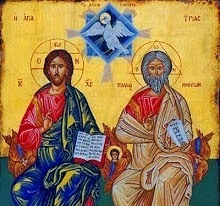
The Trinity and Creation Out of Nothing

Today I'd like to start talking about some things that Christians* believe - some things that a lot of people assume are just dusty, archaic, impractical ideas that people debate for no good reason and which don't have any real significance, but which really make all the difference in the world.

[* I'm talking about "what Christians believe" here, and what I mean is what has been handed down as agreed-upon Christian doctrine from ancient times all the way up to the present; these things are shared by Roman Catholics, by Orthodox (Greek, Russian, or otherwise), by all sorts of Protestants, and even sometimes by other Christian groups outside of those broad families. These are truly ecumenical doctrines, and they are definitely not theological novelties. Speaking of these as what Christians believe isn't meant here to suggest automatically that someone who rejects some of these beliefs is therefore obviously not saved. They may very well be; they may be true disciples of Christ for all I know. But they don't hold to the historic orthodox faith, which is what I'm concerned with here.]

One thing that Christians have historically believed is the doctrine, or teaching, of creatio ex nihilo. That's a fancy Latin phrase meaning "creation out of nothing". Now, that doesn't mean that God took a big fistful of a stuff called 'nothing', and then poof! he turned it into a universe. That's crazy talk. What it does mean is this. The world has, in some sense, a beginning. Christians have often held that it had a first period of time to its existence, and in many respects it's gotten some strong scientific support from modern cosmology. So 'before' that beginning to the world, God was all there was. It's not like, pre-universe, there was God plus a lot of other stuff lying around. No, God is the only eternal reality, not God plus matter. There was nothing that just happened, lucky for God, to be there so that God could make stuff with it. When it came to creating the world, it was entirely God's decision for there to exist anything but God. If God had wanted, he was totally free to not create anything. And if he'd made that call, then eternally there would be only God - and that's it, because that's enough. (More on that in a moment.) God has no equals. Nothing but God's own self, or aspects of his own self, can be co-equal with God, because only God is a necessary being. And God did not need anything outside of himself in order to create. That's the main lesson we get from creatio ex nihilo - as opposed to the idea, which the early Christians rejected, of creatio ex materia, which would have meant that God had some matter existing eternally and independently alongside of God that he used to make the world. Like I said, there was no such matter; God made that, too. And what that teaches us is that everything that exists is dependent on God. Nothing is independent of him. We are dependent on God for our existence. God created us, and he is absolutely responsible for the fact that we exist; we are dependent and contingent and merely temporal, while God is independent and necessary and eternal. Like Christian philosopher Peter Van Inwagen said:

To say that God is the creator of all things besides himself is not to say that he formed them out of some pre-existent stuff, like the cosmic craftsman of the Timaeus. If there is a God, then there never was a chaos of prime matter that existed independently of his power and his will, waiting through an eternity of years for him to impress form on it. This could not be, for, if there is a God, nothing does or could exist independently of his will or independently of his creative power. God creates things from the ground up, ontologically speaking. His creation is, as they say, ex nihilo.1

Two other Christian philosophers have similarly noted:

For the author of Genesis 1, no preexistent material seems to be assumed, no warring gods or primordial dragons are present - only God, who is said to "create" (bara, a word used only with God as its subject and which does not presuppose a material substratum) "the heavens and the earth" (eth hassamayim we'eth ha'arets, a Hebrew expression for the totality of the world or, more simply, the universe). Moreover, this act of creation took place "in the beginning" (bereshith, used here as in Is 46:10 to indicate an absolute beginning). The author thereby implies creatio ex nihilo (creation out of nothing) in the temporal sense that God brought the universe into being without a material cause at some point in the finite past.2

So God did not need anything outside of himself to create, but Christians also believe that God did not need anything outside of himself for any other reason either - including his own happiness, or fulfillment, or for relationships. God is not just a God of love; God is essentially love. He doesn't need or require us, because everything needed for relationship, he has eternally had within his own being, within his self. What Christian teaching says that? Turns out it's a pretty famous one: the Trinity. That's right, the doctrine of the Trinity isn't just some academic thing that theologians talked about and argued over for ages simply to hear themselves talk or find something to fight over. It's actually important! It's important because, for one, it shows us that relationship isn't something that required creation. It's not as if God was forced to create because he got bored. God could never be bored because God's life is the eternally blessed communion of the Father with the Son and the Spirit, of the Son with the Father and the Spirit, and of the Spirit with the Father and the Son. And it's not as if God felt lonely; how could God feel lonely when he is, in his very character, relational within himself? So what this shows us is, first, that God does not need us for companionship or for anything else. God has everything it takes to be completely and perfectly fulfilled, and he had it eternally and necessarily. If he didn't, then he wouldn't be eternally and necessarily perfect, which is also something that Christians believe about God. What it also shows us is that God is and has always been perfect relationship in himself, from before the world began, and that when he freely chose to create a world, he created it in a way that reflects his nature. We were not made to be alone, because God is not alone. We were made to be in community because God himself is Community. And God created us so that he could enter into contingent and free relationships with us - not because he needed to, but because he freely chose to - and so that he can by grace bring us as contingent partners to share in the community of the Trinity. Think about that. God called us so that by grace we can share in the relationships that are from everlasting to everlasting, so that we can be brought into the communion of the Father and the Son and the Holy Spirit! This participation in God's inner life, as participants who have been freely invited by God from the outside, is a large part of what ancient Greek-speaking Christians - as well as Orthodox Christians today - call theosis, 'deification'/'divinization'. That doesn't mean that we become God by nature - we don't get to be omnipotent, for example, nor do we get to become the source of all things that exist, or uncreated, or anything like that - but it does mean that we get to share in some profound ways in who God is, as an act of God's grace.

Now, all those ancient heresies that some people who haven't done their history homework think were valid forms of Christian belief but were oh-so-brutally repressed by those evil orthodox Christians who wanted to control everyone? ("Help! Help! I'm being repressed!") Those heresies don't give you this. Take Sabellianism, for example. That's an ancient heresy, also known as 'modalism', that taught that there was really only one person who was God, and that when you saw the 'Father' and the 'Son' and the 'Holy Spirit' in the Bible, this was just one divine person playing a bunch of different roles, like a guy with a puppet in each hand, pretending to have real conversations with them - but really, there's only one center of consciousness there, only one person, so there's no actual relationship going on. That's what a lot of Christians mistakenly think the Trinity is, but it isn't. Jesus was not praying to himself, he was praying to a distinct person: his Father. There are real relationships between them. If Sabellianism were true, then if God hadn't created, he might well have gotten lonely; he could not have had a relationship unless he created something to have one with. And in a real sense, that would mean that God would have been in need, and therefore not perfect. And that God could never have a rich enough inner life to invite us to share in; it would forever be closed to us. Not only would that God be too small, so would the salvation he offers. Sadly, modalism of some form is still with us today in the teachings of the United Pentecostal Church International as well as other Oneness Pentecostal groups, as well as in the personal beliefs of a lot of well-meaning Christians who haven't been taught well enough to know better.

Or take Arianism, for example. This was the heresy that the Council of Nicaea fought in the year 325. Arius, a church elder from Alexandria in Egypt, taught that the Father was the uncreated God, but that the Son was a lesser created god who wasn't eternal like the Father. And because the Son was of a different essence from the Father, the Son couldn't know the Father perfectly; there are some things about God, in other words, that even Jesus doesn't get, and so he can't perfectly reveal God to us. What's worse, only God is eternally perfectly good; all other created agents can choose to fall away. What this meant for Arius was that it's theoretically possible for Jesus to rebel against the Father just like Satan did - and if he does, then say goodbye to your salvation. (Oh, and also, since only the one true God is worthy of worship, if you've ever worshipped Jesus, you're an idolater. Congratulations! The early Arians actually tried to hang on to some form of worship of Jesus, but they ultimately couldn't escape the logical consequences of their views.) And if you believe that Jesus is the Word/Reason (Logos) and Wisdom of God, like the New Testament says and the church recognized, then to believe that Jesus is a created being means that God was once totally speechless, irrational, and foolish until he created Jesus. This is why early Arians had to resort to saying that God had an uncreated Word/Wisdom as well as a created word/wisdom, and that Jesus is the second one instead of the first.

Note that this all means that Arianism has nothing better to offer than Sabellianism here. God in eternity is still a solitary individual without a robust inner life of relationship and community, and he can't bring us into a divine community by grace. Add to that all the other problems with what Arius was teaching, and you can see why the church had to make a big fuss about it! So when the Nicene Creed said that the Son is "of the same essence as the Father", using the Greek word homoousios, they were safeguarding what they knew about Jesus and his eternal relationship to the Father, as well as the fact that the church had always worshipped the Father and the Son and the Holy Spirit (which is why when some heretics decided to concede when it came to Jesus and go after the Spirit instead - they were called 'Pneumatomachians', or 'those who fight against the Spirit' - they didn't get any further). Sadly, forms of Arianism are still with us today among Jehovah's Witnesses, Christadelphians, and a bunch of other sects, as well as probably a lot of uninformed Christians in the pews.

Sabellianism can't give you a God of eternal community. Neither can Arianism. Neither can other anti-Trinitarian ideas such as tritheism, which is any belief that the Father, Son, and Holy Spirit are three totally separate gods. Aside from the fact that this is obviously not what Christians have ever believed, each of these 'gods' would be incomplete without the others. None of them has relationship within his own self, his own divine essence. And so while they might be able to invite you to join their society and become a peer, it isn't their inner life that you're entering into. And there's also the possibility that, unless they are necessarily always in agreement, they'll fight and break off their relationships - and then where would we be? But if they are necessarily in agreement, and if they do share an inner life, and if they're all co-eternal and mutually related, then really they aren't three gods but one God, just as the doctrine of the Trinity says.

None of these false theologies, these heresies, can give you what orthodox Christianity can. And in my opinion, not only is the doctrine of the Trinity better grounded in what the Bible teaches, but the doctrine of the Trinity is simply more beautiful, more promising, and more meaningful. There really are practical implications to believing in these things; don't let anyone try to tell you otherwise. Only the doctrine of the Trinity, coupled with creatio ex nihilo, speaks to you about one God who has no needs, who exists eternally as Community - which means that our relationships on earth are a reflection of something divine. And only these doctrines affirm God's true freedom, independence, and unique eternity in creating. And only these doctrines offer you the hope of being invited to participate by grace in the Community of the Father and the Son and the Holy Spirit, in which they eternally participate by nature.


1 Peter Van Inwagen, The Problem of Evil: The Gifford Lectures Delivered at the University of St Andrews in 2003 (Oxford, UK: Oxford University Press, 2006), 29.
2 J. P. Moreland and William Lane Craig, Philosophical Foundations for a Christian Worldview (Downers Grove, IL: InterVarsity Press, 2003), 554.

So This Guy Goes Out to Sow Some Seed...

Alright, alright, listen up, I've got a story for you, so get this image in your head: So there's this guy, alright? He's out working hard in the field sowing seed; it's planting time. Think of him out there, hard at work beneath the hot sun. He's got this big bag that's full of the stuff he's sowing, and he just reaches in, grabs handful after handful, and tosses it all over the dirt; he figures he can come back later and plow it all into the earth. So this guy, he doesn't worry about where it lands; there's plenty of seed to go around. Now some of his seed is gonna just land on the path in the field where he's walking, or right next to the path - somewhere that isn't for planting. The seed lands on that ground, but that kind of ground can't receive it, can't take it in. Does the seed make any difference to the ground at all? No way. It just lies there, inert, useless, until finally some birds swoop down from the sky and peck it up. Then what's the deal with that ground? Absolutely nothing. One thing's for sure: nothing's gonna grow there.

But okay, okay, the path isn't the only place seed can land, is it? Some of the field is pretty rocky - just a layer of topsoil over a layer of hard rock. So some of the seed lands there and gets plowed in, and that's good, right? But what happens once the seed gets in there? It doesn't get in very deep, does it? Well the top layer of soil gets pretty hot from the sunlight, so the seed germinates real quick and starts growing, it shoots up fast like it's eager to get to the surface. But look! Where do the roots go? The rock blocks them from getting deep into the dirt to get nutrients. So then there's this plant there for a while, it grows up quickly and all that, but it's got terrible roots! Now maybe when it's raining and cool out, that's no problem, you don't need good roots to deal with most of that. But what happens to the plant when it gets hot and dry and the sun's just beating down on this poor thing? There's not much moisture in that dry soil! So the plant gets all dried out and withers up. What good is that to the farmer? None at all.

Now alright, not all soil is rocky. There's some much better dirt the seed can land on, and some probably would, right? Now in a lot of fields, you're gonna have some patches with these nasty thorny bushes growin' in 'em, so what about the seed that lands in those parts? Well it'll sure sink into the soil, that's a plus, and it might not grow as fast as the seed that falls in rocky soil, but it'll have much better roots. But look! These thorns are gonna keep growing, and if you watch, they'll grow up over some of the plants and hog all the sunlight, and their roots will wrap around the roots of the good plants and get in there with 'em and hog all the water, too! So maybe those plants will grow, but bit by bit the plants get just strangled by these thorns. So what good is the plant? What kind of crop are you gonna get from something that's dying because other stuff is stealing its sun and water? That's not gonna help the farmer either!

But don't you worry about the farmer; see, this guy knows what he's doing. What's left of the field is good soil, right, it doesn't have rocks or any other plants growing there. So what's to stop the seed from sprouting? Nothing! That's the beauty of it. In good soil, this stuff he's planting just flourishes! It grows and grows and grows - and it's good stuff! The seed gets into the soil, it gets down in there, the soil receives it. The sprouting seed works its roots all throughout the soil so that it can draw up enough water into itself - and that way when hot, dry days come along, the plants won't wither up and give in; they'll keep growing anyway! See, this soil is good soil, so it doesn't put up much resistance to the roots. And since this soil is good soil, there aren't any weeds or thorns or thistles or any of that junk growing there. This is not land where the sower's crop has to share space with anything else, or compete with anything else. No, the sower's crop gets the whole plot to itself! And what happens when the crop gets the plot all to itself like that? It grows and grows and grows and grows until it matures and turns into a bountiful, flourishing crop, bearing its fruit in abundance - so much so that it more than compensates for the seed the sower lost on all the ground that wasn't good for it! Now we can see that the sower wasn't crazy, casting his seed from one and to the other without worrying which kind of ground it was gonna fall on. He knew what he was doing all along!

So that's my story, but what's it meant? The seed he's planting is the announcement we've all been waiting for. We live in a good world, but bad things, horrible things, happen because we decided we didn't want to live under God's rule; we didn't want God to be king over us. And so we rebelled. But God always promised that he wouldn't leave us to our own devices forever; he'd show us the error of our ways and would come and invite us back and establish his rule again, bit by bit. And the announcement we've been waiting for is that God's coming to reign at last, and so we'd better be ready to live that way, and not like the rebels we've been. That's the message that a wandering sage named Jesus started to spread thousands of years ago among the people God had chosen to bless the whole world through. And that's the message that Jesus sent his students to spread after they'd learned about it from him. But that's not all there was to the message. Jesus also told a lot of stories to show people what God's rule is like - and as it turns out, it looks a whole lot different than pretty much everybody had always figured it would. Instead of looking like God storming in and smashing up on everybody who's been picking on his people, it looked a lot like God sneaking in and letting all those bad guys - and even his own people! - smash him up instead. It looked a lot like a big failure, but it would turn out to be the great victory. And this topsy-turvy reign of God was going to come, Jesus said, through him! So that's the message that this sower is spreading: "Hey, you! You've been living like a rebel, not like a loyalist to God - and he's on his way to stop your great secession, so if you know what's up, you'll do an about-face pronto. God's rule has shown up on your doorstep, and you didn't even know it because it didn't look a thing like you wanted it to! And God started it through Jesus, his anointed son - the one you've been waiting for is here!"

So the sower, then, is anybody who spreads this message - but even if they get it exactly right, even if they're as convincing as could be, plenty of people are still going to miss out. Some people, like the dirt alongside the path, are packed so hard that there's no room for the message to even get into them. They aren't open to it. It takes effort to get your head around this shocking news, and they just aren't willing. So the message may hit their ears, but it won't stick around. The subtle powers that don't want God's rule to come can easily swoop in and snatch it away. And then some people, like the thin dirt on top of rocks, do accept the message gladly, but they don't really get it. They've got something in them that won't let it get any deeper, so the message does good in their lives when things are well and cool and all that jazz... but the moment things get too hot to handle, these fair-weather followers fall to the wayside. They're in for the good, but as soon as they realize that the message calls for putting up with a lot of hot, dry days, they drop it like a hot potato. And then there are other folks, like the thorn-infested plots, who don't have that problem. It's not that these people don't let the message in, it's not that the good news doesn't set up shop there. Don't get me wrong, it does, but they've got a whole 'nother problem. The kingdom message ain't the only message vying for their attention, and they've let a bunch of other messages - like the familiar story that it's all about take, take, take; or the story that he who has the best toys wins; or any of those old lies - set up shop there too! There's competition - and God's rule wants the whole plot, not just what other things leave aside. So these folks are trying to invest their resources in God's kingdom plus all this other junk, and that's a loser's bid. Can't pull it off. So they may have received the message, but they didn't really get it and follow through, and so it won't bear fruit there.

But then there are other folks who are like good soil. When the good news gets to them, they really get it. The message gets into them, so the anti-God forces out there can't just swipe it away and pretend it never happened. The message gets its roots deep into them; there's nothing blocking it, because these folks aren't shallow. For these people, it's about more than an emotional high. God's rule isn't about signing up and feeling splendiferous for the rest of your life; it's about dying and rising with Jesus the Messiah. It's about becoming like Jesus in his agonies and his tears and his anguish so that we can become like him in his victories and his shouts of joy and his indestructible life of power becoming fuller, not emptier, when poured out in love. So the message gets its roots into these people, and then when they suffer for trusting Jesus and giving him their loyalty as their Lord - because that's what faith is all about - they don't dry up, give up, wither up; they stick with it no matter how many difficult days come through. And the message that brooks no competitors finally finds that these people have no plans to provide it with competitors. Their lives, their plots, have no thorns, no other things striving against the rule of God. You can't serve God and something else that isn't God, be it Mammon or Pleasure or Convenience or Independence or Selfhood or any of those other lame counterfeits that only look so tempting because we haven't yet really seen for ourselves how the reign of God is so fully of the realities of which all rival masters are cheap replicas. "Accept no substitutes" is the wisdom these 'good soil' people live by. Their lives are devoted to God's rule, no matter what comes their way, and they're willing to go through the effort to grasp the message in both their minds and in their acts. So what's the consequence of that? These are fruitful people! You just won't believe how productive they are when you really see them as they are. And when it comes to God and his rule, these people are the ones God has good reason to consider finally useful - because they yielded to his message.

So what's the point of this whole story? First of all, now that you've heard the message, what kind of soil are you going to be? Are you like the soil of the path - never yielding, never receiving, never comprehending, and so never finding out what it's like to even have growth? Or are you maybe like the rocky soil - so shallow that while your growth looks amazing at first and everybody's impressed, it turns out that you never really got the meaning after all, or else you would've let the message penetrate you deeper, and now that times are tough, you're ready to throw in the towel? Or are you maybe instead like the thorny ground - you've received the good news, you're planning on sticking with it, but there are so many other things you want to serve too, so instead of giving everything over to God's rule, this message has to compete with all the clutter in your life? Or are you - praise God! - like the good soil - yielding to the message, taking it in, letting it get deeply into you, not keeping anything back from it, so that when all's said and done, you're the one with real results to show for it all? Be those people; don't be the other people. And if you're like those people, the 'good soil' people, then you'll want to go and share this message with others. Go, do it, and do it as effectively as you can! Train well, go forth, and serve! But don't labor under the delusion that if you were only a bit more persuasive or skilled, everyone would accept the message. Many just aren't ready for it - but those who are, are blessed indeed.

Thursday, October 7, 2010

Some Brief Remarks on Being Forsaken by God

If you've ever felt forsaken by God... rest assured that God knows exactly what that's like. That sounds odd, doesn't it? But according to a very persuasive case made by a New Testament scholar whom I rather respect, that's precisely what Jesus meant to convey when, on the cross, he cried out the famed line from Psalm 22:1, "My God, my God, why have you forsaken me?"

In his 2008 book Jesus and the God of Israel: God Crucified and Other Studies on the New Testament's Christology of Divine Identity, Richard Bauckham included a very curious final chapter entitled "God's Self-Identification with the Godforsaken in the Gospel of Mark". And in it, he pointed out that the meaning of being forsaken by God is that "he has allowed this to happen and does nothing to help" (257). Of course, that doesn't mean that he's entirely absent, or that he's really forgotten us, or that he's delivered us up for good, or anything like that. But by this definition, Jesus really was forsaken by God on the cross. This isn't a loss of faith; actually, Psalm 22:1 constitutes an expression of faith, since it appeals to God to remain faithful even in the starkest of circumstances. But Bauckham also argues that in quoting Psalm 22:1, Jesus wasn't just expressing something about his own situation at the time; he was identifying himself with God's people and indeed with everyone who has ever experienced God's apparent absence.

But as I've mentioned before, Jesus is intrinsic to the unique divine identity - or, in layman's terms, Jesus is God. And the Gospel of Mark bears that view out. So in a very real sense, Jesus' crucifixion isn't just God identifying with our pains, our sufferings, our shame - as radical as all of that is. No, there's more. God actually put himself in the place of everyone who's ever searched for God and found nothing. God put himself in the place of being forsaken by God. That's... a really radical idea. I mean... God being God-forsaken? But that's the paradoxical culmination of the Gospel of Mark, it seems. In Jesus, God bore our sins, our shame, our suffering... and he even bore the absence of God for us. Which means, likewise paradoxically, that the very moment when God was most revealing his ultimate love to all humanity was a moment of God's own apparent absence. "God redeems and renews humanity in this way, by entering the situation of humanity at the deepest level of the human plight: the absence of God" (268). The darkness itself was the brightest light there could ever be.

I'm not sure whether that thought would have comforted me when I, too, was apparently forsaken by God during some of my times of deepest, crushing depression, the times that nearly drove me to overcoming my cowardice enough to take the plunge into the abyss. I suspect that I was so inconsolable that no realization would truly have alleviated it much. But, on the other hand, I don't know that. And there's a real sense in which it should be a great comfort. The God to whom I'm crying out, begging, pleading, ranting, cursing, cajoling, idly threatening... that's the same God who has been in that very same situation of reaching out to God and touching only a dreadful, enigmatic, terrifying lack. God knows what it's like to be abandoned - even abandoned, for all intents and purposes in the here-and-now, by God! God empathizes more intensely than I can fathom. He can, in Christ, actually identify with that situation every bit as deeply, and no doubt so much more so, than I can. And if perhaps one of the benefits of suffering is that, if we bear with it rightly, we can identify more closely with the crucified Christ in his own sufferings and thus, by sharing with him, be united more nearly to him... then perhaps... perhaps one could go so far as to say that the experience of the apparent divine absence could function the same way? Could it be that these 'dark nights of the soul' are not just an opportunity to curb spiritual pride (for which purpose I lost the felt presence of God for several years), but a further opportunity to engage in a very different sort of spiritual experience: the identification with the crucified Christ in his Godforsakenness, just as he identifies with us in ours? Ah, if only I had had the capability to make such use of my own 'dark nights' during those times! But should I ever pass through a similar time, I pray that God will grant me the wisdom to follow through and thus grow in faith rather than weaken in it. And I pray, too, that any other sufferings I must endure will present themselves to me, not merely as trials and tribulations, but as similar opportunities to find the crucified Christ there amidst it all.

Wednesday, September 22, 2010

Hail, the Lord Jesus, God Incarnate!

This post is going to be a bit different than most here, because it isn't really about Christian 'spirituality' at all, at least not in the conventional sense of ethics or 'practical' theology. Two days ago, a Christian apologetics and interfaith dialogue group I founded at my alma mater hosted a five-person panel discussion on the deity of Jesus. Via the wonders of technology (a.k.a. Skype), I was able to be one of the panelists, and so I give two mini-presentations defending the traditional Christian belief that Jesus really is God. (I had to keep them quite short in order to ensure that I could deliver them in the time permitted, so there's much more that could have been said.) Another of the panelists took my view, while another took what could maybe be understood as a qualified Arian stance of sorts, and the other two panelists were a Conservative Jew and a deist. What follows is the text I prepared to answer the two questions around which the panel presentations revolved:

Does the New Testament teach that Jesus is God?

To tackle this question, we need to know how Jewish thinkers of the time talked about the unique identity of the God they worshipped. Jews during the Second Temple Period said that their God was the unique Creator of all things, and that everything else was made by him. They said that their God was the only true King over all things. One way they symbolized this was that God's throne was usually the only one in the highest heaven, far above the angels, and only God sat on that throne. They also said that only their God had always existed and always would, that their God had a unique name that picked him out from everything else, and that only this God should be worshipped.

In Jewish writings of that time, every other being is clearly distinguished from God because God has these traits and they don't. However, those Jewish writings could also talk about God's Wisdom and God's Word sharing these traits with him. For instance, both Wisdom and Word are said to be involved in creation. Wisdom is also shown sitting on God's throne with him and sharing in his rule over the universe. So there's strong Jewish precedent for distinctions within God's own identity.

With this in mind, I think it's clear that the New Testament says that Jesus shares all of these traits - and if that's the case, then the statement they must be making is that he shares the very identity of the God of Israel. Only God created all things and did so completely without any outside help, but Hebrews 1:2 says that the Father made the whole universe through the Son, and John 1:3 says that absolutely nothing was created except through God's Word - which the Gospel of John identifies with Jesus. (Just two verses earlier, John explicitly refers to the Word as "God".) Hebrews 1:10 quotes the Hebrew Bible to say that "in the beginning [Jesus] laid the foundations of the earth".

Only God rules over all things from his heavenly throne, but Ephesians 1:20-21 says that Jesus is sitting on God's throne at the Father's right hand and that from there, Jesus is ruling over all things. Hebrews 1:3 also says that the Son sustains everything in existence and is seated at the right hand of the Father. And at the end of the Gospel of Matthew, right after the resurrected Jesus accepts worship from his followers, Jesus claims that he has total authority over everything in heaven and on earth. Jesus is also portrayed as having an eternal indestructible life in Hebrews 7:16, and Hebrews 13:8 famously announced that "Jesus Christ is the same yesterday, today, and forever".

Jesus is also portrayed as bearing God's unique name in several passages, such as when Philippians 2:9 says that Jesus has "the name that is above every name", which can only be God's name. In addition to that, the New Testament frequently quotes passages from the Hebrew Bible about Israel's God and applies them directly to Jesus, including passages in which God's sacred name appears in the Hebrew text. Finally, when it comes to worship, I already mentioned that Jesus is worshipped in the Gospel of Matthew, but Hebrews 1:6 portrays God the Father as ordering all the angels to worship Jesus.

So to look back at the ways Jews in the Second Temple Period identified the one and only true God, we find that the New Testament applies them all to Jesus. We could probably find at least some of these in nearly every book of the New Testament. In other words, the New Testament does teach that Jesus is included in God's identity - which means that it's accurate, though maybe imprecise, to say that Jesus is God.

Was the historical Jesus really God?

There's no way to conclusively prove this from historical argument alone. Our first question is, did Jesus include himself in the divine identity? The earliest layer of tradition behind the Gospels, commonly known as "Q", seems to suggest that he did. In Matthew 11:19, Jesus says that "Wisdom" - by which he means himself - "will be vindicated by its deeds". In Matthew 12:42, Jesus describes himself as "one greater than Solomon", which because of the way Solomon was understood in Jewish tradition implies that Jesus is again claiming to be God's Wisdom. In Matthew 8:20, Jesus alludes to the portrayal of God's Wisdom in Sirach 24:7 and onward, which shaped his mission; and where Sirach 6 urges readers to take up Wisdom's yoke, Jesus urges his followers to take up his own yoke. All this but that last one is considered Q-material, whereas the part about Jesus' yoke is probably independent. For that matter, we know that the earliest Christians proclaimed Jesus as Lord and invoked his name in baptism and other religious rituals, frequently in language that identified him as divine. It's extremely likely that Jesus' presentation of himself as Wisdom goes beyond even the different Gospel sources and comes originally from the historical Jesus himself. Considering how Jewish tradition of that time understood God's Wisdom, the odds are quite good that Jesus understood himself as included in God's own identity somehow.

But if so, was he right? Or was Jesus just misguided? It seems pretty tough for a man to honestly believe that he helped God create all things, that he descended to earth from heaven, and that he's guaranteed to one day rule over the entire universe from God's own throne. Unless that person happens to be right, it seems fair to question his grip on reality. Since millions and even billions of people ever since have seen great insight and outstanding teaching in Jesus' words and actions, the latter seems rather unlikely. More importantly than that, though, Jesus vindicated what he was saying by rising from the dead. While the resurrection is an issue all its own, I'd like to just quickly note that the same disciples who abandoned Jesus before the crucifixion came to strongly believe shortly afterwards that Jesus had bodily risen from the dead - and believed it so strongly that most of them gave their lives for it. Even some people who originally rejected Jesus, such as Paul and Jesus' own brother James, came to believe strongly that he was the risen Lord and Messiah because - as they said - he had appeared to them after his resurrection and set them straight; they, too, died for the gospel they preached. In addition, we have no evidence at all that the Jewish and Roman authorities even tried to deny that Jesus' burial place no longer contained his body, and the earliest alternative stories already assume that Jesus' tomb was empty shortly after his body was placed there. To this day, nearly two thousand years later, no one has ever presented a convincing rival explanation other than the Christian one: that God raised Jesus from the dead. The evidence even persuaded a prominent Jewish theologian named Pinchas Lapide that Jesus rose from the dead; he just gives it a much different meaning. But in light of what Jesus taught about himself, Lapide's version seems much less likely than the one that Christians have been spreading throughout the entire world ever since it happened: God raised Jesus from the dead because Jesus really is the promised Messiah, really is the world's rightful Lord, and really is intrinsic to God's own identity - just like Jesus claimed, just like the earliest Christians claimed about him, and just like Christians have been claiming ever since.

------------------------------------------------------------------------------

Several days later, I accepted a challenge to debate a Muslim fellow on essentially the same topic on one of the Internet's more successful theology discussion forums. Because here I had a bit more space and freedom, I was able to flesh out my case a bit more in my opening statement, which I here repost in a slightly modified form:

Was Jesus God, according to the Bible?

To approach what a text means to assert about a topic, it's always good to know how that topic was understood by the culture in which the text was first written and first heard, especially if we value authorial intent. In Second Temple Judaism, which was the Judaism (or Judaisms, in some respects) as thought and practiced in Jesus' day and earlier, Jews distinguished their God from all other reality by means of a few identifying characteristics that drew a clear-cut line between God on the one hand and the entire creation on the other. First, God was the unaided Creator of all other things. Isaiah 44:24, for instance, identifies Israel's God as the one "who made all things, who alone stretched out the heavens" and who alone "spread out the earth". The late first century work of 2 Enoch says, in both alternative recensions, that God had "no advisor/counselor and no successor" (33:4), while 4 Ezra 3:4 clearly states that Israel's God "formed the earth [...] without help".

Second, the God of Israel was the only one with rightful authority over absolutely everything created. This authority, moreover, was symbolized by the fact that God's throne in the highest heaven was above all the angels (Isaiah 6:1; 1 Enoch 14:18-22; 2 Enoch 20:3J). Whereas God sits enthroned in the position of a ruler in that heaven, even the highest angels - such as Raphel (Tobit 12:15), Gabriel (Luke 1:19), and Michael (Testament of Abraham 7:11) - are consistently portrayed as standing in his presence, which was the posture of servants of the king.

Third, the God of Israel had always existed and always would. He is "God who lives forever" (Tobit 13:1), "him who lives forever" (1 Enoch 5:1), "the Eternal" (Sirach 18:1), "the Eternal One" (Testament of Moses 10:7), and the one who is "almighty and eternal, Israel's savior from all evil" (2 Maccabees 1:25).

Fourth, and very importantly, the God of Israel had a very unique name: YHWH. (This name's original pronounciation is no longer known, but today is usually vocalized as either 'Jehovah' or 'Yahweh'.) This name is clearly not actually shared by any other being who isn't God; to actually possess the name of YHWH as one's own is to obviously be God.

Fifth, these Jewish writers consistently said that only Israel's God deserves to be worshipped by created beings. Any other being who isn't God, no matter how exalted, does not deserve to be worshipped, for that is idolatry. So routinely in this literature, we see humans tempted to worship angels, for instance, and being rebuffed with exhortations to worship God instead (Tobit 12:16; Revelation 19:10 and 22:8-9; Ascension of Isaiah 7:21; Apocalypse of Zephaniah 6:14-15).

So those are five lines that distinguish between God on the one hand and everything else that isn't God on the other. But already within this literature of the Second Temple Period, we see qualifications being made in the literary tradition: while none of these angels or exalted humans are within the divine identity, certain attributes of God can themselves be ascribed these traits, and thus be included in God's own identity; they are not created beings (that is, there never was a point at which they did not exist, nor does their existence seem to be contingent on an act of divine will in the way that the existence of the angels or the universe is), but are in some sense the uncreated God. Needless to say, God's Wisdom and God's Word are prime examples, since both are ascribed a role in creation (see, among many other passages, Wisdom 7:22 with regard to God's Wisdom and 2 Baruch 14:7 with regard to God's Word). Furthermore, God's Wisdom has a unique association with the throne of God in a couple Second Temple Jewish works (see Wisdom 9:4; 1 Enoch 84:2-3), such that as New Testament scholar Richard Bauckham observes, "Wisdom is depicted sitting on the great divine throne beside God, participating in the exercise of sovereignty by playing the role of advisor or counsellor to the king" (Jesus and the God of Israel: God Crucified and Other Studies on the New Testament's Christology of Divine Identity, p. 17).

So when it comes to the New Testament, if the authors there had wanted to place Jesus within the divine identity without claiming that he exhausted the divine identity, there are a few ways they could do that aside from directly calling him "God" from time to time. First, they could describe him as the Wisdom of God or the Word of God, either directly or indirectly. Second, they could attribute to Jesus all the key traits that to Second Temple Jewish ears would have made God unique in his identity, thereby ascribing to Jesus the identity of the God of Israel. And third - though this could arguably in some ways be subsumed under the second - they could apply texts from the Hebrew Bible about the God of Israel directly to Jesus, thereby placing him in God's shoes, as it were.

With regard to the first, clearly this is done on several occasions. Description of Jesus as God's Word is quite evident, since in the famed Johannine Prologue (John 1:1-18), John opens by declaring that "in the beginning was the Word, and the Word was with the God, and the Word was God" (John 1:1) and goes on to announce that this same Word "became flesh and dwelt among us" (John 1:14) in the person of Jesus. Similarly, Revelation 19:13 names Christ "the Word of God" rather explicitly. It's for this reason that later traditions, such as found in Islam, likewise refer to Christ as God's Word (e.g., Surah 4:171), albeit without maintaining a Second Temple Jewish awareness of the implications of that claim. Finding clear references to Jesus as God's Wisdom is a bit trickier. However, Sirach 24:7ff. speaks of Wisdom as being unable to find a resting place until it arrives in Jerusalem, and this has clear echoes in Matthew 8:20, as well as the entire geographical shape of Jesus' mission. In Matthew 12:42, after making a clear reference to Solomon's wisdom, Jesus claims that he is "one greater than Solomon". As New Testament scholar Ben Witherington III rightly says:

One must ask, for a person like Jesus who spoke in the Wisdom tradition, a tradition which continued to attribute a wide variety of works to Solomon right up to the turn of the era, who or what could be greater than Solomon? Surely the implication is the presence of Wisdom herself. (Jesus the Sage: The Pilgrimage of Wisdom, p. 202)

Similarly, Jesus refers to himself as Wisdom in Matthew 11:19, and in Matthew 11:29-30, Jesus takes up the language of Sirach 6:24-29 about Wisdom's yoke and casts himself in Wisdom's role. Also, Hebrews 1:3 refers to Jesus as the apaugasma of God's glory, using an exceptionally rare Greek word borrowed from Wisdom 7:26 and its description of Wisdom.

The second available means of displaying the deity of Christ - that is, by ascribing to Jesus the distinctive identifying traits of God - also happens quite clearly. First, where creation is said to have been God's solo job, without any aid, advisor, or instrument, we know that the New Testament declared that "in these last days [the Father] spoke to us through a Son [Jesus], whom he made heir of all things and through whom he created the cosmos" (Hebrews 1:3), and that "all things came to be through him, and without him nothing was made that has been made" (John 1:3), and that "all things were created through [Jesus] and for [Jesus]" (Colossians 1:16; the same verse describes even various angelic ranks as having been created by Jesus). The language of John 1:3 in particular seems reminiscent of the way in which YHWH's supreme role in the act of creation is depicted in the Dead Sea Scrolls: "He establishes all things by his design, and without him nothing is done" (1QS 11:11). Quoting from the Old Testament, Hebrews 1:10 states that "in the beginning [Jesus] laid the foundations of the earth". Clearly, no one outside of God's identity had a role in creation; yet Jesus had a role in creation; and therefore Jesus is intrinsic to God's own identity.

Moreover, Jesus is routinely depicted as occupying a place at God's throne which not even the highest angels (who were, in Second Temple Judaism, the highest created beings and thus served as a boundary marker between God and creation) could reach. Hebrews 1:3, a verse already mentioned, declares that after providing "purification for sins", Jesus as heavenly high priest "took his seat at the right hand of the Majesty on high". Later in the same discourse, the author declares that Jesus "sat down at the right hand of the throne of the Majesty in heaven" (Hebrews 8:1); and, again, that Jesus "sat down at the right hand of the throne of God" (Hebrews 12:2). Ephesians 1:20-21 likewise says that the Father "seated [Jesus] at the Father's right hand in the heavenly realms, far above all rule and authority, power and dominion, and every title that can be given, not only in the present age but also in the one to come". As if this were not enough, both Revelation 22:1 and 22:3 both speak very explicitly of "the throne of God and of the Lamb" - that is, one throne shared by both the Father and the Son. Earlier, Revelation 7:17 describes Jesus as being "at the center of the throne", and in Revelation 3:21, Jesus himself says quite unambiguously, "I overcame and sat down with my Father on his throne". Moving away from the throne imagery, in Matthew 28:18 the risen Jesus claims to have "all authority in heaven and on earth". No one outside God's identity reigns with this authority from the highest throne of heaven; yet Jesus reigns with this authority and sits on that throne; and therefore Jesus is intrinsic to God's own identity.

Beyond this, Jesus is portrayed as the eternal, everlasting one, just as God is. In Hebrews 7:16, for example, we read about Christ's innate "indestructible life" by virtue of which he holds the everlasting priesthood. The language used for Melchizedek (e.g., "without mother, without father, without genealogy") in Hebrews - the point of which is to actually apply it to Jesus as its true fulfillment, rather than to make a statement about the historical Melchizedek - is what New Testament scholar Jerome H. Neyrey refers to as "Hellenistic god-talk", language developed by Greeks to speak of divinity but also used by Jews to describe their God, since these alpha-privative Greek words would often have seemed quite inappropriate for any other being in a Second Temple Jewish worldview. Thus, Neyrey states:

I must conclude that the author of Hebrews acclaims Jesus as a "true god" because of his full eternity in the past and imperishability in the future. [...] ...Jesus is called "God" because he enjoys the primary characteristics of a true deity: he is (1) uncreated and ungenerated in the past, without mother or father or genealogy; and (2) imperishable, without end, and eternal. Since these temporal characteristics are unique to true deities, we learn that the author of Hebrews consciously knows what he is doing; the designation of Jesus as "God" has substance. (Render to God: New Testament Understandings of the Divine, pp. 237, 242)

Moreover - in another passage also cited by Neyrey and others to much the same effect - Hebrews 13:8 ascribes eternity to Christ in acclaiming him "the same yesterday, today, and forever". No one outside of God's identity is eternal and imperishable; yet Jesus is eternal and imperishable; and therefore Jesus is intrinsic to God's own identity.

Additionally, Jesus is shown to bear God's unique name. For instance, Philippians 2:9 identifies Jesus as having "the name that is above every name". Similar phrasing is used in Hebrews 1:4 in giving to Jesus a name superior to any name possessed by any of the angels. Of passages like these, and in particular of Philippians 2:9, New Testament scholar Richard Bauckham writes that "it is inconceivable that any Jewish writer could use this phrase for a name other than God's own unique name" (Jesus and the God of Israel, p. 199). The conclusion is clear that Jesus bears YHWH's name, and thus plausibly Philippians 2:11 should be read as bearing the sense that "every tongue [will] confess that Jesus Christ is YHWH, to the glory of God the Father". This is not an idiosyncratic reading by any means. Another New Testament scholar, Gordon Fee, wrote in his magisterial tome on Paul's view of Jesus that this name "can hardly be anything other than a reference to the Divine Name in the [Old Testament]" (Pauline Christology: An Exegetical-Theological Study, p. 397), while New Testament scholar Ben Witherington III concurs that this must be "the name of God in the Old Testament, i.e., LORD, which is the LXX equivalent to Yahweh" (Jesus the Sage, p. 265). No one outside of God's identity possesses this sacred name as his or her own; yet Jesus bears this name, and someday all of creation will confess it; and therefore Jesus is intrinsic to God's own identity.

So far as these identifying traits of God are concerned, Jesus is portrayed in the New Testament as a proper recipient of worship, which is another clear prerogative exclusively reserved for YHWH the God of Israel. In Second Temple Jewish literature, exalted beings like angels are portrayed as rebuffing attempts to worship them; Jesus, however, never does this. On the contrary, in Matthew 28:17, the risen Jesus receives and accepts worship from his devotees. In Hebrews 1:6, the Father proclaims the Son as his "firstborn", his heir, and then demands that all the angels actually worship Jesus. Is God ordering idolatry here? By no means! Rather, Jesus is a proper object of worship; worshipping Jesus is portrayed in the New Testament as wholly right, and we know historically that this practice dates back to the earliest roots of the Christian movement. Yet, in Richard Bauckham's terms, "worship is acknowledgement of God's sole deity" (Jesus and the God of Israel, p. 234). And there are numerous occasions on which Jesus receives worship, and so I rest content with these two. No one outside of God's identity is rightly worshipped; yet Jesus is rightly worshipped; and therefore Jesus is intrinsic to God's own identity.

Thus, as far as the first two ways in which the New Testament authors could have included Jesus in God's identity, it seems quite clear that they have. The third, however, may in fact be no less prevalent in the New Testament, and that is quoting Old Testament passages about YHWH and declaring that Jesus is their referent, thus effectively declaring him to be (in some sense) YHWH. Beginning in an unusual place, 1 Peter 2:3-4 says that Christians "have tasted that the Lord is good" and are "com[ing] to him, the Living Stone rejected by men but chosen by God". Clearly, the "Lord" (Gk. kurios) in 1 Peter 2:3 is Jesus; but the language is taken from the Greek rendering of Psalm 34:8, which urges the Israelites to "taste and see that YHWH [= 'LORD'] is good". Similarly, 1 Peter 3:14-15 quotes from Isaiah 8:12 and then calls readers to "in your heart set apart [or, sanctify/regard as holy] Christ as Lord"; yet the attentive reader's mind would have been called to the next phrase found in Isaiah 8:13, which says that the one we are to set apart, sanctify, and regard as holy is none other than YHWH. The next verse, Isaiah 8:14, says that YHWH "will be a stone that causes men to stumble and a rock that makes them fall", while 1 Peter 2:8 applies these words to Jesus as the "stone that causes men to stumble and a rock that makes them fall". Moving away from that one epistle, we find the same phenomenon elsewhere. In 1 Thessalonians 3:13, Paul blesses the letter's recipients with a wish that they be "blameless and holy in the presence of our God and Father when our Lord Jesus comes with all his holy ones", alluding to a prophetic declaration that "YHWH my God will come, and all the holy ones with him" (Zechariah 14:5). Likewise, where Isaiah beheld the glory of God himself (Isaiah 6:1-10), the Gospel of John quotes from the same chapter and explains that Isaiah made these statements upon seeing Jesus' glory (John 12:41). And where Psalm 102:25-27 was clearly addressed to YHWH as to the only one who "laid the foundations of the earth" and can remain after the heavens are rolled up like a scroll, Hebrews 1:10-12 has no qualms about applying these words directly to Jesus as the one who laid the foundations of the earth and could easily endure after the heavens are rolled up like a scroll - for Jesus is included in the very identity of YHWH, the eternal creator. And where Psalm 68:18 speaks of YHWH ascending on high and leading captivity captive - thus doing wonderful things on behalf of his people - Paul exegetes this very christologically in Ephesians 4:7-10, indicating that Christ was the YHWH of whom the psalmist sang.

Quite clearly, then, the New Testament depicts Jesus as God's Word and God's Wisdom, two figures in Jewish literature of the time who were clearly uncreated and included in God's identity. In the same manner, the New Testament independently depicts Jesus as being included in God's identity by ascribing to Jesus all the major identifying traits that set God apart from everything that isn't God. Likewise, the New Testament takes passages from the Hebrew Bible that clearly referred to only YHWH and applies them to Jesus, thus identifying him as the YHWH of those texts. These three factors all give strong reason to conclude that the New Testament includes Jesus within the unique identity of the God of Israel - and this is what it means to say, "Jesus is God". Indeed, the doctrine of the Trinity, when stripped of philosophical terms like ousia and hypostasis, is simply the claim that there is one and only one God, YHWH, and that there are three distinct persons/individuals - the Father, the Son, and the Holy Spirit - who each have the identity of this one God.

That being said, there are also a few instances in which the New Testament does directly refer to Jesus using the Greek word theos, 'god'. Most prominent, of course, is John 1:1, which declares that "in the beginning was the Word, and the Word was with the God, and the Word was God". As is now widely recognized, the 'ho theos' of John 1:1b indicates the Father, while the 'theos' of John 1:1c is what Philip Harner referred to as a "qualitative anarthrous predicate noun"; and, in that same classic 1973 article on the subject, he surveyed clauses that John could have written in that place and concluded that, given these options, the meaning of what was actually written must be that "the logos had the nature of theos (rather than something else)" (p. 85); he went on to reiterate that "John evidently wished to say that the logos was no less than theos, just as ho theos (by implication) had the nature of theos" (p. 86 n. 30) before finally concluding that the sense of the passage is that "the Word had the same nature of God" (p. 87). And because God's nature, in this sense, is unique to the Creator and is not shared by any created being (and nor are there a multiplicity of gods, ontologically speaking), this must be taken with the force that the Word is indeed God, in the sense in which we are here using such locutions.

Finally, I'll conclude with a relatively brief mention of John 20:28, in which Thomas, one of Jesus' disciples, finally encounters the risen Jesus and exclaims in reference to him, "My Lord and my God!" (or, in Greek, 'ho kurios mou kai ho theos mou'). This cannot be understood as a split reference to Jesus at first and the Father a few words later, nor can this be construed as simply an impious exclamation, since such would have been blasphemy that Jesus would not have tolerated. Rather, as Ben Witherington III rightly notes:

The confession "My Lord and my God!" recapitulates some of the claims about God's Son/Wisdom made in the prologue in John 1. Jesus is not just the believer's Lord but also the believer's God, and so an appropriate object of worship, even before the ascension. (John's Wisdom: A Commentary on the Fourth Gospel, p. 344)

This verse, it should be noted, is very close to the Greek translation of Psalm 35:23, where YHWH is acclaimed by the psalmist as "my God and my Lord" ('ho theos mou kai ho kurios mou'), and also bears a resemblance to Revelation 4:11 in which the elders acclaim the Father as "our Lord and God" ('ho kurios kai ho theos hemon'). My conclusion, then, is that in the sense relevant to this debate, the Bible does indeed portray Jesus as God - meaning, as specified previously, that it depicts Jesus as included within the divine identity that was regarded as unique to the God of Israel.

Wednesday, September 15, 2010

The Great Faithfulness of God

Great is Thy faithfulness, O God my Father;
There is no shadow of turning with Thee.
Thou changest not; Thy compassions, they fail not;
As Thou hast been, Thou forever wilt be.

How amazing it is to worship a God who never changes, a God who's always constant as purest unmitigated act. How amazing it is to know that God's compassions never fail! How amazing it is to know that God's track record of faithfulness is unblemished, and that this gives us absolute assurance that his track record of faithfulness will be flawless tomorrow, and the day after that, and the day after that, and so on, ad infinitum!

Great is Thy faithfulness! Great is Thy faithfulness!
Morning by morning, new mercies I see!
All I have needed, Thy hand hath provided;
Great is Thy faithfulness, Lord, unto me!

God's faithfulness truly is great. But to be honest, I don't see God's new mercies morning by morning. I usually don't see much that's pleasant in the morning (and I don't drink coffee). How different my days might be if I resolved to greet every morning by finding a new gift from God!

Summer and winter, springtime and harvest,
Sun, moon, and stars in their courses above,
Join with all nature in manifold witness
To Thy great faithfulness, mercy, and love.

The great God who is faithful to us is the great God who sustains the regularity of nature, the great God on whose constant activities all 'laws of nature' depend. The constant course of the planets and stars in their grand revolutions, marking off cosmic time by definite periods - that is the faithfulness of God. The seasons on which we rely as we consider the patterns of the years to come - that, too, is the faithfulness of God. The faithfulness of God is the guarantee of an orderly cosmos rather than a disorderly chaos; the same faithfulness of God that gives us a cosmos is a testimony on the grandest scale to the faithfulness, mercy, and love of God.

Great is Thy faithfulness! Great is Thy faithfulness!
Morning by morning, new mercies I see!
All I have needed, Thy hand hath provided;
Great is Thy faithfulness, Lord, unto me!

Great is God's faithfulness - but not so much with mine. All I have needed, God's hand has provided; great is his faithfulness unto me. But I have a problem. My faith isn't terribly strong, I'll admit. And if there's one thing that comes difficult to me, it's trusting God. I have a very difficult time saying, "God will provide." When I say that to myself, the other voice inside me says, "Yeeeeeeeah, like that's gonna happen." And I have a tough time recognizing what I do have as a gift from God; I'm much more naturally inclined to look at it as the product of purely human striving. I pray that God might give me eyes to see all things as his providence.

Pardon for sin and a peace that endureth;
Thy own dear presence to cheer and to guide;
Strength for today and bright hope for tomorrow;
Blessings all mine, with ten thousand beside!

God is faithful to pardon my sin - and I've had plenty to pardon. God is faithful to give me peace - not a temporary peace, a peace that succumbs to the vicissitudes of day-to-day life, but rather a peace that outlasts them all because it runs so much deeper than it all. And God's peace runs so much deeper than them all because it springs from his "own dear presence" that cheers us and guides us. God's dear presence can offer strength for today and bright hope for tomorrow - and I need plenty of both. The song proclaims that these five things - pardon, peace, presence, strength, and hope - are all already mine in Christ - and so are ten thousand others! I can scarcely even begin to imagine the other riches God has in store.

Great is Thy faithfulness! Great is Thy faithfulness!
Morning by morning, new mercies I see!
All I have needed, Thy hand hath provided;
Great is Thy faithfulness, Lord, unto me!

At the Orientation Worship Service, I think it was, several of the new students stood to bear testimony of what God is doing in their lives. And one really stuck out. A man from India told of how he came to America to study here, and when he arrived in the airport, he had a certain small amount of money - and spent every last bit of it before he even got out of the airport. And he detailed how, despite all apparent possibility or sense, he relied on God every step of the way and got gift after gift. He said that he has no idea where all the money to pay for his education here came from, but by the provision of God, it came indeed. Oh for the faith to depend on God that totally! Oh for the faith to be at peace in the midst of trials and know that God will provide, whether I can see how or not! I am by nature obsessed with planning for the future; I'm obsessed with being in control so as not to have the rug swept out from underneath my feet. But the lesson I most need to learn - especially here at seminary, where my financial situation is hardly sturdy by any human reckoning - is to trust in God to provide a way for me to fulfill his will, whyever it is he's called me here.

Because great is his faithfulness. Great is his faithfulness! Morning by morning, new mercies I'll see. All I have need of, his hand will provide. Great is his faithfulness, even to me.

Drench Us in Your Spirit, O Lord

"Because of his great love for us, God - who is rich in mercy - made us alive with Christ even when we were dead in transgressions; it is by grace you have been saved. And God raised us up with Christ and seated us with him in the heavenly realms in Christ Jesus, in order that in the coming ages he might show the incomparable riches of his grace, expressed in his kindness to us in Christ Jesus."
(Ephesians 2:5-7)

Tonight, like last night, I went to a tent meeting; a revival of sorts, if you will. An alumna of the seminary delivered an insightful message on being baptized in the Holy Spirit. Last night's message, delivered by one of our seminary's professors, was about the outpouring of the Holy Spirit. And both tonight and last night, the Holy Spirit was there. Both nights, I could feel the Spirit upon me - though as a Christian, the Spirit is with me whether I feel him or not. That's a lesson I'd really do well to learn. There is nothing I have to do to 'earn' God's Spirit; there is nothing I have to do to 'earn' God's favor. Why? Because in Christ, I have already been raised up from death (spiritual, not physical - physical resurrection from physical death is what God has yet in store for me); in Christ, I have already been seated with Christ in the heavenly realms. I - however relatively insignificant or completely unworthy I'm so often tempted to feel - have a throne already reserved for me in heaven as Christ's joint-heir, as someone adopted by the Father through participation in the Son's natural sonship by virtue of the Spirit of sonship that the Father has poured out into my life through his beloved Son. I have been called by grace to share by grace in the overflowing of the Trinitarian mystery of love. There's nothing I still have to do to 'earn' that. What room is there to speak of earning anything, when God's incomparable riches are promised as grace?

But as I said, the Spirit was with me and upon me tonight. Tonight our speaker - who spoke a fair deal on Ephesians 2:6-7 - invited us to step out into the aisle or to come up front and to pray for one another. That aisle, that front, represented - and in some inexpressable way, I might say, partook in - the river of baptism. (As our speaker says, when it comes to the baptism of the Spirit, God does not merely sprinkle us, he drenches us and soaks us and immerses us. God does not seek to dispense his Spirit with an eyedropper.) And as I stood in that aisle, worshipping God and crying out for his Spirit, one of my friends here came to me and prayed over me and with me for that Spirit to be present in me in a new way. And when I, in turn, laid hands on him and prayed for him to likewise receive the Spirit... I could tell that something fresh was happening. The words I spoke came welling up within me from somewhere I simply couldn't locate; the words I spoke took me completely by surprise, rushing out with power I could never have mustered from within myself alone, from within my dryness, my inner wastelands; the words I prayed were, I believe, words set into my heart to be spoken as a blessing for him. And I hope that they richly blessed him indeed, for I know that the speaking of them certainly blessed me. (Last night, too, some of the words I spoke felt as if they carried a power not my own.)

Our speaker, too, prayed over me later to receive greater assurance and to be drenched in the Spirit of God. She prayed, too, that I might be filled with a consuming love for those around me, a consuming love for those I encounter, a consuming love for others. And that caught me by surprise a bit, because to be perfectly honest, I've always struggled so much with having a passion to love others. For large stretches of my life, I've honestly felt dead inside. My natural state towards the world around me is a gray-tinged apathy. Even towards God, I find it terribly difficult to muster up much feeling. And that has been perhaps one of the things I've struggled with most in my Christian walk. (That, and the fact that I have faith perhaps one percent the size of a mustard seed, but that's perhaps for a different time.) But tonight, as I looked around and my community engaged in worship and prayer and encountering the Spirit of God, I couldn't help but feel my heart cry out, "This is family. These are my brothers, my sisters, in Christ. These are fellow children of God."

I have no idea right now what this post is 'about'. I'm not even certain that's any of my concern anymore. But I feel that if I don't take the time to put these words down... well, I fear I might lose them to the murky mire of my oft-splintered memory. And I don't want to lose what I gained tonight, what I found tonight. I don't want to lose that timeless time gripped in worship of our God. I don't want to lose the fact that, for the most part, everything beyond that tent seemed to pale in comparison with what was going on there. What I want to do is somehow to take what was in that tent and bring it with me to share with the world.

Heavenly Father, God who reigns in majesty and marvelous light from the throne of grace, surrounded by legions of angelic servants and the vast throngs of your children, send your Spirit down upon us through Jesus, your Son, with whom we died and with whom we were buried and with whom we were raised and with whom we were seated in the heavenly places.

Let our hearts and souls be not dry, but let this unimaginable thirst be amplified as we cry out for more and more of your Spirit. Send your Spirit down upon us, and let us forever yearn for more of it - for however much of your life is in us, you promise us always more.

Lord, let us never forget who you've made us to be; let us leave darkness and shame behind as you bring us into your kingdom of endless light, and let us forever look at the world from that vantage point.

Anoint us, O great God of heaven, anoint us and soak us and drench us and baptize us with your Spirit - not for our sakes along, but so that your Spirit might overflow from our hearts into the lives of those around us, so that we might spread your light and your glory and your holiness throughout the world.

In the name of Jesus Christ our risen Lord and everlasting King, we cling in faith to the promise you gave to us, Father, and we plead earnestly with you to baptize us with your Spirit of Glory so that we might become all flame.

Amen.